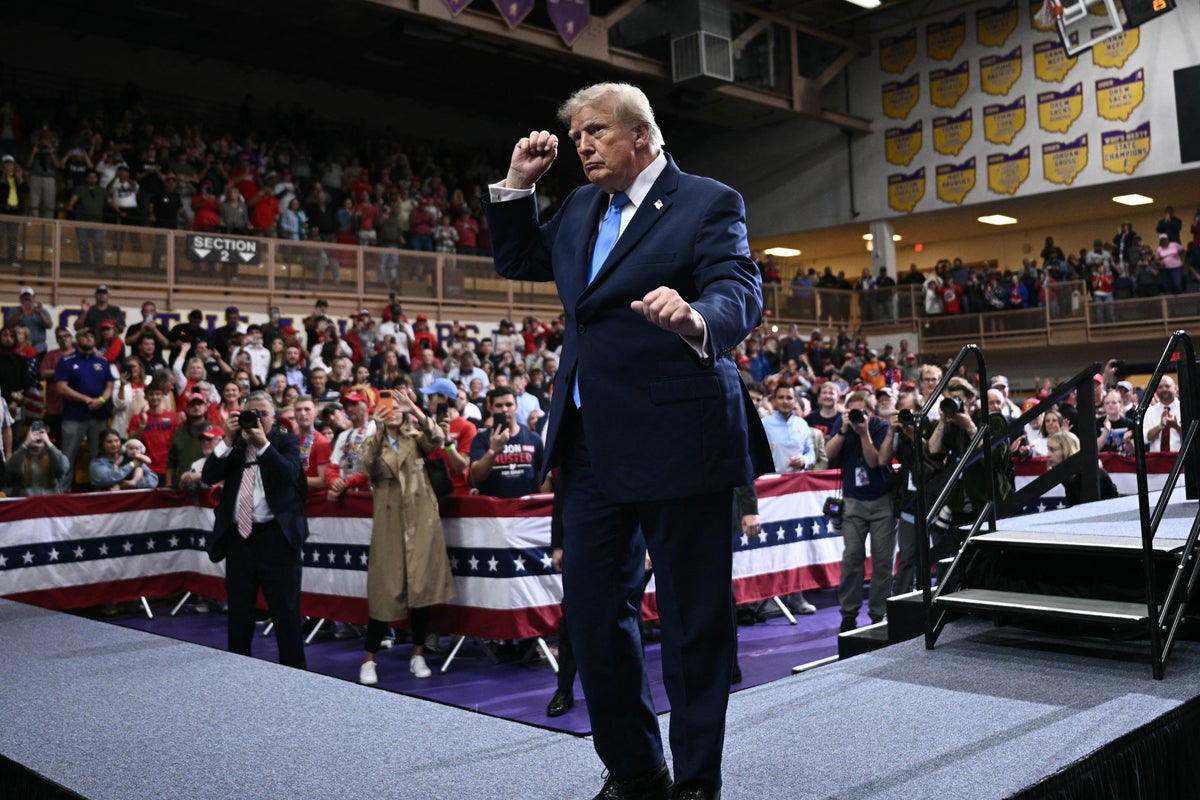
President Donald Trump campaigned in Vandalia, Ohio, on Saturday, October 3, 2026, to support Republican candidates four weeks before the midterm elections. During his speech, Trump urged supporters to vote as if he were on the ballot himself, stating that a Republican victory would allow the party to "shove it up" the Democrats. He appeared alongside U.S. Sen. Jon Husted and gubernatorial candidate Vivek Ramaswamy, both of whom are in competitive races against Democratic opponents former Sen. Sherrod Brown and Amy Acton, respectively.
The rally comes as the president faces a 37% approval rating and a 61% disapproval rating, according to New York Times polling averages. Factors cited for the decline in popularity include persistent high prices for gasoline and diesel during the U.S.-Israeli war with Iran, as well as controversy regarding the Epstein files. Trump told the crowd that Republican control of Congress is necessary to prevent a roadblock to his agenda and suggested he would be less inclined to provide federal assistance to Ohio if Democrats win key state races.
To incentivize turnout, Trump promised that a Republican victory would result in $5,000 payments to Americans, funded by revenue from tariffs and economic growth. He also criticized Sen. Tom Cotton (R-AR) for opposing a bill to make daylight saving time permanent and shared what appeared to be the senator's cell phone number on social media. In response to Republican campaigning, a spokesperson for Sherrod Brown’s campaign, Lauren Chou, criticized Husted for supporting Trump’s Iran policy and tax deals for data centers.
For individual households, the election stakes include a proposed $5,000 "dividend" payment that Trump claims he will send to every American if Republicans win. However, Congress has not agreed to approve this cash distribution. Residents in Ohio are currently navigating a 35% year-over-year increase in gasoline prices, averaging $4.16 per gallon, and the effects of $3 billion in retaliatory Canadian tariffs on state exports. A Democratic victory would, according to Trump's rally statements, potentially reduce the direct line of communication between Ohio officials and the White House for securing federal funding.
Beyond immediate financial impacts, the election serves as a referendum on the administration's handling of the war with Iran and domestic economic conditions. The next steps in the campaign include Trump traveling to Nebraska on Monday, October 5, followed by a Thursday, October 8 hearing regarding the president's ban on three news outlets. Voters will cast their final ballots on Tuesday, November 3, 2026.