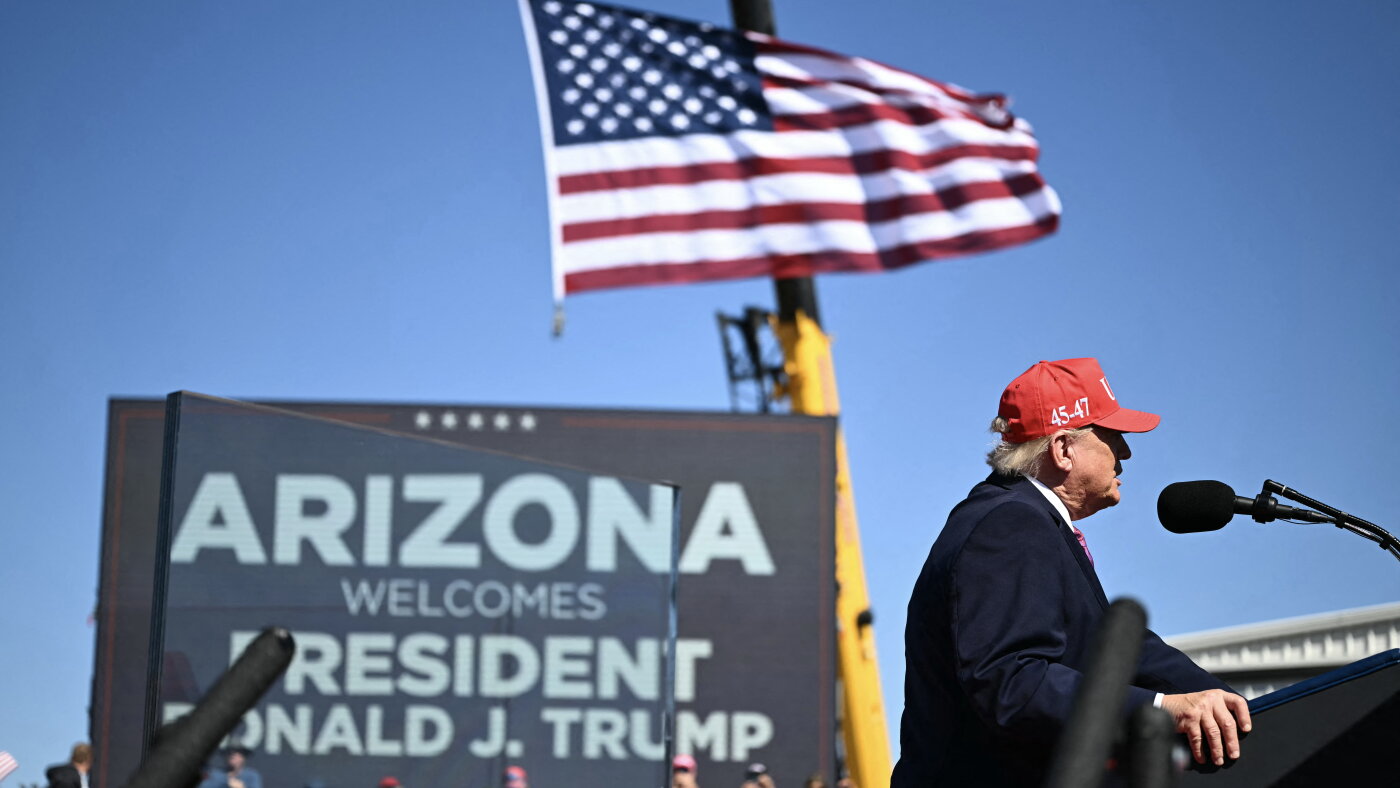
President Donald Trump has focused his recent campaign travel on states he won in 2024, following an earlier pledge to spend the month before midterm elections visiting approximately 35 places. While the president stated at a Rose Garden dinner in early September that he intended to campaign for candidates in attendance, his recent itinerary has included stops in Ohio, Texas, Oklahoma, and Tennessee.
The White House has not specified which 35 locations were originally planned, and reports indicate the president has campaigned with fewer than one-third of the candidates who attended the September dinner. Trump stated during travel between Arizona and Montana that his visits to these states were intended as a gesture of gratitude and to support local Republican candidates. He noted that Republican turnout often decreases in years when he is not on the ballot.
Campaign activity has extended to Alaska, where Trump campaigned for Sen. Dan S. Sullivan and Rep. Nick Begich. Though Trump won Alaska by 13 points in 2024, the current races are reported to be close. The Republican National Committee (RNC) also announced a scheduled stop in Kansas for a Senate race currently rated as a toss-up. RNC Chairman Joe Gruters stated that the strategy aims to increase base turnout by having the president active on the campaign trail.
During his rallies, Trump has discussed his past election victories, legislative record, and economic conditions prior to the war with Iran. He has also promoted a proposal to provide a $5,000 dividend to every American adult if Republicans win control of both the House and Senate. The source reports that this proposal has met with resistance from some elected Republicans.
In North Carolina, Trump is scheduled to campaign in Greenville on Tuesday. The trip comes as Republican campaign committees have canceled ad reservations for Senate candidate Michael Whatley, and a congressional district in Eastern North Carolina—previously redrawn to favor Republicans—is now rated as a toss-up by the Cook Political Report. North Carolina Democratic Party Chair Anderson Clayton stated that the president's late-stage campaigning is an attempt to drum up support that she believes will not be successful.
The scale of this effort involves shifting campaign resources, including the cancellation of ad buys in some races to reallocate funds elsewhere. Voters in the affected districts may notice a change in the volume of political advertising and direct outreach as national committees adjust their expectations for the midterm outcome. The president's proposed $5,000 dividend would, if enacted, represent a significant direct payment to every American adult, though its path to implementation depends on both election results and overcoming internal party opposition.
The outcome of these efforts will determine the balance of power in the U.S. House and Senate, impacting future legislative priorities and federal appointments. If the strategy to boost base turnout fails in these traditionally Republican areas, it could lead to a change in how parties approach redistricting and safe-seat maintenance. The next major milestones include the president's visit to Kansas on Monday and North Carolina on Tuesday, followed by the midterm Election Day. The final impact on voter turnout and the dividend proposal will be clarified as election results are certified.