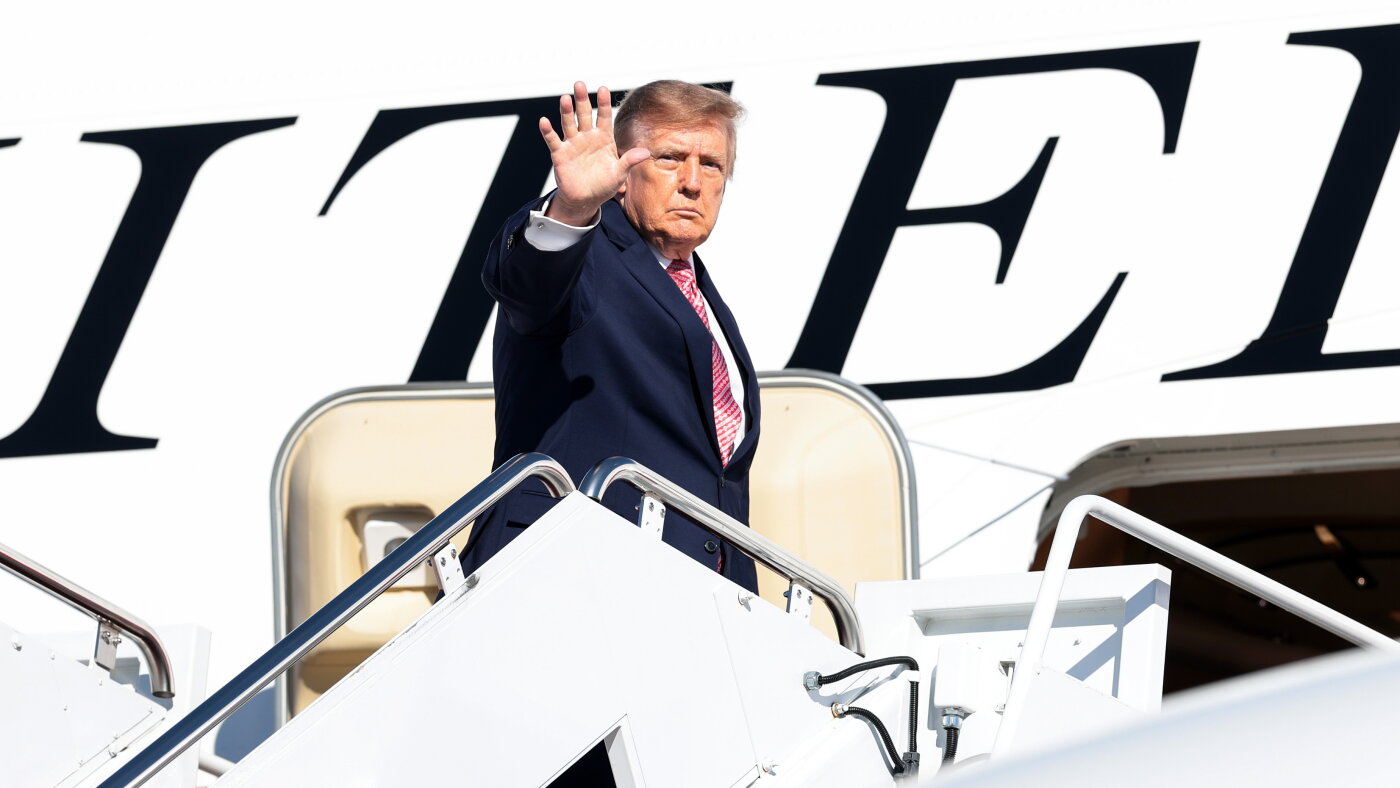
President Donald Trump stated this weekend that he is exercising broader executive authority in his second term compared to his first. Speaking to supporters in Northern Kentucky, the president cited actions such as renaming the Gulf of Mexico to the Gulf of America and pursuing international deals with Russia despite legislative opposition. These comments come less than two weeks before the November midterm elections, as recent polling from The New York Times/Siena College and Reuters/Ipsos shows his approval rating reaching record lows of 36% and 31%, respectively.
The administration’s recent actions include a Justice Department raid on a congresswoman’s home and the removal of trees in Washington, D.C., against a judge's wishes. Additionally, the administration announced investigations earlier this month into nine universities, including Harvard and Yale, for allegedly bringing in international students to undercut American wages. Presidential historian Tevi Troy noted that Trump is utilizing an executive branch that has seen a quarter-century of power accumulation from Congress, describing the president's methodology as "unilateralism."
While the president has acknowledged the historical tendency for a president's party to lose seats during midterms, he has remained publicly optimistic at rallies. On Monday in Kansas, he told supporters that Republican candidates would win if turnout is high. However, he has also claimed without evidence that Democrats will cheat and has promised a $5,000 payment to every American adult citizen if Republicans maintain control of Congress. A recent Ipsos survey found that a majority of Americans do not believe the president will accept the election results if his party suffers losses.
The scale of the current political shift is reflected in polling data involving thousands of respondents across multiple surveys. With 59% of voters in the Times/Siena poll disapproving of the president's performance, the results suggest a lack of confidence among Democrats (94% disapproval) and independents (67% disapproval). In contrast, 80% of Republicans approve of the president’s performance. These figures highlight a polarized electorate as the nation approaches an election that will determine control of both the House and the Senate.
The outcome of the November midterms will dictate the future of the president's agenda and his ability to continue acting unilaterally. If the Republican Party loses its majorities, as suggested by some polling analysts, the president may face increased oversight or legislative blocks. Conversely, if Republicans retain control, the administration may move forward with its promised cash payments and further executive actions. The midterm elections are scheduled to take place in less than two weeks, with voters deciding the composition of the next Congress.