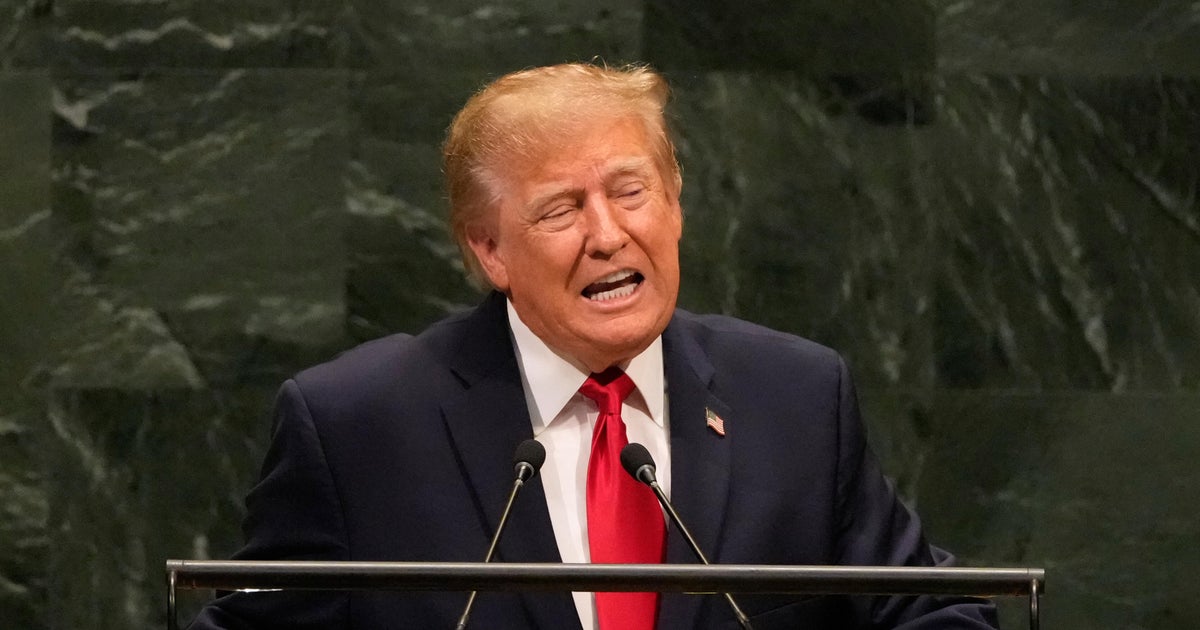
President Donald Trump addressed the United Nations General Assembly on Tuesday, September 22, 2026, where he discussed his administration's military and foreign policy objectives. During the speech, which lasted roughly 35 to 40 minutes, the president stated he had a "big decision" regarding the ongoing war with Iran: either negotiate a new deal or "annihilate" the country. He predicted that Iranian leaders would wait until after the upcoming U.S. midterm elections to reach a settlement.
The address comes as the president faces domestic polling lows and international tension over multiple global conflicts. Trump defended his decision to initiate the war with Iran nearly seven months ago, characterizing it as a necessary step to prevent Tehran from acquiring nuclear weapons. The Iranian delegation walked out during his remarks, as did the Cuban delegation after Trump accused Cuba of coordinating with "left-wing radicals" in the U.S. and pledged that "freedom will be coming to Cuba."
Trump highlighted several recent international developments, including a security agreement with Greenland and Denmark to build two "major" U.S. military bases. He also discussed U.S. intervention in Venezuela, stating that the U.S. would no longer permit threats in the Western Hemisphere and would secure national interests by force if necessary. Additionally, the president proposed rebranding "Artificial Intelligence" (AI) to "Superintelligence" (SI), arguing the word "artificial" makes the technology sound "fake."
The conflict with Iran has also strained traditional alliances, leading to public disagreements between the U.S. and partners like Canada and various European states over trade, defense spending, and requests for NATO assistance in the war. The threat of "heavy tariffs" against major buyers of Russian oil, signed into law by Trump last week, could further impact global trade relationships, particularly with China. Chinese President Xi Jinping is scheduled for a state visit to the White House this Thursday, an event that will likely determine the immediate direction of these trade tensions.
Looking ahead, the U.S. midterm elections on November 3 will serve as a domestic benchmark for the administration's policies. While the president stated the election "doesn't even enter my mind," current polling shows registered voters preferring Democrats for Congress by a margin of 43 to 35 percent. On the legal front, three news organizations—Politico, CNN, and MS NOW—are suing the administration to restore White House access after being banned, a move that has already led to the suspension of standard television pool coverage for the president’s meetings with foreign leaders at the U.N. summit.