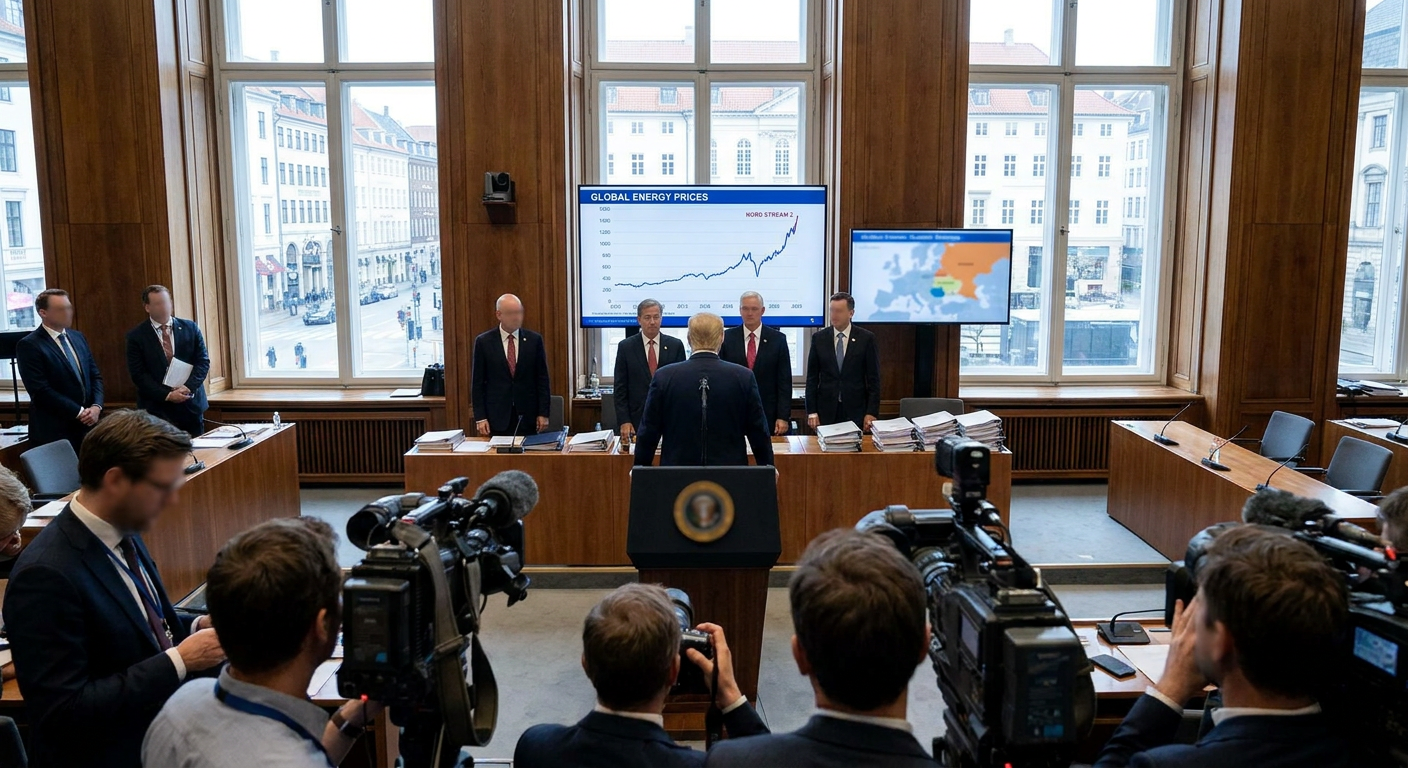
President Donald Trump has taken steps to reduce economic and diplomatic pressure on Russia as he seeks an end to the conflict in Ukraine. The moves include lifting Treasury Department sanctions on Russian diesel and suspending a recently signed sanctions law named after the late Sen. Lindsey Graham. Additionally, the administration has paused the sharing of military intelligence with Ukraine, a move criticized by lawmakers from both political parties.
These actions occur amid rising domestic energy costs as the United States approaches midterm elections. According to the administration, lifting diesel sanctions was intended to mitigate high fuel prices. The president stated he is currently negotiating with Russia on multiple issues, including energy, the release of American hostages, and efforts to prevent Russia from assisting Iran. Former U.S. Ambassador to Ukraine Bill Taylor noted that direct U.S. financial and military assistance to Ukraine has declined by 95%.
On Monday, Ukrainian President Volodymyr Zelenskyy briefed a bipartisan group of U.S. lawmakers, alleging that the Pentagon is delaying the delivery of missiles that international partners have already purchased for Ukraine. Zelenskyy also suggested the U.S. was involved in a recent multi-day loss of connectivity to Starshield and Starlink satellite services, which are used for Ukrainian battlefield communications. Secretary of State Marco Rubio, speaking in Mumbai, India, stated that while reports of delayed interceptor deliveries might be accurate, there has been no "deliberate political directive" to harm Ukraine.
Republican and Democratic lawmakers have expressed opposition to the administration's current stance. Rep. Mike Lawler (R-NY) stated that purchasing Russian diesel provides financial support to the Russian government. Darline Graham, sister of the late Sen. Graham, also spoke out against the decision to buy Russian diesel. The president stated he is willing to meet with Russian President Vladimir Putin and Chinese President Xi Jinping to discuss the war, even without the presence of Ukrainian leadership.
In Ukraine, the suspension of military intelligence sharing and reported delays in missile deliveries change the day-to-day capabilities of the armed forces. With direct U.S. aid down by 95%, Ukrainian forces are increasingly dependent on intelligence and the ability to receive weapons purchased by European partners. The interruption of Starlink satellite services, which Ukraine relies on for communication, further impacts battlefield coordination. Zelenskyy has intensified direct lobbying of the U.S. Congress to address these supply and communication issues.
The broader diplomatic shift sets a precedent for excluding Ukrainian leadership from high-level negotiations regarding their own territory. President Trump’s stated goal is to secure a foreign policy win and maintain Russia’s presence at the bargaining table for hostage and energy negotiations. What happens next depends on the outcome of these negotiations and the response from Congress. Lawmakers have already begun bipartisan briefings, but no specific dates for votes to reinstate sanctions or formal dates for a summit between Trump, Putin, and Xi have been reported.