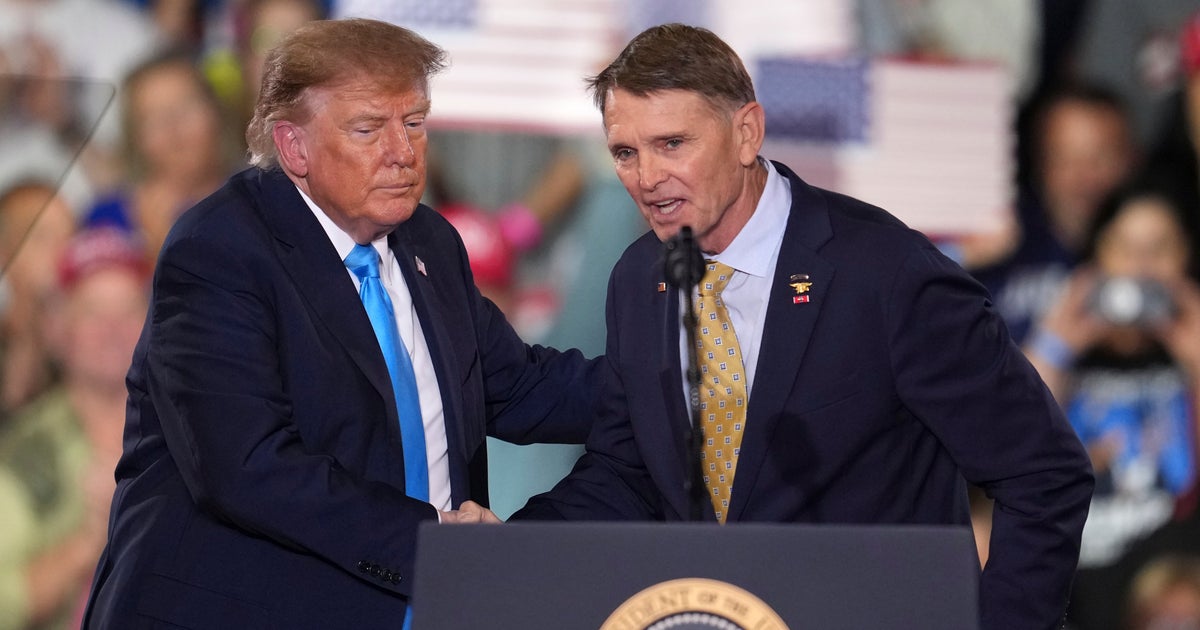
President Donald Trump evaluated the physical appearance of several Republican and Democratic candidates during campaign events leading up to the 2026 midterm elections. During a rally in Kentucky on Saturday, Oct. 17, 2026, the president described U.S. House candidate Ed Gallrein as a "beautiful guy" and "central casting." Turning to Ohio Senator Jon Husted, the president recounted a physical examination of the senator's build, mentioning his jawline, shoulders, and past as a college football player.
The remarks follow a pattern for the president, who previously owned the Miss Universe pageant and hosted the reality program "The Apprentice." These appraisals occur as both parties contest control of Congress, with the results determining whether Republicans keep control or the Trump administration faces legislative opposition in Washington.
In Georgia on Friday, Oct. 16, 2026, Trump called gubernatorial nominee Rick Jackson "distinguished" and "beautiful-looking," while praising Representative Mike Collins as a "good-looking man" who is "all man."
Conversely, the president criticized the appearance of Texas Senate candidate Ken Paxton during a party convention, stating he did not like the way Paxton looked and critiquing his suit. Trump also targeted Democratic candidates, comparing Texas candidate James Talarico to the MAD magazine mascot Alfred E. Neuman and Georgia Senator Jon Ossoff to the character Pee-wee Herman, disputing claims that Ossoff is "good-looking."
The public assessments affect the campaign profiles of candidates across Kentucky, Ohio, and Georgia, whose electoral success will help determine which party controls the U.S. House and Senate. For Republican candidates like Ed Gallrein, Jon Husted, and Rick Jackson, the president’s descriptions serve as a form of personal endorsement. Conversely, the public critiques of Texas Republican Ken Paxton and Democratic candidates James Talarico and Jon Ossoff demonstrate how the president uses aesthetic comparisons to differentiate between allies and opponents.
Voters in these states may notice these characterizations through rally broadcasts and social media as the 2026 midterm election approaches. The rhetoric contributes to a broader debate over candidate viability and masculinity. The effect of this rhetoric may influence how future candidates are presented to the public, emphasizing physical traits alongside political qualifications. The final impact will be determined on Election Day in November 2026, when voters decide on candidates for the House, Senate, and state-level governorships. Currently, no further debates or specific polling updates following these remarks have been reported.