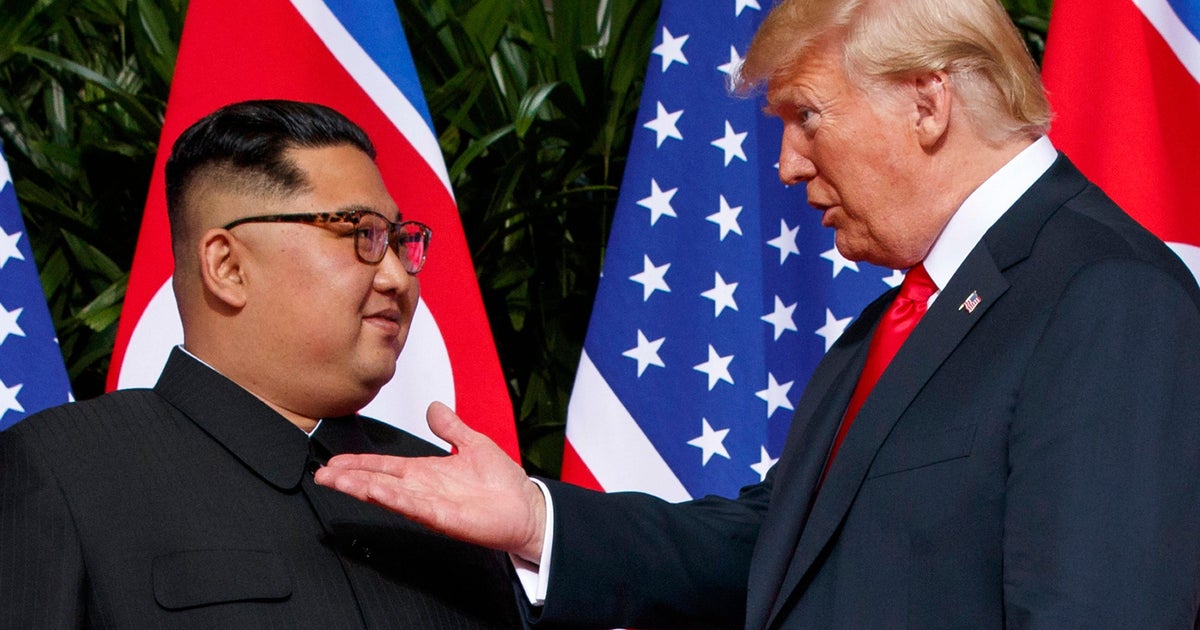
President Donald Trump stated Wednesday that he expects to meet with North Korean leader Kim Jong Un later this year. The announcement follows a report by the Wall Street Journal indicating that the administration is seeking to organize a summit, potentially coinciding with the November Asia-Pacific Economic Cooperation (APEC) meeting in Shenzhen, China.
The proposed meeting would be the fourth between the two leaders, who held three summits during Mr. Trump's first term to discuss the denuclearization of the Korean Peninsula. While the White House and Pyongyang have not officially confirmed a date or location, Mr. Trump told reporters he has directed aides to establish contact with the North Korean government to restart stalled negotiations.
The diplomatic push occurs as North Korea continues to expand its nuclear capabilities. Analysts currently estimate the country possesses dozens of nuclear warheads, and Kim Jong Un has recently stated he will not engage in talks predicated on denuclearization. Instead, Kim has called for the international community to recognize North Korea as a nuclear power.
To facilitate a return to the negotiating table, Mr. Trump ordered a reduction in the scale of annual joint military exercises between the U.S. and South Korea. The "Ulchi Freedom Shield" exercises, which typically last 10 days, were reduced to five days and are scheduled to end this Friday. Mr. Trump characterized the full exercises as a "hostile signal" and cited a lack of South Korean assistance in the conflict with Iran as an additional factor in his decision.
The scale of the nuclear challenge has grown since the previous summits, with North Korea now estimated to hold dozens of warheads. The potential for a November summit in China places a timeline of less than three months on diplomatic preparations. If the meeting occurs, it may set a precedent for accepting North Korea as a nuclear-armed state, a move that South Korean President Lee Jae Myung has already responded to by calling for military independence and the acquisition of nuclear-powered submarines. This shift could fundamentally change the 70-year alliance structure in East Asia.
In the immediate future, regional leaders are reassessing their defensive postures. South Korean officials have expressed concerns that the U.S. might not intervene in the event of hostile actions by North Korea or China. While China's Foreign Minister Wang Yi is currently in Seoul to discuss denuclearization, the actual resumption of U.S.-North Korea talks remains dependent on Pyongyang's response to the outreach. The next major milestone will be the conclusion of the shortened military drills this Friday and any subsequent official confirmation of a November meeting date.