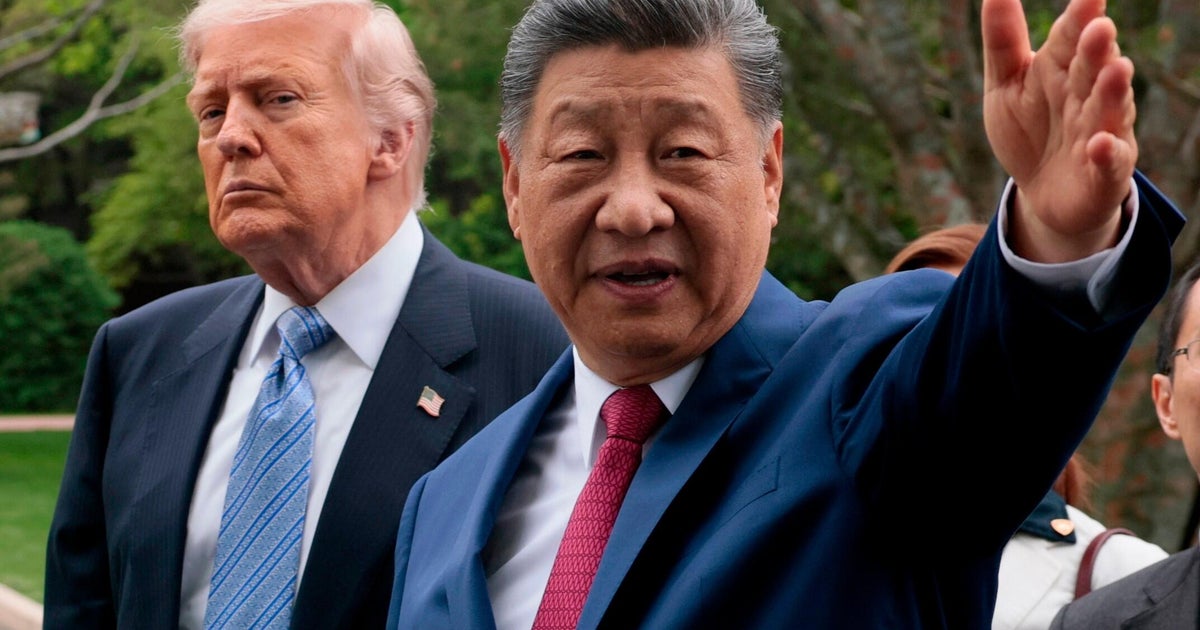
President Donald Trump is hosting Chinese President Xi Jinping for a state visit this week, marking the first time a Chinese leader has visited the White House in more than a decade. The visit includes a personal greeting by Mr. Trump at Joint Base Andrews on Wednesday, followed by a formal arrival ceremony, a bilateral meeting, and a state dinner on Thursday. The leaders are expected to discuss artificial intelligence, regional security, and the future of a trade truce set to expire in November.
The meeting follows a state visit by Mr. Trump to Beijing in May. Relations between the two nations have been marked by a trade war that saw tariffs reach over 100% in early 2025 before a truce was reached in Busan, South Korea, in October. That agreement lowered tariffs and paused Chinese export restrictions on rare earth minerals in exchange for Chinese purchases of U.S. soybeans. However, reports indicate China has not met its soybean purchase pledges, and tensions remain over U.S. semiconductor export limits and China's ties to Iran and Russia.
The White House announced that Thursday's arrival ceremony on the South Lawn will feature nearly 500 service members and a military flyover including a B-2 Spirit bomber and four F-22s. While U.S. Treasury Secretary Scott Bessent noted that China has proposed a "bigger deal" beyond the current trade truce, analysts such as James Lewis of the Center for European Policy Analysis suggest there is no formal agenda for major policy achievements. Discussions are also expected to cover a proposed "notification system" for AI incidents that affect national security, though Mr. Trump has previously expressed resistance to regulations that might slow U.S. AI development.
For the technology sector, particularly companies like Nvidia, the visit centers on the future of semiconductor exports and artificial intelligence. While the U.S. currently chokes the supply of advanced chips to China, Mr. Trump has allowed sales of H200 chips to "approved customers." A new agreement or a tightening of these rules would change the operating environment for AI developers who rely on these high-value components. Furthermore, the proposed establishment of a U.S.-China "Board of Trade" would identify a specific subset of low-tech consumer goods to be shielded from future trade disputes, providing more price stability for those items in retail stores.
The visit also carries implications for international security and domestic industry. China's control over rare earth elements remains a point of leverage; a supply cut last year led to the shutdown of some American factories. Any progress on trade, tech, and Taiwan could set the precedent for how the U.S. handles China's "unstoppable" reunification goal with Taiwan, an island of 23 million people that produces the majority of the world's semiconductor chips. What happens next depends on the private meetings Thursday and whether the two leaders announce an extension of the Busan truce before the November 10 deadline.