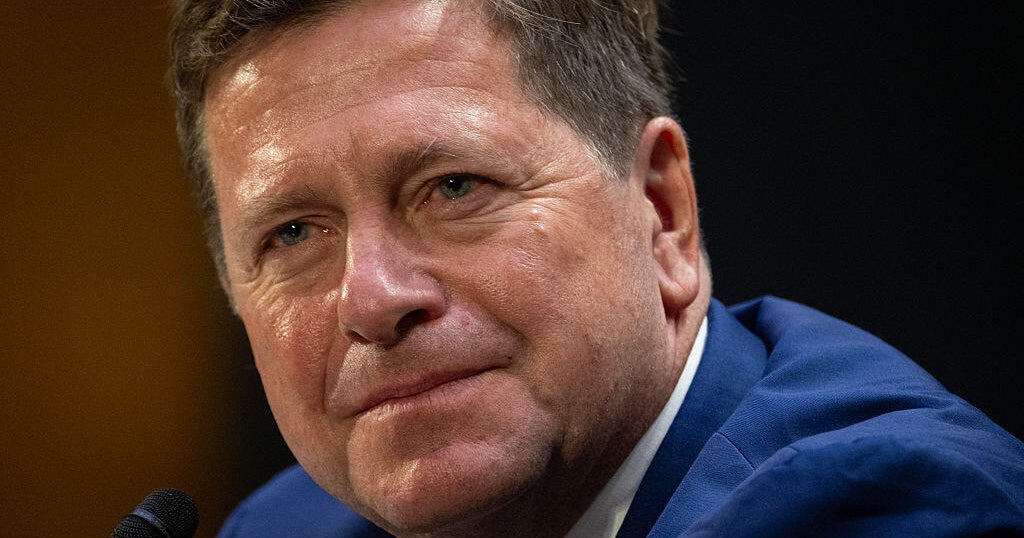
President Donald Trump is likely to name Jay Clayton, the current Director of National Intelligence, as his primary advisor on artificial intelligence, a role referred to as "AI czar." Sources briefed on the matter stated that the administration has discussed having Clayton serve in this new capacity while maintaining his leadership of the nation’s intelligence agencies. A White House official declined to confirm the appointment, stating that personnel decisions are announced directly by the president and characterizing reports as speculation.
The potential appointment follows the president’s announcement last month that he intended to name an advisor to oversee AI policy and establish an "AI force." Clayton, a lawyer who previously led the Securities and Exchange Commission and served as a federal prosecutor in Manhattan, was confirmed as intelligence chief in July 2026. He filled the vacancy left by Tulsi Gabbard, who resigned in May 2026. If appointed, Clayton would be the second person to hold the AI advisor role in this administration, following venture capitalist David Sacks, who stepped down earlier this year but continues to co-chair the President’s Council of Advisors on Science and Technology.
The move comes as the administration and industry leaders debate the extent of AI regulation. During a meeting at the White House on Tuesday, executives from OpenAI, Anthropic, Google, Meta, Nvidia, and SpaceXAI signed voluntary safety standards involving internal controls and external audits. President Trump characterized this agreement as "morally binding" and "almost like a constitution." While some industry leaders like Sam Altman of OpenAI and Dario Amodei of Anthropic have supported pacing development to manage risks, others, including Sacks and Nvidia CEO Jensen Huang, have argued that warnings regarding existential threats from AI are overblown.
The scale of this role involves coordinating policy for a technology sector that includes trillion-dollar companies like Google and Nvidia. The president has referred to the technology as "Super Intelligence" and emphasized its potential economic benefits, suggesting a policy direction focused on maintaining a competitive edge over international rivals.
What happens next depends on the president's final decision, which sources said is expected shortly. Trump told reporters on Tuesday that he planned to name the advisor within three or four days of that meeting. If Clayton is formally designated, he will manage the implementation of the voluntary safety standards signed by tech executives this week. Meanwhile, the Federal Trade Commission continues to investigate several companies, including OpenAI and Anthropic, over potential risks associated with their technology.