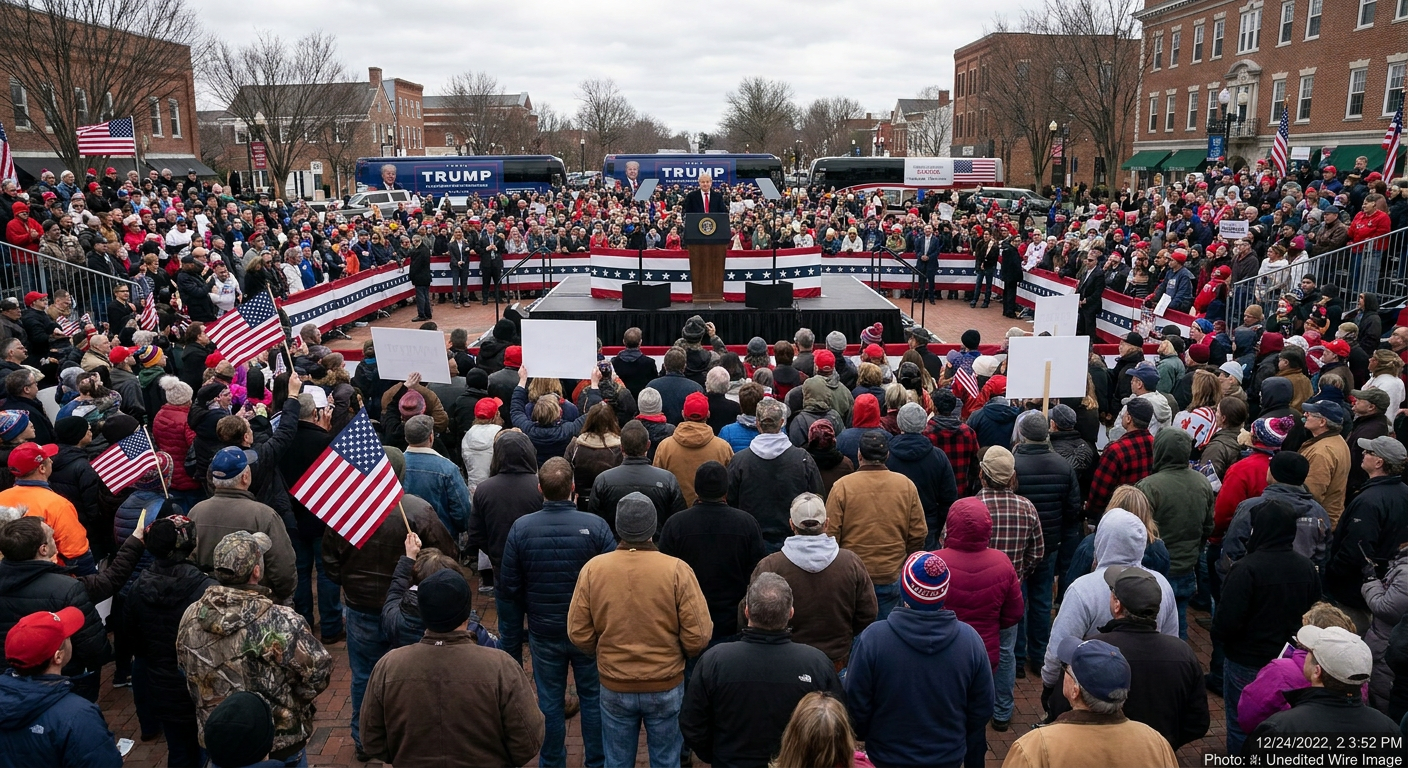
President Donald Trump returned to the United States following a trip to Ireland to begin a nationwide campaign tour for Republican candidates ahead of the November midterm elections. During a Republican convention in Dallas, Texas, last week, Trump pledged to visit dozens of candidates to increase voter enthusiasm. The campaign efforts occur amid a conflict in Iran and high gasoline prices, which have created a challenging political environment for the current administration.
At the Dallas convention, Trump proposed a $5,000 payout to every American if Republicans win in November. NPR political correspondent Mara Liasson reported that the response to the proposal was tepid among some Republicans, who expressed concern regarding the fiscal impact and the authority required to issue such checks. The proposal follows previous unfulfilled pledges, including a $5,000 "DOGE dividend" and a $2,000 tariff rebate. When asked during a press conference in Ireland on Sunday if congressional approval would be necessary for the payments, Trump stated, "I don't know. But it's easy enough if the Republicans win."
Vice President JD Vance also addressed the convention in Dallas, focusing on the administration's record regarding border policy, violent crime rates, and tax reductions. Vance characterized the Democratic Party as the "party of hatred." However, Liasson noted that Vance did not address the war in Iran during his speech. The Republican strategy appears to rely on negative partisanship to motivate voters.
The outcome of the 2026 midterm elections will determine control of Congress and the feasibility of the president's proposed $5,000 payout. For a typical household of four, this proposed payment would total $20,000. However, the plan carries a projected cost of more than $1 trillion, which would be added to the national debt unless balanced by budget cuts or tax increases.
Individual Americans are currently navigating high gasoline prices and economic concerns that have contributed to a 33% approval rating for the president in a recent Quinnipiac poll. The political environment is further complicated for voters by administration policies regarding tariffs, AI safety, and the use of Flock cameras. While Democrats currently report higher enthusiasm, Republican structural advantages—including campaign funding and partisan gerrymandering—could influence which party controls the legislative agenda.
What happens next depends on voter turnout and the resolution of confusion surrounding mail-in ballots, which may affect the total number of votes cast. The midterm elections are scheduled for this coming November. Candidates from both parties are now entering the final fall stretch of campaigning. Results from these contests will set the stage for the 2028 presidential cycle, in which Vice President Vance is expected to be a participant.