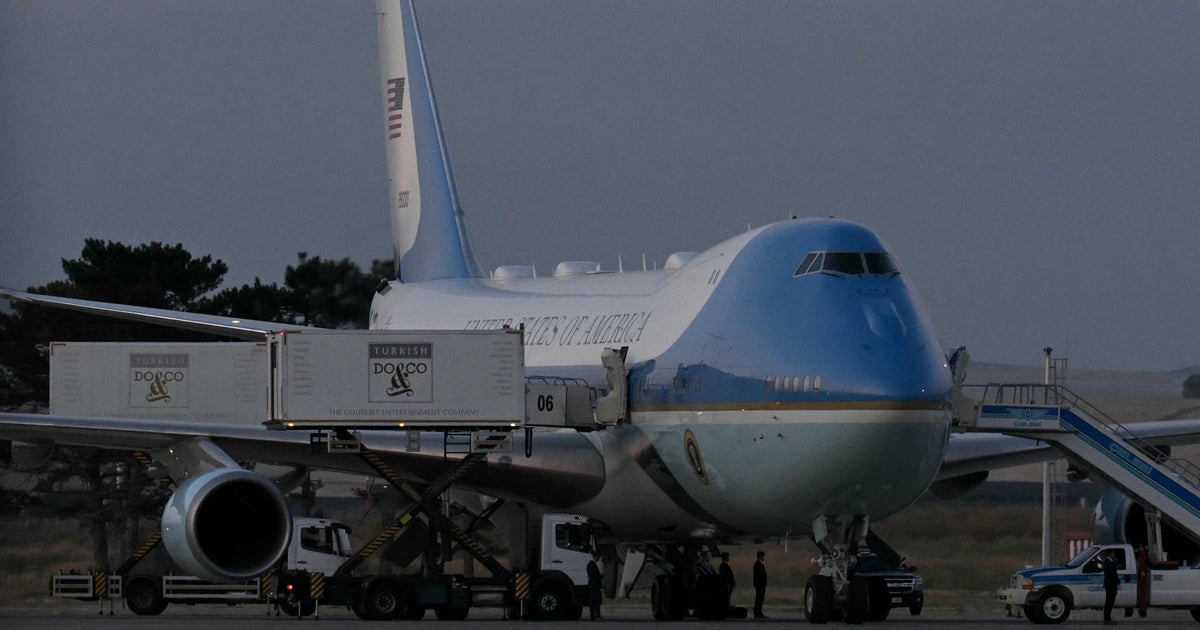
President Trump secretly transferred from his primary aircraft to a different plane last month following intelligence reports of an Iranian missile plot, according to U.S. and Turkish officials. The move occurred on July 8 as the president was departing a NATO summit in Ankara, Turkey. Intelligence services reportedly identified a plan by Iran to fire a surface-to-air missile at the presidential jet, prompting the National Security Council, the Secret Service, and the White House Military Office to coordinate a misdirection effort.
The transfer involved Mr. Trump boarding a Boeing 747 that has served as Air Force One since the 1990s while press cameras were rolling. Shortly after, he surreptitiously moved into a catering truck that transported him to a U.S. Air Force-operated C-32A jet. While the decoy aircraft carried the Secretary of State, the Treasury Secretary, and members of the press corps along the original flight path, the president flew separately to a military base in the United Kingdom before switching back to a newly retrofitted Boeing 747 for the final leg to Washington, D.C.
According to two U.S. officials speaking on the condition of anonymity, the National Security Agency, the CIA, and Turkey's MIT intelligence service picked up streams of information regarding the credible threat within a day of the flight. While there were initial reports of a specific team in Turkey tasked with the strike, subsequent probes did not detect such a team. Mr. Trump addressed the event on Tuesday, stating that the military and Secret Service requested the switch due to threats and characterizing himself as a primary target for Iran.
The scale of the threat is tied to a six-month-long conflict between the United States and Iran, during which officials say there has been a significant ongoing plot to kill the president. For the American public, this event highlights the concrete security measures taken during active international conflicts and the potential for domestic and foreign policy to be disrupted by immediate physical threats to the head of state. The use of such a "ruse" involves multiple federal agencies, including the National Security Council, the Secret Service, the CIA, and the NSA, as well as foreign intelligence partners like Turkey’s MIT, showing the level of international coordination required to manage presidential travel during wartime.
The knock-on effects include increased scrutiny of presidential security and the protocols for protecting non-combatants, such as reporters and administrative staff, who are unknowingly used in misdirection efforts. This event sets a precedent for how the White House Military Office may handle future travel in high-threat environments as the U.S.-Iran war continues. Moving forward, lawmakers have begun demanding more answers regarding the safety of the staff and press involved. While the operation occurred on July 8, the details only became public this week following reports from major news outlets, and no specific future dates for related congressional hearings have been confirmed.