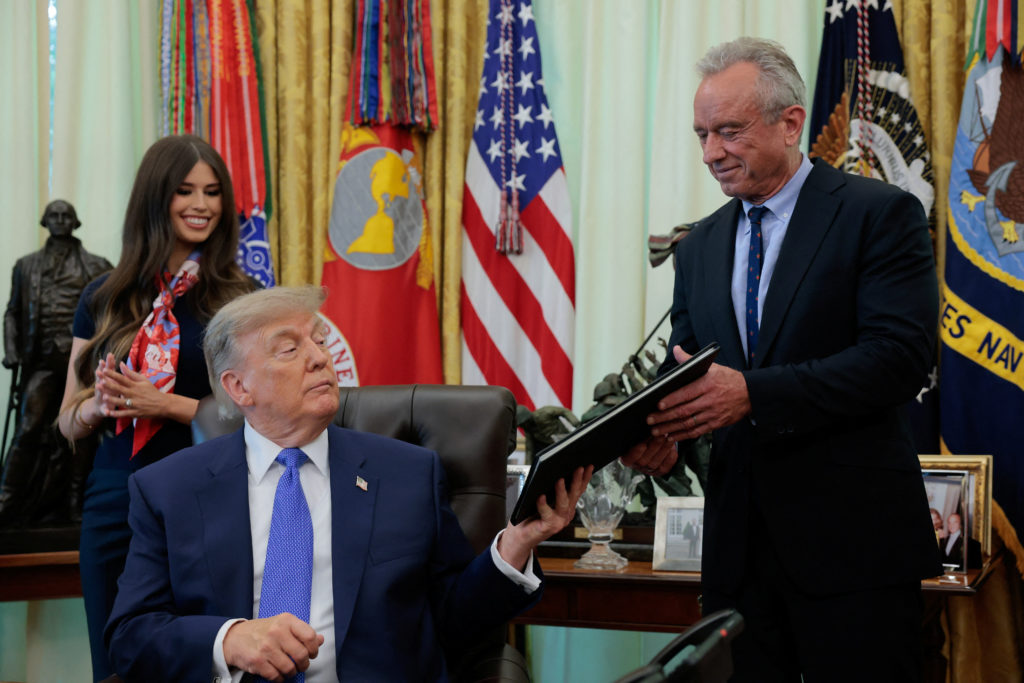
President Donald Trump signed an executive order on Monday directed at changing childhood vaccination protocols by calling for the separation of combination shots into individual injections. The order specifically identifies the measles, mumps, and rubella (MMR) vaccine and states that appointments should be spaced out whenever possible. White House spokesman Kush Desai stated the effort is intended to provide parents with more options on timing and frequency to increase overall vaccination rates.
The three-in-one MMR approach has been the standard in the U.S. since the 1970s, and there are currently no individual vaccines for these viruses licensed by the Food and Drug Administration (FDA). President Trump has previously expressed the view that U.S. children receive too many vaccines and should receive smaller doses over a longer period. Last year, he tasked Health Secretary Robert F. Kennedy Jr. with reviewing ways to reduce the number of recommended vaccinations.
The order instructs federal officials to develop plans for unbundling these shots within 90 days. However, pharmaceutical companies Merck and GSK, which supply U.S. childhood vaccines, both stated they stand by the safety of their current products and noted there is no published evidence showing a benefit to separating the MMR vaccine. Experts cited in the report note that the executive order is not legally binding on drugmakers or states, which hold the legal authority to set school vaccination requirements.
The scale of the shift would require drugmakers to build new manufacturing facilities to produce millions of additional individual doses, a process industry experts say typically takes about five years. Former FDA vaccine chief Dr. Jesse Goodman noted that companies would likely need to spend tens of millions of dollars on new clinical studies to prove individual shots produce the same immune response as current versions. Because the FDA must review and license each unbundled vaccine separately, the transition would likely take years to complete.
Beyond manufacturing, the policy could set a precedent for how the federal government influences medical recommendations, though it currently only advises states to update their laws. The knock-on effects could include a decline in vaccination rates if the added logistical burden causes parents to stop making appointments. The next steps involve federal agencies presenting their 90-day implementation plans, though it remains unknown if any drugmaker will voluntarily seek FDA approval for the standalone shots.