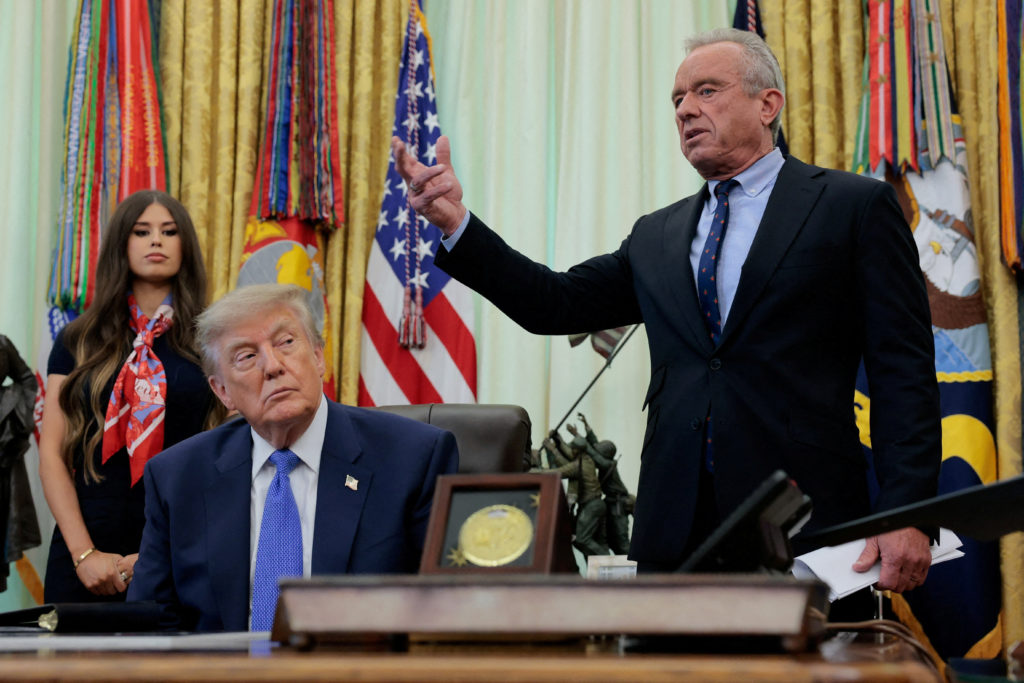
President Donald Trump signed an executive order on Monday calling for a revision of federal childhood vaccine recommendations. The order advocates for spacing out pediatric vaccinations over multiple medical visits rather than administering combined shots, according to a White House fact sheet.
The action follows a December order in which the president directed the Department of Health and Human Services (HHS) to review how other nations handle vaccine guidance. Following that review, HHS attempted to reduce the number of recommended vaccines for children, but a court subsequently blocked that change.
According to the fact sheet, the new order recommends that the measles, mumps, and rubella (MMR) vaccine be separated into three individual shots given at different times. In the Oval Office on Monday, the president also suggested that one-year-olds should have their vaccinations spread across five separate visits. Health Secretary Robert F. Kennedy Jr. stated his department is also conducting research into environmental factors related to autism.
Public health experts cited in the report stated that spacing out vaccines increases the risk that children will remain unprotected against preventable diseases for longer periods. This comes as the U.S. faces a measles outbreak that experts say threatens the nation's measles elimination status. While the federal government sets these recommendations, states hold the legal authority to set vaccine mandates for schools. The executive order advises states to consider changing their own laws to align with these new federal recommendations, which could eventually change the legal requirements for millions of students entering daycare or K-12 schools.
The knock-on effects could include changes to how pharmaceutical companies manufacture vaccines if they seek to meet a new demand for single-antigen shots. It also sets a precedent for executive intervention in the standard immunization schedule, which is typically handled by health agencies through clinical study. What happens next depends on the response from HHS and state legislatures. Health Secretary Kennedy said his department will release its findings on autism research "as soon as they are ready," and the administration continues to focus on health policy ahead of the November elections.