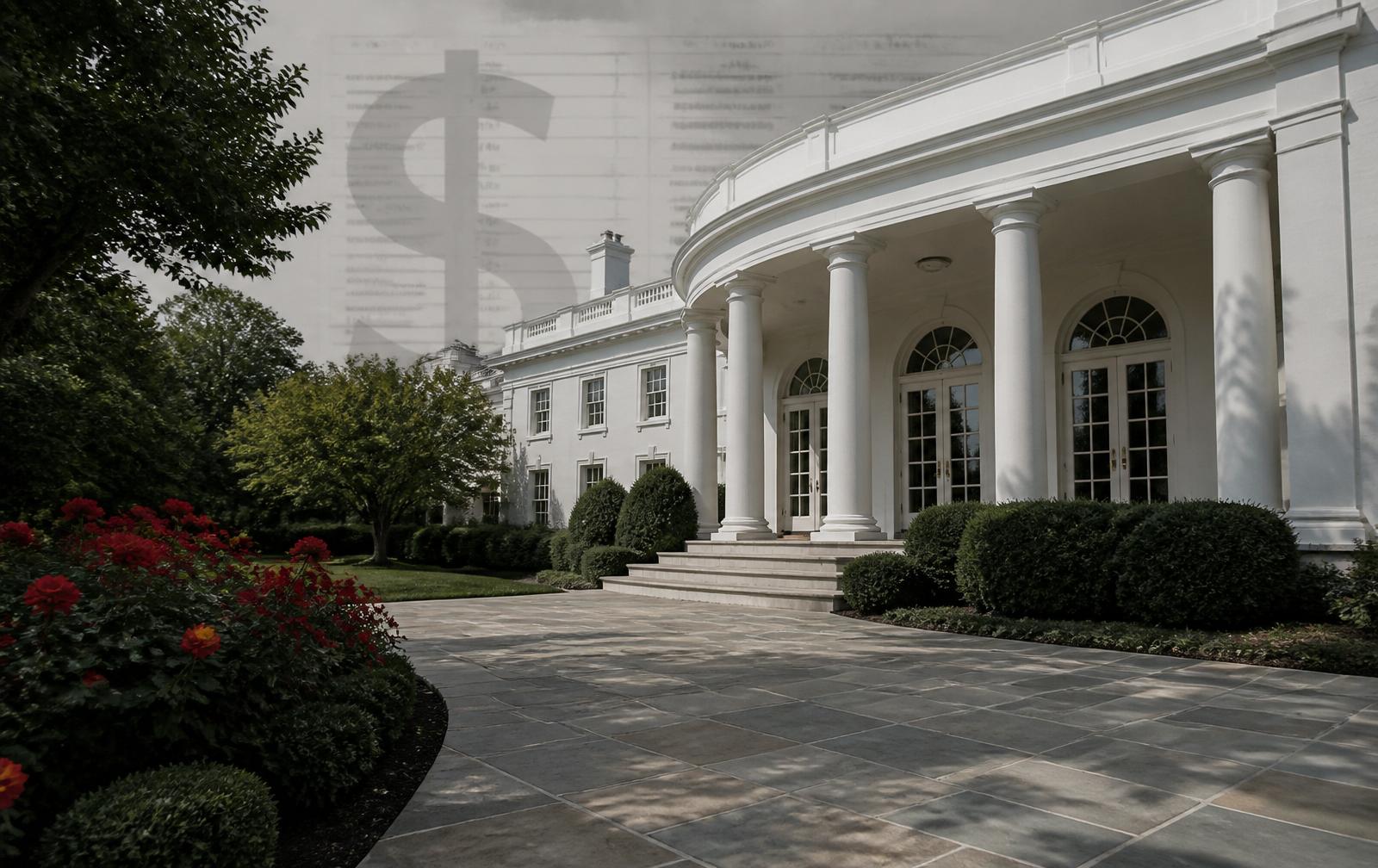
Recent renovations on the White House grounds — including the paving of the Rose Garden lawn and planning for a new East Wing ballroom — have been financed largely through private donations routed through the Trust for the National Mall and the White House Historical Association. Both are registered 501(c)(3) nonprofits, and both publish annual reports and IRS Form 990s.
Those filings name donors, but only in giving tiers such as "$1,000,000 and above," "$500,000–$999,999," and so on. They do not disclose the exact amount any individual donor gave, and they do not tie donors to specific projects. The Trust for the National Mall's most recent annual report lists corporate and individual donors in these tiered categories, including major banks, energy companies, defense contractors, and private family foundations. The White House and the Trust have not released a project-level donor breakdown for the Rose Garden work or the planned ballroom.
The Internal Revenue Service requires 501(c)(3) organizations to disclose contributions above certain thresholds on Schedule B of Form 990, but the names and addresses of those donors are redacted in the public version of the form. The unredacted Schedule B is filed with the IRS and, in some cases, with state charity regulators, but is not released to the public.
For readers who want to inspect the primary sources directly, the Trust's annual reports are posted on its website, and every year of its Form 990 is available through ProPublica's Nonprofit Explorer. The White House Historical Association publishes its own annual report and 990. Neither organization is required to disclose which donor paid for which project, and neither has volunteered that detail.