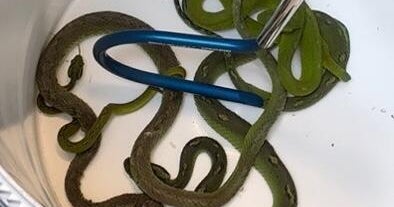
U.S. Customs and Border Protection (CBP) officers discovered 69 reptiles hidden in a vehicle during a search at the San Ysidro port of entry earlier this month. The discovery occurred after 66-year-old Georgina Bribiesca Chavez of Tijuana, Mexico, was taken into custody on an outstanding arrest warrant while attempting to cross the border from the U.S. into Mexico on Aug. 10. According to the U.S. Attorney's Office for the Southern District of California, the animals were found the following day in a hidden compartment behind a rear seat.
The investigation into Chavez and her alleged partner, 28-year-old Salvador Pelayo, began in 2023 when the U.S. Fish and Wildlife Service launched an undercover operation. Investigators allege the pair engaged in a yearslong scheme to smuggle protected and exotic reptiles across the border for sale. Pelayo was arrested in July on similar federal charges. Both defendants have entered pleas of not guilty during their respective court appearances.
During the vehicle search on Aug. 11, officers noticed movement inside pillowcases that had been tied and taped shut. The materials were transported to the San Diego Zoo, where staff identified 60 abronia lizards, four venomous yellow-blotched palm pit vipers, three caimans, one baby crocodile, and one indigo snake. Prosecutors stated that Chavez did not inform officers about the live animals during her arrest, and the three caimans died before they could receive medical care. The remaining reptiles were reported to be in stable condition at the zoo.
Court documents allege that the defendants conducted multiple undercover sales of protected turtles and utilized shipping centers in the San Diego area to distribute wildlife. The U.S. Attorney's Office claims the operation generated tens of thousands of dollars in profit. Several of the recovered species are protected under international agreements governing endangered or threatened wildlife.
For the public and those involved in the legal reptile trade, the case highlights the day-to-day operations of U.S. Customs and Border Protection (CBP) and the U.S. Fish and Wildlife Service in monitoring international wildlife transport. A person in this industry would notice that federal investigators used undercover sales and the monitoring of local shipping centers to build their case. The discovery of venomous pit vipers and other reptiles in a standard passenger vehicle underscores the potential safety risks to border personnel who conduct physical searches of seized property.
The knock-on effects of this case involve the enforcement of international treaties designed to protect endangered and threatened species. By prosecuting the alleged use of commercial shipping centers for illegal wildlife distribution, federal authorities are setting a precedent for how these facilities are monitored. The next steps in the legal process include further court proceedings for Chavez and Pelayo following their not guilty pleas; however, specific trial dates or deadlines were not reported in the available source material.