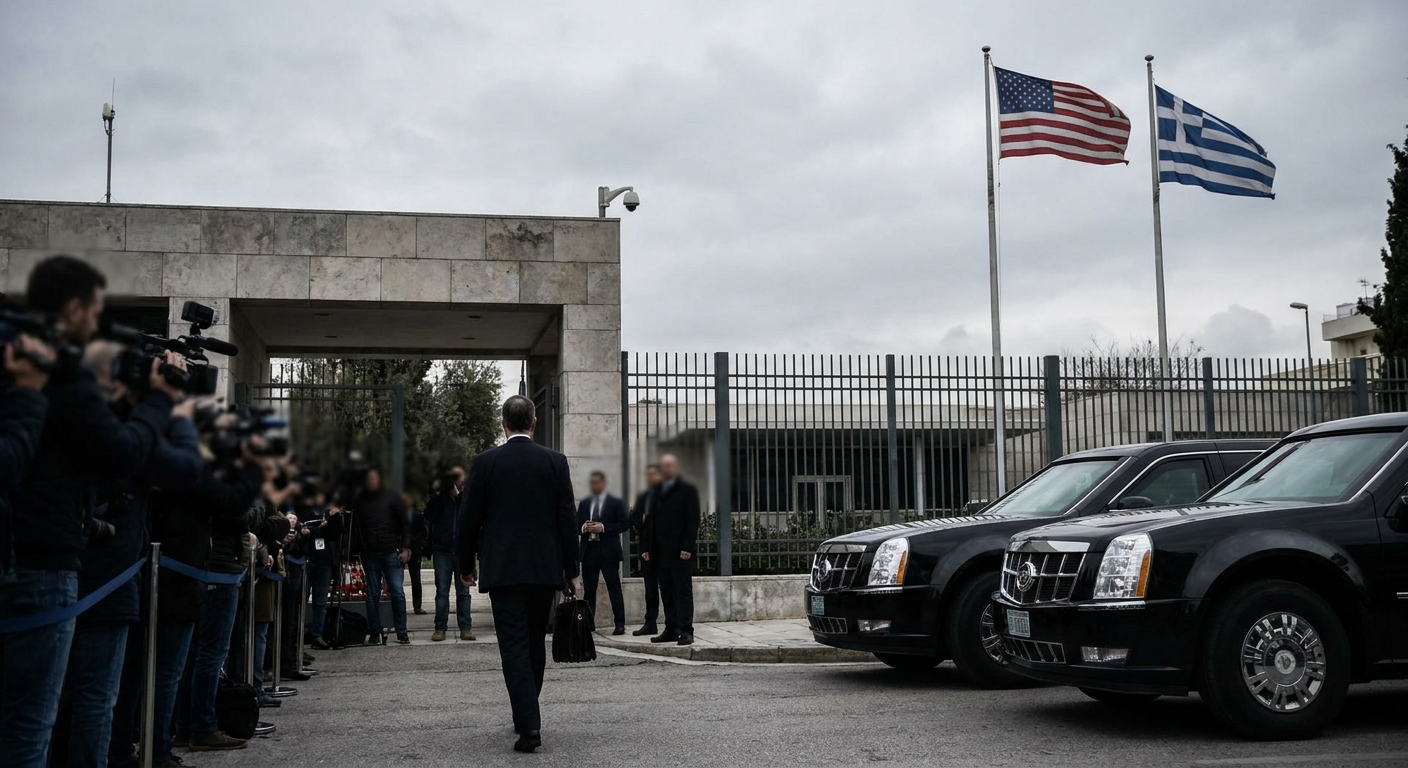
Kimberly Guilfoyle resigned this week as the U.S. ambassador to Greece following reports that she sought financial assistance from a political donor prior to her appointment. The resignation occurred after the Wall Street Journal reported that Guilfoyle asked a donor to pay her credit card bill. While NPR has not independently confirmed the reporting, the departure has prompted discussions regarding the current vacancy rates and staffing practices within the U.S. State Department.
James B. Story, a career diplomat and former U.S. Ambassador to Venezuela who retired in May, stated that the reported request to pay a credit card bill would be a violation of standard diplomatic gift restrictions. Story noted that ambassadors and Foreign Service officers are subject to intense scrutiny regarding the acceptance of gifts, particularly from individuals seeking to do business with the U.S. government.
The State Department is currently operating with nearly 50% of U.S. ambassadorships vacant, including positions in Russia, Ukraine, and Germany. Additionally, 80% of the ambassadors currently in the field are political appointees rather than career Foreign Service officers. Story characterized the current staffing levels as "extreme," attributing the vacancies to a bipartisan trend of the Senate holding up nominations for ambassadors and judges.
The shift toward political appointees affects the depth of regional expertise within the diplomatic corps. Career diplomats typically spend decades learning specific languages, histories, and bilateral complexities. The current 80% political appointee rate represents a departure from the traditional mix of career and political staff. Furthermore, the July consolidation of the U.S. Agency for International Development (USAID) into the State Department has shifted the management of foreign assistance programs, such as HIV medication distribution, from development specialists to State Department staff.
The absence of confirmed ambassadors in the Middle East and Persian Gulf occurs during a regional conflict involving Iran. These vacancies may reduce the resonance of U.S. messages delivered to governments in Qatar, Kuwait, and Iraq. While the State Department is currently recruiting new personnel to address staffing shortages, there is no reported timeline for when the current vacancies will be filled or when the Senate might move to confirm pending nominees.