The Plain Record

Neutral daily news — clear headlines, complete facts.

Business

U.S. and Canada Conduct Talks to Avert 50% Tariffs on $20 Billion in Goods

The U.S. and Canada are negotiating to avoid 50% tariffs on $20 billion in goods as a Wednesday deadline approaches.

Published August 18, 2026 at 8:05 AM EDT

The short answer

The U.S. and Canada are negotiating to avoid 50% tariffs on $20 billion in goods as a Wednesday deadline approaches. The United States and Canada are engaged in late-stage negotiations to prevent the implementation of 50% tariffs on $20 billion worth of Canadian goods.

U.S. and Canada Conduct Talks to Avert 50% Tariffs on $20 Billion in Goods

The Facts

Who
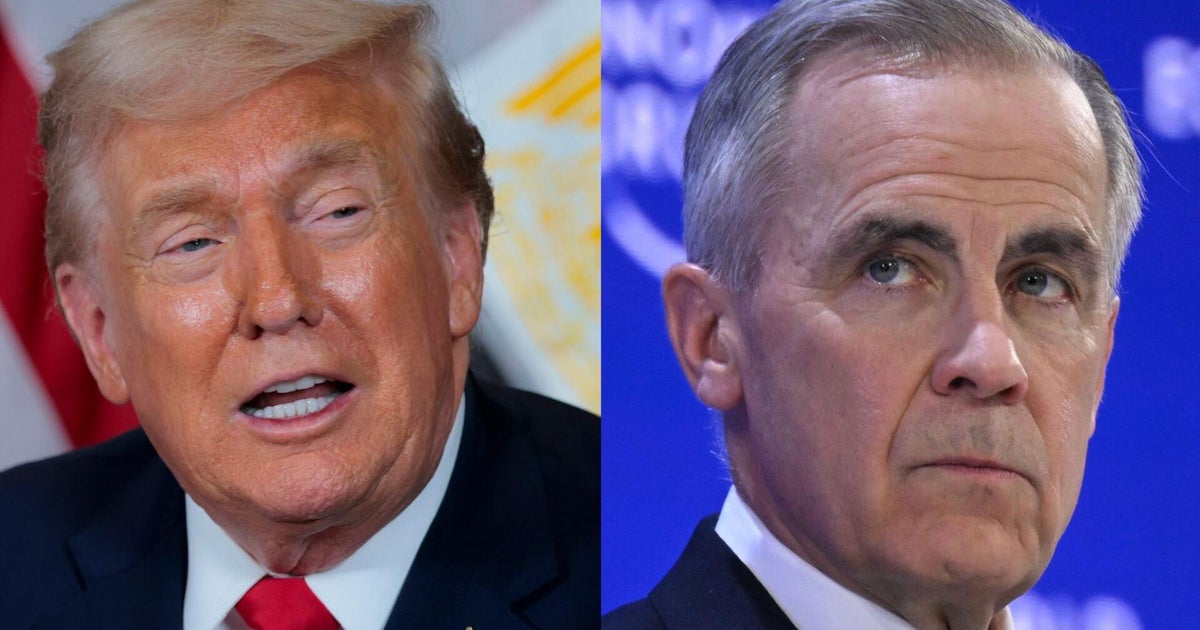
President Trump, Canadian Prime Minister Mark Carney, U.S. Trade Representative Jamieson Greer, and Canadian Minister Dominic LeBlanc.
What
Negotiations to prevent 50% tariffs on Canadian goods.
When
Wednesday at 12:01 a.m. deadline
Where
Washington and Ottawa
Why
The U.S. is seeking trade concessions and military equipment purchases using Section 338 of the Tariff Act of 1930.

Timeline of what happened

Key dates and decisions, in the order they occurred.

  1. 1930

    Congress passes the Tariff Act (Smoot-Hawley)

  2. February 1, 2026

    Supreme Court strikes down prior tariffs

    Supreme Court strikes down double-digit import taxes from the previous year.

  3. July 21, 2026

    Petition to expel U.S. ambassador begins in Canada

  4. August 17, 2026

    Canadian officials and U.S. Trade Representative meet in last-minute talks

The United States and Canada are engaged in late-stage negotiations to prevent the implementation of 50% tariffs on $20 billion worth of Canadian goods. The proposed levies, scheduled to take effect at 12:01 a.m. Wednesday, target a variety of products ranging from hockey sticks to medical tongue depressors.

The tension follows a series of trade actions by the Trump administration, which recently invoked Section 338 of the Tariff Act of 1930. This Depression-era provision allows the president to impose tariffs of up to 50% on countries deemed to be discriminating against U.S. businesses. President Trump has stated that Canada discriminates against American exports of automobiles, alcohol, and cheese, and cited Canadian retaliatory tariffs as a reason for the new measures.

Canadian Prime Minister Mark Carney described the ongoing talks as "intense and delicate" during a statement on Monday. Meanwhile, U.S. Trade Representative Jamieson Greer indicated that while the U.S. seeks a conciliatory approach from Canada, it will take action if countries retaliate against U.S. trade policies. The two nations are also in the process of renegotiating the U.S.-Mexico-Canada Agreement (USMCA).

The scale of the economic relationship involves nearly 330,000 people and $2 billion worth of goods crossing the U.S.-Canada border every day. Because 72% of Canada’s exports are directed to the U.S., a prolonged trade conflict could disrupt supply chains for small-business owners and manufacturers who rely on cross-border materials. U.S. trade negotiators are reportedly using the tariff threat as leverage to secure concessions, including increased Canadian purchases of U.S. military equipment like F-35 fighters and greater access to critical minerals to reduce reliance on supplies from China.

The outcome of these talks will set a precedent for how the U.S. utilizes Section 338, a legal tool that does not require a prior investigation or have a set expiration date. If a truce is not reached by the midnight deadline, Canada may implement its own retaliatory measures, potentially escalating into a broader trade war. A petition in Canada to expel the U.S. ambassador has already gained 218,000 signatures, indicating significant public pressure on the Carney government to resist concessions that could be perceived as signs of weakness.

Summaries are written by The Plain Record to state the facts of a story plainly and without political slant. See our editorial standards, or report a correction.

← Back to the front page

Questions readers ask

What happened: U.S. and Canada Conduct Talks to Avert 50% Tariffs on $20 Billion in Goods?

The United States and Canada are engaged in late-stage negotiations to prevent the implementation of 50% tariffs on $20 billion worth of Canadian goods. The proposed levies, scheduled to take effect at 12:01 a.m. Wednesday, target a variety of products ranging from hockey sticks to medical tongue depressors.

Who is involved?

President Trump, Canadian Prime Minister Mark Carney, U.S. Trade Representative Jamieson Greer, and Canadian Minister Dominic LeBlanc.

When did this happen?

Wednesday at 12:01 a.m. deadline

Where did this happen?

Washington and Ottawa

Why does this matter?

The U.S. is seeking trade concessions and military equipment purchases using Section 338 of the Tariff Act of 1930.