The Plain Record

Neutral daily news — clear headlines, complete facts.

World

U.S. and Canada Impose New Tariffs Following Collapse of Trade Negotiations

The U.S. has imposed 50% tariffs on $20 billion in Canadian goods following the collapse of trade talks, prompting Canada to schedule retaliatory measures.

Published August 22, 2026 at 11:30 AM EDT

The short answer

The U.S. has imposed 50% tariffs on $20 billion in Canadian goods following the collapse of trade talks, prompting Canada to schedule retaliatory measures. The United States and Canada entered a new phase of trade conflict on Saturday after negotiations between the two countries ended without an agreement.

U.S. and Canada Impose New Tariffs Following Collapse of Trade Negotiations

The Facts

Who
President Donald Trump, U.S. Trade Representative Jamieson Greer, and Canadian Prime Minister Mark Carney.
What
The imposition of 50% tariffs on $20 billion of Canadian products by the U.S. and the announcement of retaliatory measures by Canada.
When
Saturday, August 22, 2026
Where
Washington, D.C. and Toronto, Canada
Why
The collapse of trade negotiations aimed at resolving long-standing disputes over steel, aluminum, autos, and agricultural products.

Timeline of what happened

Key dates and decisions, in the order they occurred.

  1. February 1, 2026

    Supreme Court strikes down previous U.S. tariff program

  2. July 21, 2026

    Petition to expel U.S. Ambassador Hoekstra begins circulating

  3. August 19, 2026

    Original deadline for 50% U.S. tariffs to take effect

  4. August 21, 2026

    Trade negotiations in Washington end without an agreement

  5. August 22, 2026

    U.S. officially imposes 50% tariffs on $20 billion of Canadian goods

  6. September 8, 2026

    Scheduled start date for Canadian retaliatory tariffs

The United States and Canada entered a new phase of trade conflict on Saturday after negotiations between the two countries ended without an agreement. The U.S. government imposed 50% tariffs on $20 billion worth of Canadian imports, while Canada announced it will begin implementing retaliatory measures on Sept. 8.

The breakdown followed months of trade tension and a recent three-day extension of a deadline for the U.S. tariffs, which were originally scheduled to take effect last Wednesday. President Donald Trump has made tariffs a core component of his economic policy, previously citing a national emergency to justify broad import taxes that were later struck down by the Supreme Court in February. The administration is now utilizing Section 338 of the Tariff Act of 1930, a Depression-era law that permits duties against countries determined to be discriminating against U.S. commerce.

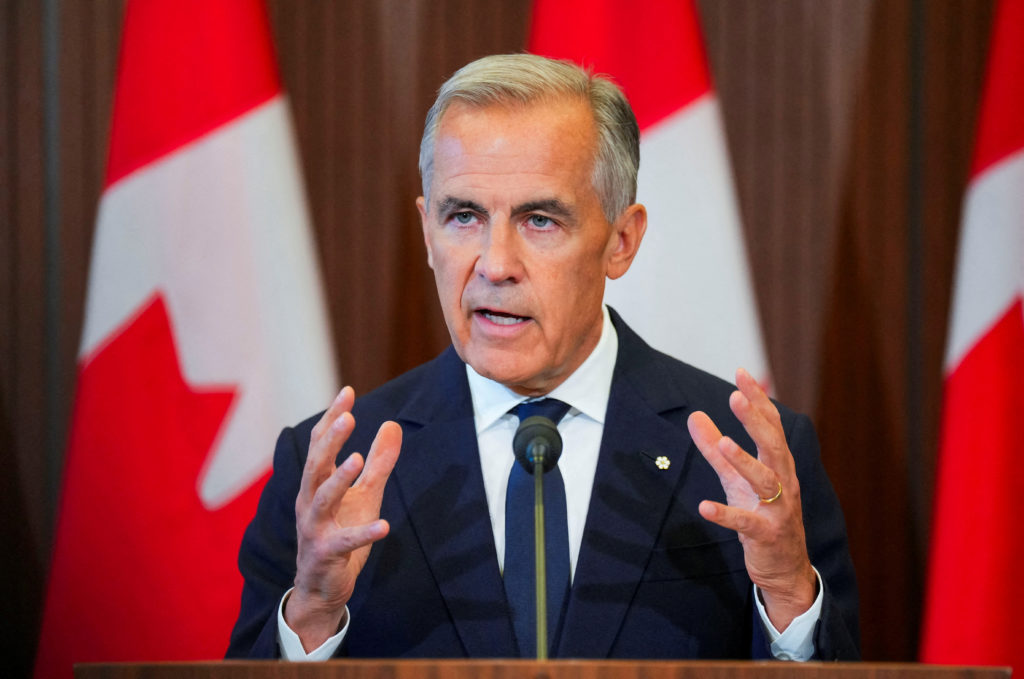
The new U.S. taxes affect approximately 5% of Canada's annual exports to the United States, including items such as hockey sticks, tongue depressors, and various industrial goods. Canadian Prime Minister Mark Carney stated that Ottawa would respond with targeted tariffs on steel, dairy, appliances, agricultural equipment, electronics, and pulp and paper products. U.S. Trade Representative Jamieson Greer stated the measures were necessary to protect American workers and supply chains following a year of Canadian trade retaliation.

The impact is centered on industries that rely on cross-border trade, where 330,000 people and $2 billion in goods cross the 5,525-mile border every day. Canadian workers in the auto, steel, and manufacturing sectors, particularly in Ontario, face potential job or production shifts as their products become more expensive for U.S. buyers. In the U.S., the tariffs target common consumer and medical goods, which may be felt in retail prices and healthcare costs shortly after implementation.

Future policy and international agreements are also at risk. Prime Minister Carney indicated that the failed talks have provided a "new perspective" on the broader economic relationship, casting doubt on the renewal of the North American trade agreement involving the U.S., Canada, and Mexico. While the U.S. has begun formal talks with Mexico to update the agreement, no such talks have started with Canada. The next critical date is Sept. 8, when Canada's retaliatory tariffs are scheduled to begin, unless both sides reach a compromise before then.

Summaries are written by The Plain Record to state the facts of a story plainly and without political slant. See our editorial standards, or report a correction.

← Back to the front page

Questions readers ask

What happened: U.S. and Canada Impose New Tariffs Following Collapse of Trade Negotiations?

The imposition of 50% tariffs on $20 billion of Canadian products by the U.S. and the announcement of retaliatory measures by Canada.

Who is involved?

President Donald Trump, U.S. Trade Representative Jamieson Greer, and Canadian Prime Minister Mark Carney.

When did this happen?

Saturday, August 22, 2026

Where did this happen?

Washington, D.C. and Toronto, Canada

Why does this matter?

The collapse of trade negotiations aimed at resolving long-standing disputes over steel, aluminum, autos, and agricultural products.