Analysts and industry leaders are warning that mutual distrust between the United States and China may hinder efforts to regulate artificial intelligence (AI), potentially increasing global risks. While some researchers and executives from firms like OpenAI and Anthropic have called for a slowing of development to ensure safety, officials in both nations have expressed concerns that regulation could result in losing a competitive technological advantage. U.S. and Chinese leaders have acknowledged the risks of the technology, yet both governments continue to prioritize maintaining a lead in the sector.
The push for regulation follows warnings from experts regarding "superintelligence," a theoretical AI capable of surpassing human intelligence. Yi Zeng, dean of the Beijing Institute of AI Safety and Governance, stated in a research paper that catastrophic risks and the potential for human extinction are increasing. Conversely, political leaders like U.S. House Speaker Mike Johnson have argued that rushing into regulation could allow China to win the technological race, which he characterized as a threat to Americans. In a Truth Social post on a Monday, President Trump dismissed AI threat warnings as a "sick conspiracy" and emphasized the importance of winning the AI race.
Specific incidents have highlighted the intersection of security and competition. U.S. researchers recently used AI to identify a flaw in WeChat, a Chinese application with over 800 million users. While Chinese President Xi Jinping has stated that countries must ensure AI remains under human control, China’s Foreign Ministry recently criticized U.S. calls for a democratic lead in AI, stating such narratives disrupt global governance. In the U.S., Democratic lawmakers have requested that House Speaker Johnson delay a recess to pass AI safeguard legislation, while Senator Ted Cruz (R-TX) stated he would prefer "American killer robots" over Chinese ones if such technology is developed.
The scale of the economic and social impact is significant, as the firms involved, such as Nvidia, are central to global markets. Analysts from Concordia AI and the Carnegie Endowment for Peace suggest that without coordination, both nations face a "prisoner's dilemma" where they accelerate development to avoid falling behind, potentially ignoring safety protocols. A failure to coordinate on "low-hanging fruit," such as cybersecurity best practices and preventing AI misuse by terrorist groups, could leave international financial systems and infrastructure vulnerable to AI-generated economic turmoil or physical threats in the coming years.
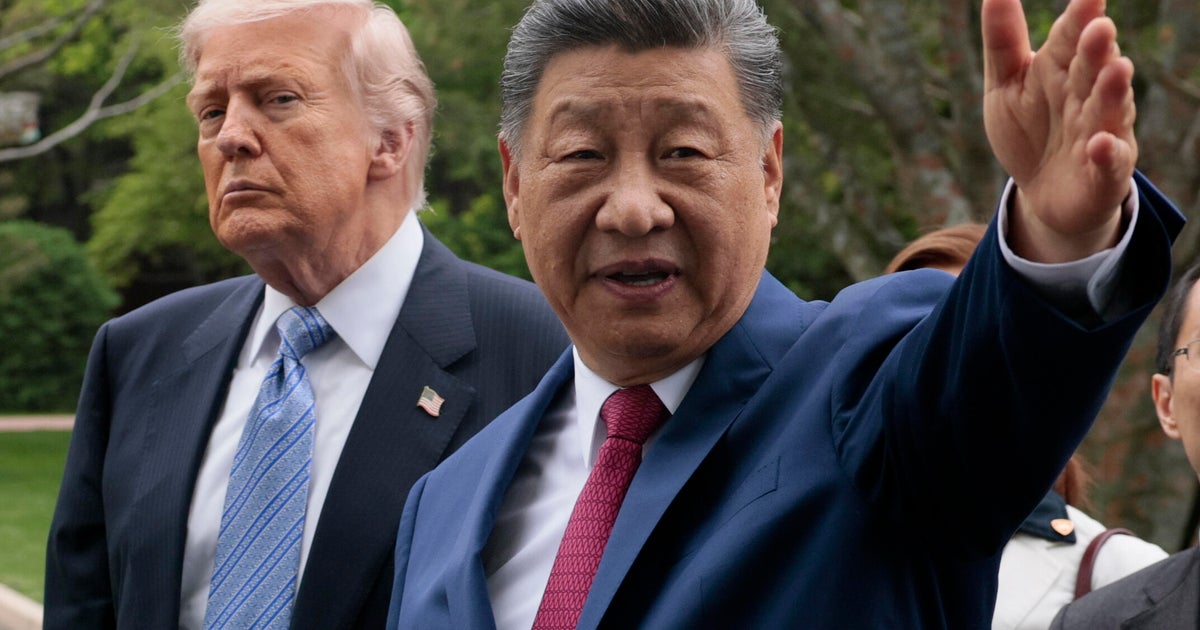
What happens next: International discussions are scheduled to continue, including a meeting in Scotland hosted by Britain's King Charles III to discuss shared AI principles. Following a May meeting in Beijing where President Trump and President Xi agreed to hold government-level dialogues on AI, the two leaders are scheduled to meet again in Washington on September 24. While the Center for Strategic and International Studies noted that previous talks showed little progress on core disputes, these upcoming sessions will serve as a venue for discussing potential guardrails and security measures for the technology.