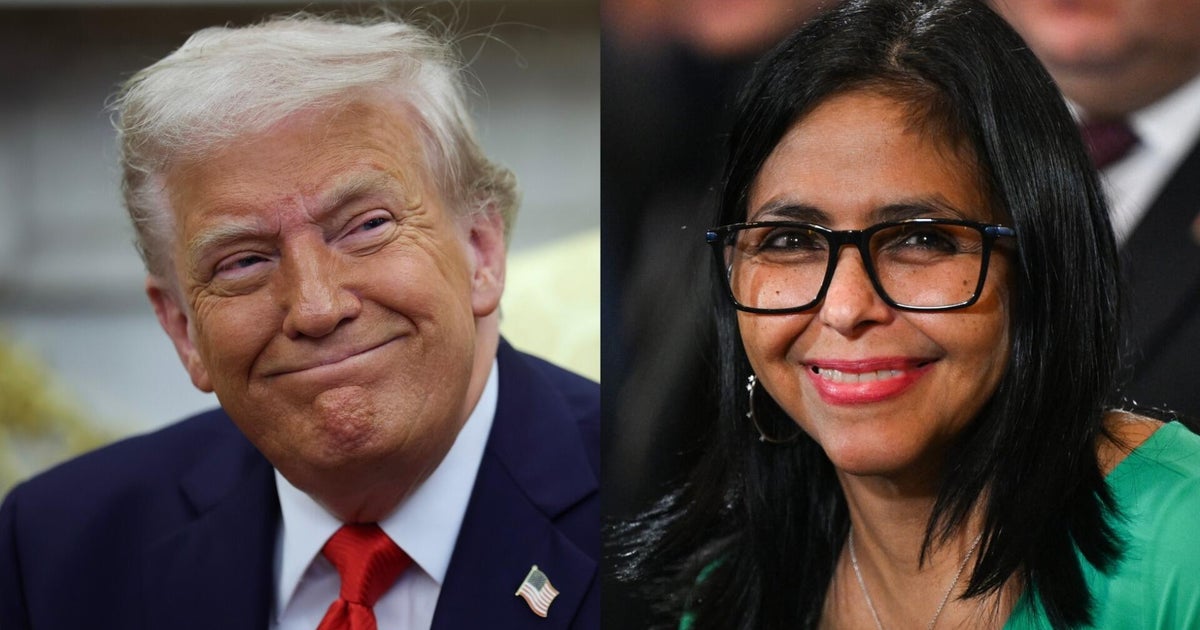
President Trump announced on Friday a U.S. deal with Venezuela to develop 17 strategic oil fields, stating the agreement will lead to lower gasoline prices for American consumers. The deal involves access to proven reserves of 65 billion barrels of oil. Venezuelan President Delcy Rodríguez reported on Saturday that the country granted a 100-year concession for these operations, while a U.S. official told CBS News that the U.S. government will control 55% of the venture through equity and the right to obtain oil at cost.
The agreement follows the removal of former Venezuelan President Nicolás Maduro from office approximately eight months ago and a U.S. military intervention in the country in January. While the U.S. Energy Information Administration reports Venezuela holds the world’s largest proven oil reserves at over 300 billion barrels, the nation's oil sector has faced years of underinvestment. According to OPEC data, production rose to 1.1 million barrels a day in the second quarter of 2026, up from 941,000 barrels a day in 2025.
Energy analysts and firms have expressed varied views on how quickly the deal will impact the market. Global Energy Monitor noted that new oil fields typically take 15 years to begin production, while Hilltower Resource Advisors CEO Tracy Shuchart estimated it could take between five and 15 years for Venezuelan oil to influence domestic U.S. prices. Analysts from UBS cited potential legal hurdles, noting that companies like ExxonMobil and ConocoPhillips are still seeking compensation for previous asset seizures by the Venezuelan government.
The scale of the project involves developing 17 fields containing 65 billion barrels of oil, which is more than the total U.S. reserves of 50 billion barrels. However, experts estimate that at least $100 billion is required just to restore existing Venezuelan fields to full capacity. For a typical driver, the timing of any price reduction remains uncertain, as Venezuelan heavy crude is more difficult for U.S. refineries to process than the light crude they typically use, and production increases have so far been limited to 100,000 to 200,000 barrels per day since the change in Venezuelan leadership.
The long-term effects depend on the ability of the joint venture to navigate geopolitical risks and establish a legal framework that attracts private oil companies, most of which exited Venezuela years ago. Any significant increase in output would require massive infrastructure investment that has not yet begun. President Trump is scheduled to meet with U.S. energy refiners and distributors on Tuesday to discuss ways to increase refining capacity and implement the deal. As of August 31, 2026, retail gas prices remain influenced by more immediate factors, such as the conflict with Iran, which saw U.S. benchmark oil rise to $85.78 a barrel following military action in the Strait of Hormuz.
What happens next: President Trump's meeting with industry leaders is set for Tuesday. The private sector's level of participation remains to be seen, as firms weigh the 100-year concession against the history of nationalization in the region and outstanding legal judgments. No specific date has been set for when the first barrels from the 17 strategic fields will reach U.S. refineries.