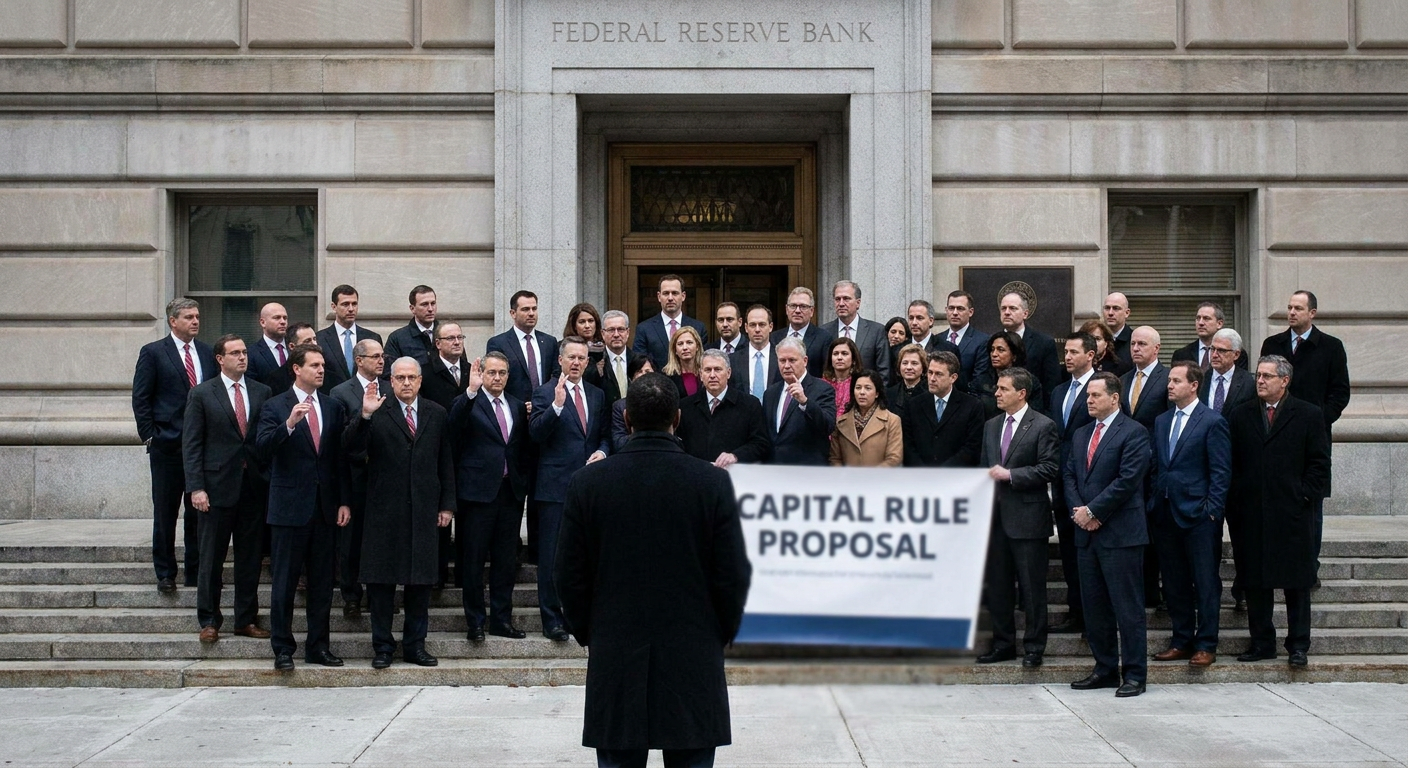
Major U.S. banks are engaged in a public dispute over a proposed Federal Reserve rule change that would alter capital requirements for the nation's largest financial institutions. While JPMorgan Chase and Bank of America have urged the Federal Reserve to reverse a specific adjustment to the "GSIB surcharge," Goldman Sachs and Morgan Stanley are advocating for its swift implementation.
The disagreement centers on the Global Systemically Important Bank (GSIB) surcharge, a capital buffer the Federal Reserve established after the 2007-2009 financial crisis. In March, the central bank proposed a revision to make this surcharge more risk-sensitive by changing how it measures short-term wholesale funding, such as repurchase agreements and commercial paper. Regulators have historically identified these funding sources as prone to instability during periods of market stress.
The proposed modification would scrap a ratio-based measurement in favor of an absolute measurement of short-term wholesale funding exposure. Public documents and sources familiar with the matter indicate that this shift would disproportionately benefit banks more reliant on such funding. JPMorgan and Bank of America, which rely more on deposits, argue the change would incentivize trading over lending. Conversely, Goldman Sachs and Morgan Stanley state the change would better reflect actual risks and could improve liquidity in the Treasury market.
An ordinary person or small-business owner might notice these effects through changes in loan availability or interest rates. JPMorgan's business banking chief, Stevie Baron, stated in a blog post that the current proposal could incentivize trading activity over lending to small businesses and customers. Morgan Stanley argued the opposite, suggesting that reduced capital requirements for government bond dealing could lower lending rates by boosting Treasury market liquidity. The outcome will determine which types of financial activities—traditional lending or market trading—are most heavily capitalized by the nation's dominant financial firms.
The disagreement among the banks complicates the Federal Reserve’s timeline as it attempts to finalize the rules. Fed Vice Chair for Supervision Michelle Bowman has signaled an intent to complete the overhaul by the end of the year. This deadline is significant because Democrats are expected to gain control of the House of Representatives next year, which sources indicate could lead to increased oversight of regulators appointed during the Trump administration. If the rule is not finalized by year-end, the policy could face further delays or modifications under new legislative scrutiny.
What happens next: Federal Reserve officials are currently reviewing public comments and meeting with bank executives. Memos show JPMorgan and Morgan Stanley have met with Fed officials at least four times each since March. While a specific date for a final vote has not been set, officials have indicated a goal to wrap up the rule by the end of 2026. The next major milestone will be the publication of the finalized rule, which will determine the exact capital levels the banks must maintain.