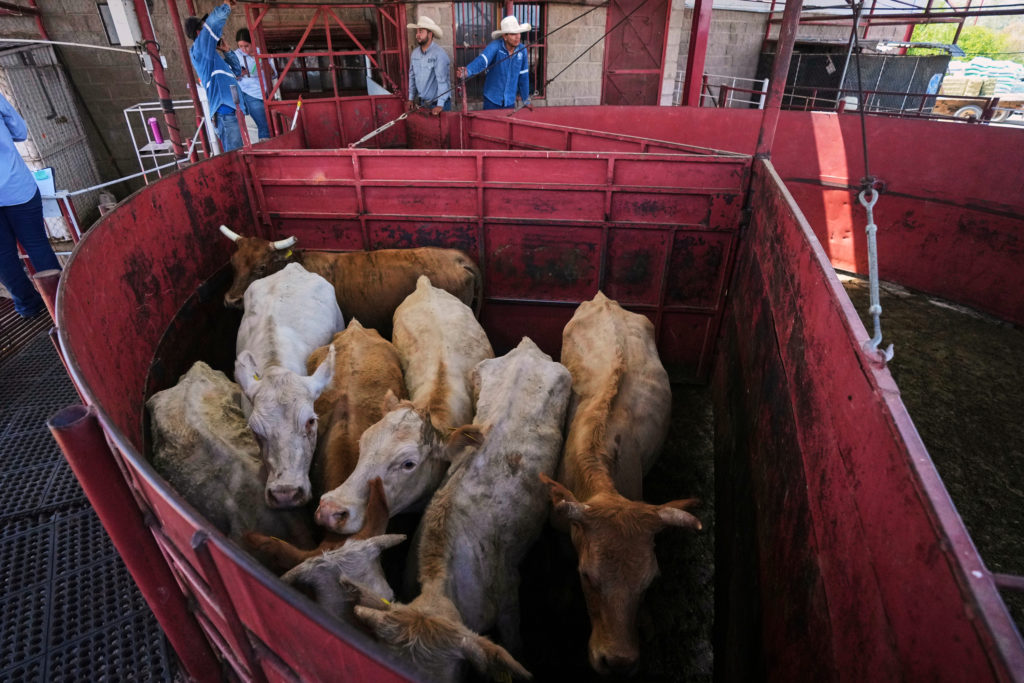
The U.S. Department of Agriculture (USDA) reopened a border crossing in Douglas, Arizona, to Mexican cattle imports on Monday. The move is part of a phased effort to restore livestock trade after the border was closed to Mexican cattle in May 2025 due to concerns about the New World screwworm, a parasite with flesh-eating larvae. Mexican President Claudia Sheinbaum confirmed the reopening during a news conference in Mexico City, stating that the border in the state of Sonora is now open for livestock movement.
The U.S. government initially closed the border more than a year ago to contain the screwworm, which had returned to southern Mexico in late 2024 and reached Texas by June 3. The parasite poses a threat to the U.S. cattle industry, valued at $113 billion. While the USDA reported that screwworm concerns have lessened enough to permit trade at the Arizona crossing, more than 40 cases of the parasite have been confirmed in southern Texas and southeastern New Mexico among cattle, sheep, goats, and dogs.
U.S. Agriculture Secretary Brooke Rollins said the phased reopening began in Arizona because the northern Mexican states of Sonora and Chihuahua maintain stronger animal health programs. Under the new protocols, every animal must be inspected and declared free of the parasite before entering the U.S. The administration intends to eventually reopen additional crossings in New Mexico and Texas, though no specific dates for those locations were provided.
For the agricultural sector, the reopening aims to address a severe shortage of cattle for slaughter. The U.S. cattle herd stands at 86.2 million head, its lowest level in 75 years, following five years of decline driven by regional droughts and two decades of low prices. This shortage has led major meat processors like Tyson Foods and JBS USA to close or reorganize plants in Nebraska, Utah, Illinois, Tennessee, and Pennsylvania. While the imports provide some relief, Peel noted that rebuilding the domestic herd will take years because cows typically produce only one calf annually, and keeping heifers for breeding further tightens the immediate food supply.
In the short term, the Trump administration announced on Friday that it would allow 331,000 tons of imported ground beef into the U.S. tariff-free over the next 90 days to address high costs. Residents in border states will see the immediate resumption of livestock traffic at the Douglas crossing. Future steps depend on the success of the USDA's animal health protocols and the potential expansion of the reopening to other state crossings, as the agency continues to monitor the spread of the screwworm parasite in Texas and New Mexico.