The Plain Record

Neutral daily news — clear headlines, complete facts.

National

U.S. Confirms Deployment of Weapons in Outer Space

Air Force Secretary Troy Meink confirmed the deployment of orbital space control weapons, leading to calls for demilitarization from Russia and China.

Background: The Insurrection Act, explained: when a president can deploy troops inside the United States

By The Plain RecordUpdated September 16, 2026 at 5:12 AM EDT
Published September 15, 2026 at 1:20 PM EDT

The short answer

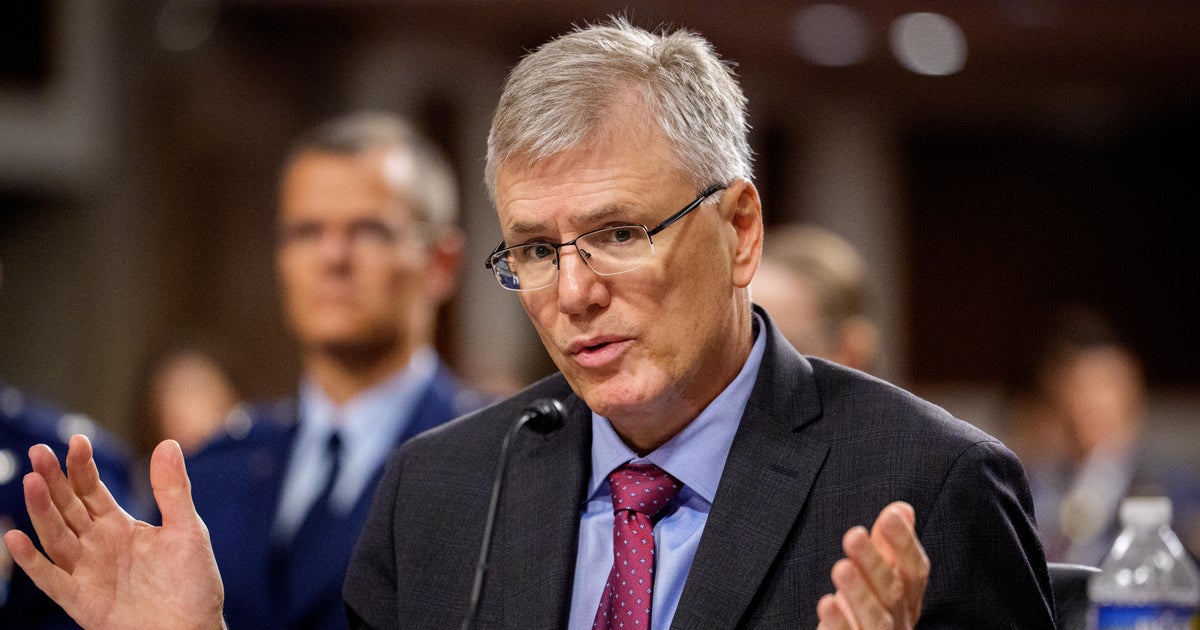
Air Force Secretary Troy Meink confirmed the deployment of orbital space control weapons, leading to calls for demilitarization from Russia and China. Air Force Secretary Troy Meink announced that the United States has deployed on-orbit space control weapons intended to defend military forces against adversary actions.

Updates (2)

  • Update — September 16, 2026 at 5:12 AM EDT: Air Force Secretary Troy Meink confirmed the U.S. has fielded orbital weapons to defend against hostile actions, marking the first time such a deployment has been acknowledged.
  • Update — September 16, 2026 at 3:42 AM EDT: Air Force Secretary Troy Meink confirmed the U.S. has deployed on-orbit space control weapons to defend against adversary actions.
U.S. Confirms Deployment of Weapons in Outer Space

The Facts

Who
Air Force Secretary Troy Meink, Chinese foreign ministry spokesman Guo Jiakun, and Kremlin spokesman Dmitry Peskov.
What
The U.S. Air Force confirmed the deployment of on-orbit space control weapons.
When
Monday (specific date not reported)
Where
Maryland, United States and Earth orbit
Why
The U.S. says the weapons are for defending military infrastructure; China and Russia warned against an arms race and the weaponization of space.

Air Force Secretary Troy Meink announced that the United States has deployed on-orbit space control weapons intended to defend military forces against adversary actions. Speaking at the Air and Space Cyber Conference in Maryland, Meink stated that these systems are capable of protecting the "Joint Force," but he did not provide specific details regarding the mechanics or quantity of the weaponry. The statement follows a 2024 U.S. report alleging that Russia was developing an anti-satellite weapon for space launch, a claim the White House at the time described as a non-imminent threat.

The announcement prompted responses from both China and Russia. Chinese foreign ministry spokesman Guo Jiakun urged the U.S. to cease military expansion in orbit, warning that the move risks turning space into a "battlefield." Kremlin spokesman Dmitry Peskov called for international cooperation toward the "complete demilitarization of space." Both nations have previously proposed treaties to prevent the placement of any weapons in space, while Western nations have focused on establishing standards for "responsible behavior."

According to a U.S. statement, space control involves using both kinetic and non-kinetic means to affect adversary capabilities for offensive or defensive purposes. While the U.S. did not specify the technology used, non-kinetic methods typically include lasers designed to blind satellites or electromagnetic jamming of data links. Military analysts noted that while the existence of such weapons was widely suspected, the formal confirmation marks a shift from Washington's previous policy of ambiguity regarding its orbital arsenal.

The shift in policy establishes a precedent of public acknowledgment that may influence international law and arms control negotiations. Space law expert Laetitia Cesari noted that a "regulatory vacuum" exists because the 1967 Outer Space Treaty only explicitly bans nuclear weapons and weapons of mass destruction, leaving other types of orbital weaponry unregulated. This announcement is expected to influence the debate between the U.S. approach of "responsible behavior" versus the restrictive treaty-based approach favored by Moscow and Beijing.

The next formal international discussion on this matter is expected to occur at the United Nations disarmament meeting scheduled for November. At that time, member states may address the lack of specific regulations for non-nuclear orbital weapons. Domestically, the Air Force continues its transition toward AI-integrated combat power, which Meink stated is necessary to compete with the cyber and programming capabilities of global rivals. Specific deadlines for new weapon deployments or additional funding requests were not disclosed in the statement.

Timeline of what happened

Key dates and decisions, in the order they occurred.

  1. 1957

    USSR launches Sputnik, beginning space militarization research

  2. 1967

    Outer Space Treaty signed banning weapons of mass destruction in orbit

  3. 2019

    United States establishes the Space Force

  4. March 2019

    India conducts missile test destroying a low-orbiting satellite

  5. 2024

    U.S. reports Russia is developing a space-based anti-satellite weapon

Summaries are written by The Plain Record to state the facts of a story plainly and without political slant. Drafted with AI assistance and checked against the source record before publication. See how we report, or report a correction.

← Back to the front page

Questions readers ask

What happened: U.S. Confirms Deployment of Weapons in Outer Space?

The U.S. Air Force confirmed the deployment of on-orbit space control weapons.

Who is involved?

Air Force Secretary Troy Meink, Chinese foreign ministry spokesman Guo Jiakun, and Kremlin spokesman Dmitry Peskov.

When did this happen?

Monday (specific date not reported)

Where did this happen?

Maryland, United States and Earth orbit

Why does this matter?

The U.S. says the weapons are for defending military infrastructure; China and Russia warned against an arms race and the weaponization of space.