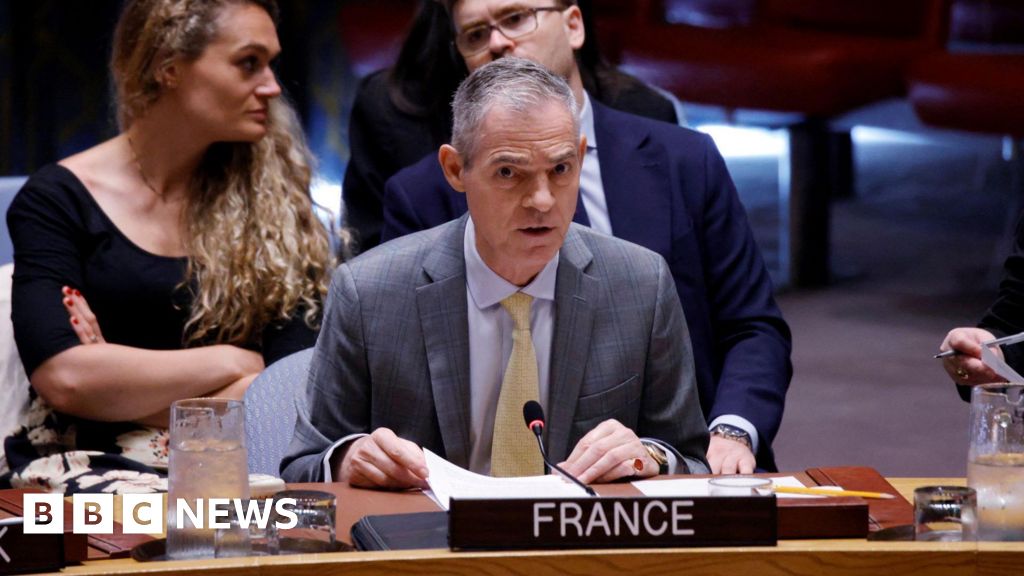
The United States delegation walked out of a United Nations Security Council meeting on Monday during a speech by the French ambassador. The move was a protest against recent comments from the French mission that compared the U.S. voting record on human rights to those of Russia and North Korea. U.S. Ambassador Dan Negrea stated that the delegation would continue such protests until France withdrew what he described as disrespectful rhetoric.
The disagreement began on Friday following a General Assembly vote regarding the reappointment of Volker Turk as the UN High Commissioner for Human Rights. The United States joined nine other countries, including Russia and North Korea, in voting against the extension of Turk's term. Following the vote, France's UN mission posted on social media that the U.S. was no longer a 'beacon of human rights' due to its alignment with authoritarian states on the matter.
During Monday's emergency meeting on the war in Ukraine, the U.S. team departed the chamber as French Ambassador Jerome Bonnafont began his remarks. U.S. Ambassador Mike Waltz accused France of 'disingenuous grandstanding' and criticized the human rights chief for allegedly being soft on oppressors while criticizing democratic nations. Conversely, Ambassador Bonnafont defended Turk as a 'voice of conscience' who acted with impartiality during his first term.
The U.S. has indicated that this dispute may affect its future involvement with the international body. Ambassador Jeff Bartos stated on Friday that the U.S. would immediately reassess its engagement, participation, and funding for UN entities. He cited concerns over 'procedural overreach' and 'backroom deals' involving UN leadership positions. The UN secretariat has declined to comment directly on the walkout, though a spokesperson stated they expect member states to respect the assembly's decisions.
The walkout and the underlying disagreement over human rights leadership also highlight a widening policy gap between the U.S. and its long-standing European allies like France. This friction may complicate the Security Council's ability to reach a consensus on urgent global issues, including the war in Ukraine and regional conflicts in the Middle East. When major powers are at an impasse over diplomatic etiquette and leadership appointments, the practical day-to-day work of international mediation and policy coordination often slows, potentially delaying humanitarian responses or peace negotiations.
Looking forward, the U.S. has set a precedent for using physical and financial leverage to protest UN administrative decisions. Future meetings will likely be scrutinized for continued walkouts or further funding cuts. Given that the resolution to reappoint Turk passed with 144 votes, the U.S. now finds itself in a minority position on this specific leadership issue. The next key dates will involve the U.S. State Department's formal review of UN funding, which could result in specific dollar-amount reductions in the coming fiscal quarter.