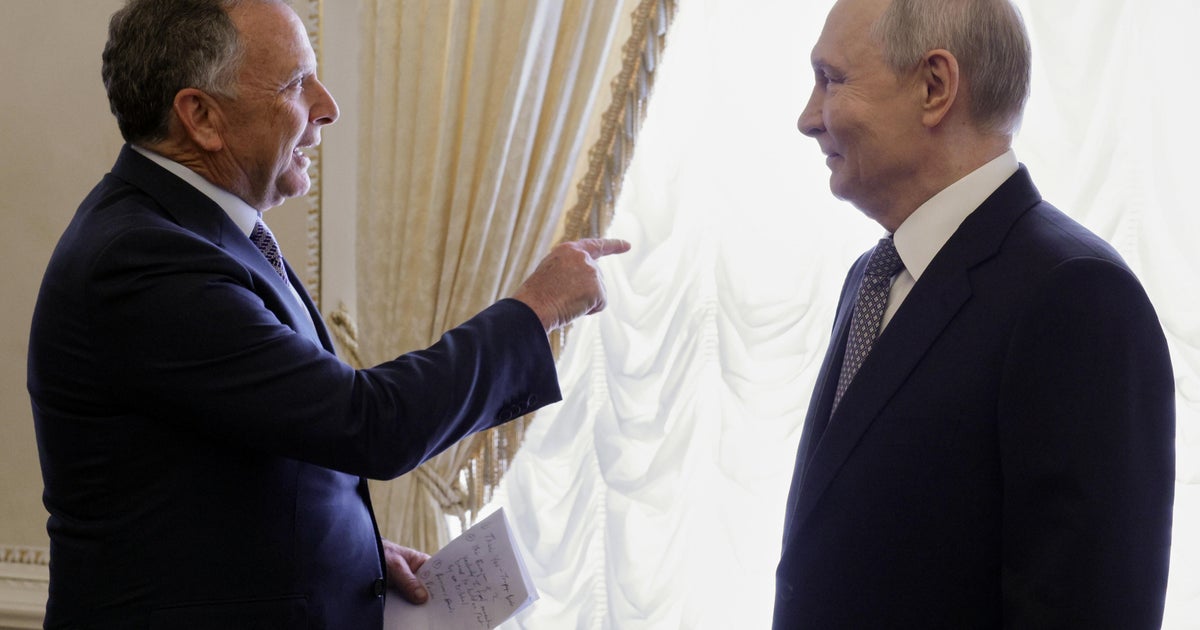
U.S. special envoy Steve Witkoff received criticism from several Republican lawmakers after he referred to Russian President Vladimir Putin as a "humanitarian" during a meeting in St. Petersburg on Wednesday, Oct. 21, 2026. The comment followed the release of 74-year-old American citizen Stephen Hubbard, who had been imprisoned in Russia for four years. Witkoff told Putin, "You are a humanitarian also, sir, and I salute that, I commend you, and I thank you again," after mentioning that Putin had described President Donald Trump as a humanitarian.
The meeting occurred as Witkoff sought a resolution to the conflict in Ukraine, which began four and a half years ago. During the visit, Russia continued strikes against Ukrainian civilian and energy infrastructure. The exchange also followed recent actions by the Trump administration to waive new U.S. sanctions on Russia and ease restrictions on Russian diesel imports. President Trump stated on Tuesday, Oct. 20, that Russia has been "fine on Ukraine" and that enforcing congressional sanctions would have hindered negotiations for Hubbard's release.
Republican members of Congress issued statements disagreeing with Witkoff’s characterization. Sen. John Cornyn (R-TX) wrote on social media that Putin is a "stone cold killer," while Sen. Thom Tillis (R-NC) described the remark as "embarrassing and outrageous," citing the impact of the war on Ukrainian children. Rep. Don Bacon (R-NE) also characterized the envoy's comments as an embarrassment. Following the meeting, Putin agreed in principle to resume three-way talks between Washington, Russia, and Ukraine starting after Nov. 10.
The exchange establishes a precedent for high-level diplomatic praise in exchange for prisoner releases, which some lawmakers argue complicates broader international sanctions regimes. The decision by the executive branch to waive sanctions passed by Congress affects the enforcement power of the legislative branch, impacting how U.S. trade restrictions are applied to the Russian energy sector. Consumers in the U.S. may also notice shifts in diesel prices following the administration’s deal to import Russian fuel.
What happens next: The U.S. and Russia have a tentative timeline to return to the negotiating table. Putin has agreed to resume three-way discussions regarding the Ukraine conflict "in principle," with a start date scheduled for sometime after Nov. 10, 2026. This date falls approximately one week after the U.S. midterm elections. In the interim, U.S. lawmakers have indicated they will continue to monitor the administration's use of sanctions waivers and its ongoing diplomatic strategy regarding the Russian energy market.