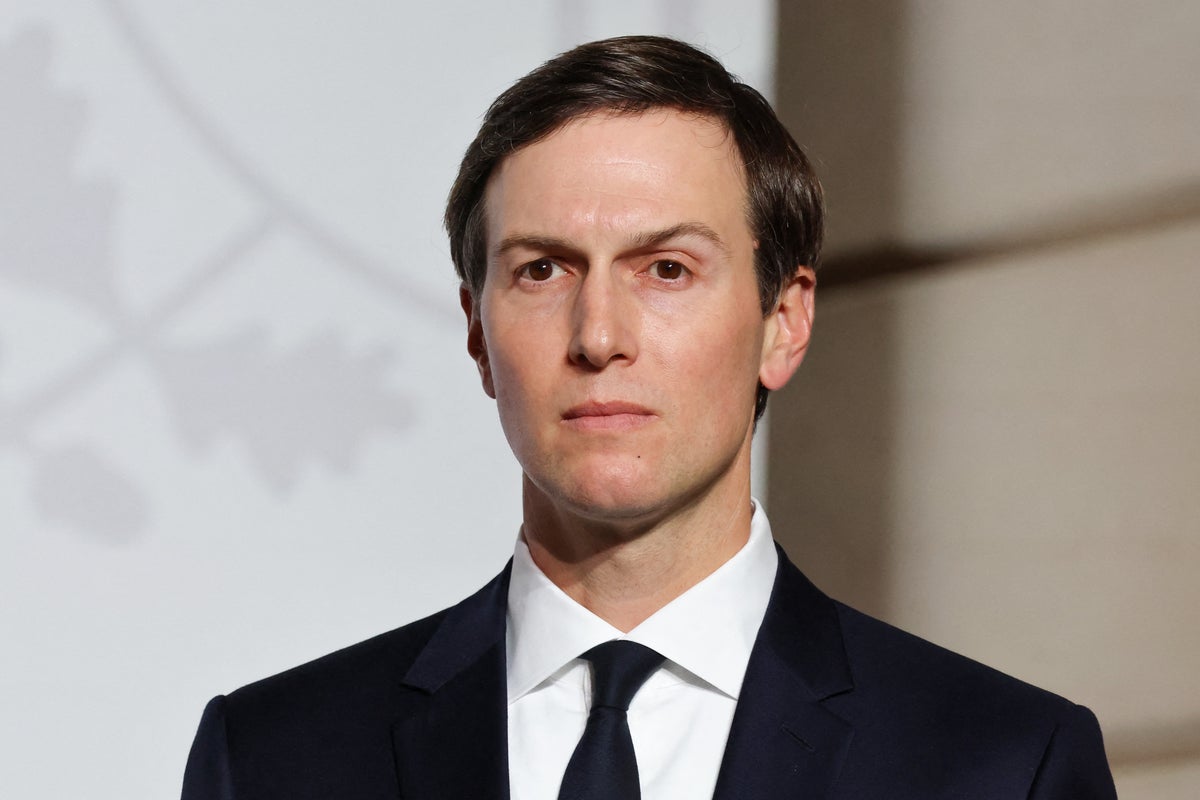
U.S. negotiator Jared Kushner held a two-hour meeting with Hamas official Khalil al-Hayya in Egypt on Sunday to discuss a stalled 15-point roadmap for peace in Gaza. Kushner, a representative for President Donald Trump, is scheduled to meet with Israeli Prime Minister Benjamin Netanyahu on Monday as part of a three-member envoy delegation seeking to advance the U.S.-backed plan. The proposal requires Hamas to disarm and Israel to withdraw its military forces from Palestinian territory.
The meeting occurs 10 months after a ceasefire halted major military operations, though significant conflict and Israeli military control of approximately 60% of Gaza continue. Previous negotiations involving Kushner and envoy Steve Witkoff helped secure the initial ceasefire last year, but progress has stalled over the specific terms of Hamas' disarmament. A regional official stated that the Sunday meeting was intended to secure Hamas' commitment to the roadmap before Kushner’s discussions with the Israeli government.
Under the proposed 15-point plan, Hamas would surrender weapons to a technocratic committee, while Israeli forces would gradually withdraw. However, both sides have presented conflicting conditions: Hamas has stated it will only surrender heavy arms in exchange for the creation of a Palestinian state, while Prime Minister Netanyahu has insisted that no withdrawal will occur until Hamas is fully disarmed. Netanyahu publicly rejected the roadmap last week, and his Likud party suggested that regional powers were attempting to influence Israeli domestic politics ahead of the October 27 election.
For the international community, the impasse has led to rare public friction between the U.S. administration and its ally, Israel. A joint statement from Saudi Arabia, the United Arab Emirates, Jordan, Pakistan, Indonesia, and ceasefire mediators placed responsibility on Israel for obstructing peace efforts after Netanyahu’s rejection of the plan. This puts significant pressure on the U.S.-created Board of Peace, an agency established to oversee the ceasefire, to find a mechanism that satisfies Israel's security demands for disarmament and Hamas' demands for a path toward statehood.
The next critical phase is a 14-day negotiation window intended to establish an implementation schedule, which Hamas officials say they are waiting for mediators to initiate. However, this window cannot begin until all parties formally approve the roadmap. With the Oct. 27 Israeli election approaching, the political environment may influence the willingness of the Israeli coalition to compromise on the current military positions. If no agreement is reached, the planned deployment of international forces to separate Israeli troops from civilian-governed areas remains on hold indefinitely.
The negotiations also involve significant regional diplomatic stakes, as Saudi Arabia, the UAE, and other nations have formally called for the U.S. and the Board of Peace to take "immediate and concrete measures" to implement the roadmap. The outcome will determine if the U.S.-backed Board of Peace can successfully coordinate the placement of international forces to divide military and civilian zones. If the disarmament impasse continues, the reconstruction of the enclave remains on hold.
What happens next depends on the scheduled Monday meeting between Kushner, Tony Blair, Nickolay Mladenov, and Prime Minister Netanyahu. A 14-day window for establishing a schedule is proposed but requires all parties to agree to the roadmap first. The diplomatic efforts are taking place against the backdrop of the upcoming Oct. 27 Israeli election and the anniversary of the Oct. 7, 2023, attacks.