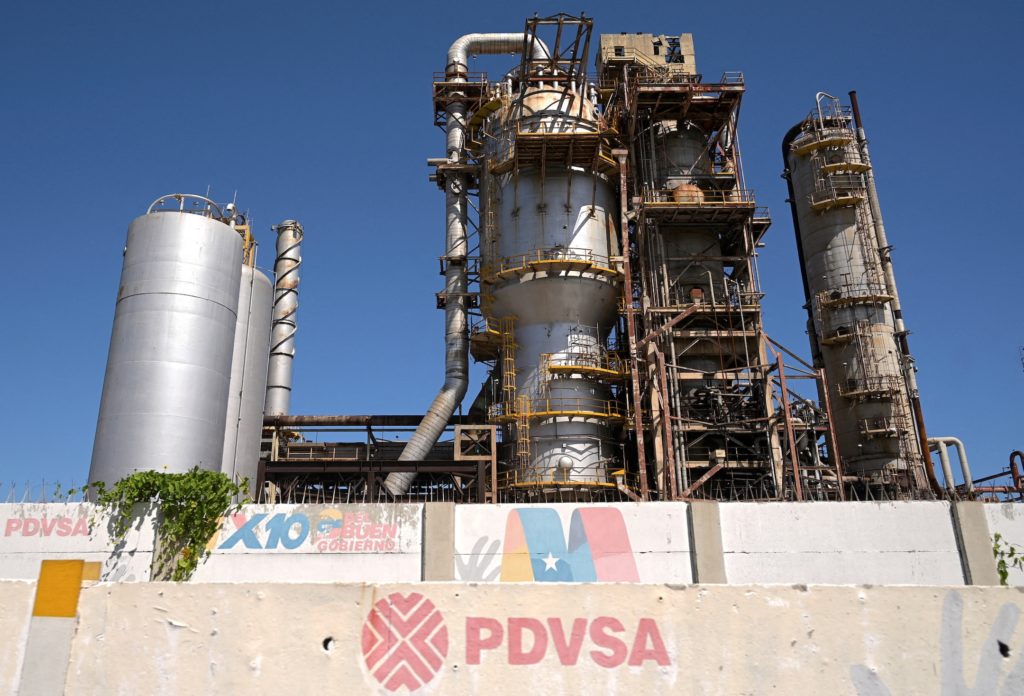
President Donald Trump announced an agreement on Monday for the U.S. Department of Defense to become an investor in a private company granted exclusive rights to develop oil fields in Venezuela. The deal establishes a joint venture between the U.S. government and local businessmen to operate 17 Venezuelan oil fields, with the U.S. securing 55 percent of the output.
The agreement marks the first known time the U.S. government has acted as a direct investor in an overseas oil project. While President Trump characterized the arrangement as a way to lower gasoline prices and fill the U.S. Strategic Petroleum Reserve, energy analysts have raised questions regarding the deal's legality under Venezuelan law and the logistical challenges of extracting the specific type of crude oil found in the region.
Under the terms of the deal, the U.S.' partner is Venezuelan businessman Alejandro Betancourt, who faces money laundering charges in Spain and Switzerland. Delcy Rodriguez, whom the source describes as acting president, called the deal a "win-win" that would provide investment and employment for the nation. Francisco Monaldi, an energy expert at Rice University, noted that the joint venture will be permitted to take part of its production at cost, though he cautioned that many of the designated fields are undeveloped and require years of infrastructure work.
For the average household, any change in fuel costs or the Strategic Petroleum Reserve—a federal emergency supply of crude oil—will likely not be immediate. The majority of the 17 oil fields are currently undeveloped, and building the necessary infrastructure to extract and transport the oil is expected to take several years. Furthermore, the Strategic Petroleum Reserve typically requires "light" oil, while Venezuelan reserves consist primarily of "heavy" and "extra-heavy" crude.
The deal sets a precedent for direct federal investment in private foreign energy sectors. The long-term stability of the deal remains uncertain, as Monaldi noted that a lack of transparency could lead to a future backlash or renegotiation. The next steps involve the commencement of infrastructure projects on the undeveloped fields, though specific dates for the start of new production were not reported.