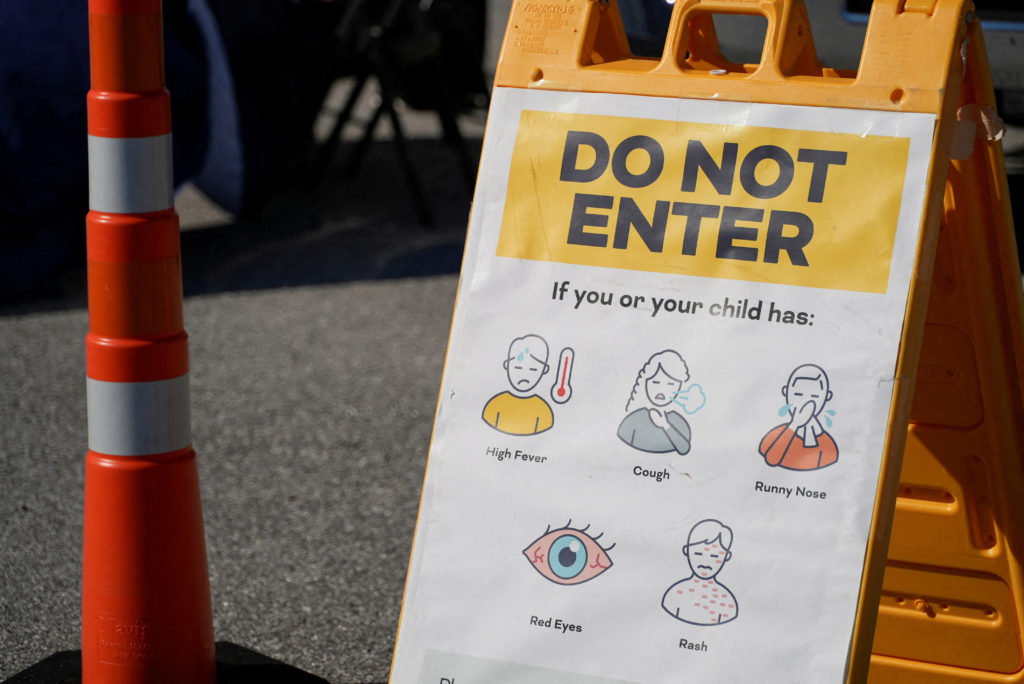
The U.S. Centers for Disease Control and Prevention (CDC) reported on Friday that measles cases in the United States have reached 2,318 for the current year. This total exceeds the 2,289 cases recorded throughout all of 2025, making 2026 the year with the highest number of reported infections since 1991. Large-scale outbreaks in South Carolina, Utah, and Arizona have contributed significantly to the total, alongside smaller clusters in several other states.
Public health officials from multiple states indicated that current figures likely represent an undercount of the actual spread. Dr. Leisha Nolen, Utah's state epidemiologist, noted that mathematical modeling suggests an outbreak on the Utah-Arizona border could be three to four times larger than confirmed reports. Similarly, Dr. Brannon Traxler of the South Carolina Department of Health stated that while their count of 997 is likely incomplete, the exact margin is difficult to determine. Officials attributed undercounting to individuals who do not seek medical treatment or testing.
Health experts cited declining vaccination rates as a primary factor in the increased transmission. According to CDC data, national vaccination rates for measles, mumps, and rubella among kindergartners fell to 92.5% in the 2024-25 school year, down from 95.2% in 2019-20. The 95% threshold is the level international health organizations identify as necessary to maintain herd immunity and prevent community spread.
In November, international health officials are scheduled to meet to review the measles-free status of the United States and Mexico. The U.S. achieved "eliminated" status in 2000, meaning the virus was no longer constantly present in the country. To maintain this status, nations must demonstrate that they can prevent sustained transmission of the virus for more than 12 months following an importation.