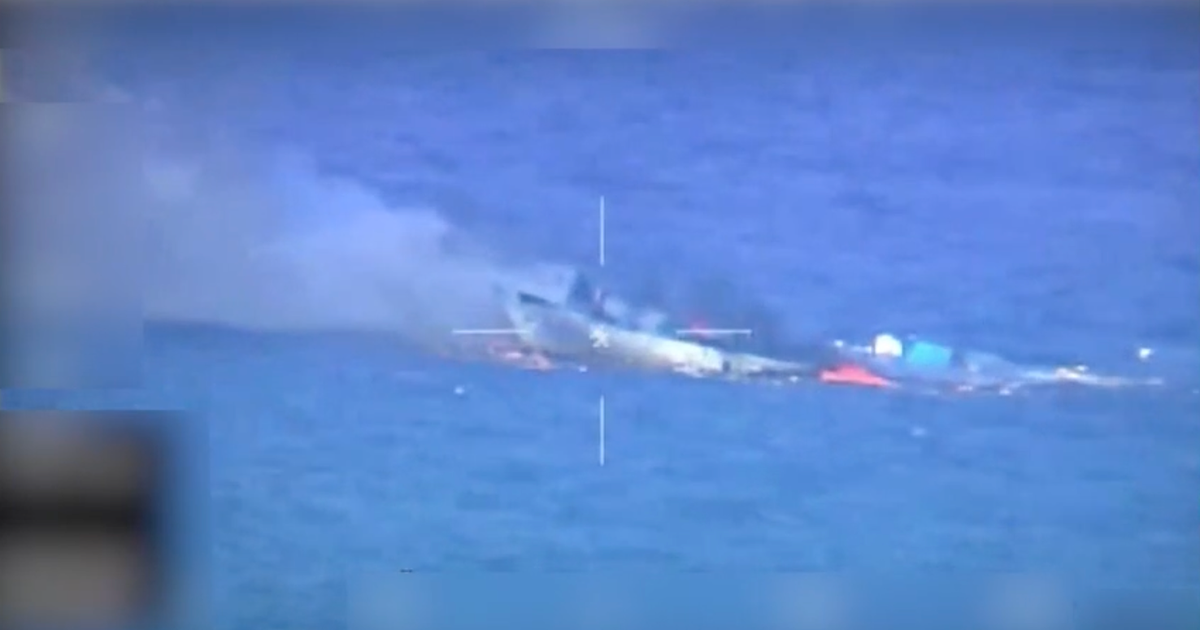
The U.S. military, in coordination with Ecuadorian authorities, boarded and sank a vessel on Friday that officials alleged served as a mobile refueling station for drug-trafficking boats. The operation took place in international waters near Ecuador in the eastern Pacific Ocean. U.S. Southern Command (SOUTHCOM) reported that the ship supported logistics for the Los Choneros organization, a group based in Ecuador.
Personnel from the USS San Antonio, including Marines and sailors, boarded the vessel and cleared it without incident. According to SOUTHCOM, the individuals found on board were removed and transported to Ecuador. Following the evacuation, the U.S. military conducted an airstrike to sink the vessel, later releasing video footage of the ship being scuttled.
Gen. Francis L. Donovan, commander of SOUTHCOM, stated that the operation was intended to dismantle clandestine tactics used to move drugs toward the United States. The strike is part of a broader U.S. campaign targeting maritime drug smuggling. This follows a Tuesday incident where four people were killed in a boat strike in the Caribbean and a Sunday strike in the Pacific that killed two people. The Sunday event ended a two-month pause in such operations.
For residents of the region and the U.S., these actions are tied to efforts to reduce the volume of cocaine entering American communities. The Los Choneros group has been a central figure in Ecuadorian civil unrest, including a 2024 gang war that led to violence in the capital of Quito and on a live television broadcast in Guayaquil. The U.S. Department of Justice previously indicted the group’s leader, José Adolfo Macías Villamar, on drug and weapons charges in April 2025.
The sinking of this refueling station was described by Donovan as an example of the Americas Counter Cartel Coalition's effort to dismantle logistical infrastructure. Macías Villamar, who was extradited to the U.S. in July 2025 after escaping and being recaptured in Ecuador, currently awaits trial following a not-guilty plea. The legal and military outcomes of these ongoing strikes will likely influence future U.S. maritime interdiction policy in the Western Hemisphere.