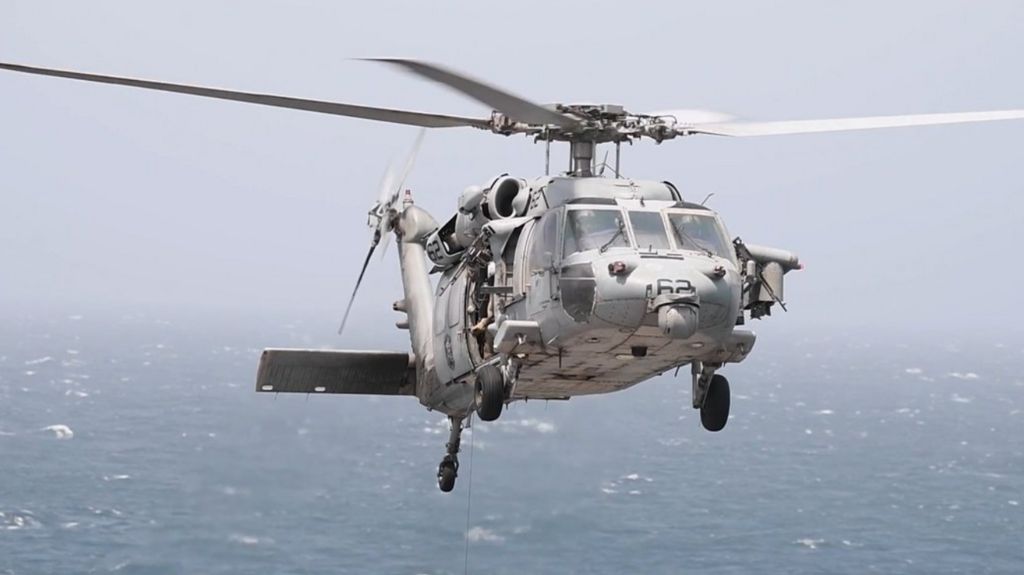
A U.S. military helicopter fired two missiles at a Panama-flagged cargo ship in the Gulf of Oman on Tuesday to prevent the vessel from reaching an Iranian port. U.S. Central Command (Centcom) reported that the aircraft targeted the ship's engine room to disable its steering gear after the crew reportedly disregarded multiple warnings.
The action is part of a U.S. blockade of Iranian ports established following the start of a conflict involving the U.S., Israel, and Iran on February 28. In response to the blockade, Iran has conducted attacks against Israel and U.S.-allied states in the Gulf, and has closed the Strait of Hormuz, a critical transit point for global energy supplies.
According to the Centcom statement, the M/V Vela Nova was the vessel targeted in the strike. The military did not provide information regarding casualties or injuries among the civilian crew. Centcom stated the vessel is no longer moving toward Iran and confirmed that the blockade remains in effect.
The scale of the disruption involves a significant portion of the global economy, as the Strait of Hormuz previously handled one-fifth of the world's oil and liquefied natural gas. The closure of this waterway and the ongoing blockade have caused energy prices to fluctuate. Households and businesses worldwide may notice these effects through volatile costs for gasoline and heating, as mediators have yet to reach an agreement to reopen the strait following the collapse of a ceasefire in June.
The incident also signals a potential escalation in regional hostilities, as it occurred the same day that Yemen’s Houthi rebels conducted their first reported deadly attack on a ship in the Red Sea since the war began. That strike killed six people and injured ten others. Future policy and military actions will depend on whether diplomatic efforts can resume; currently, U.S. and Iranian forces continue to exchange fire intermittently. The next steps involve ongoing monitoring by Centcom and potential retaliatory actions or negotiations, though the timeline for new talks remains unconfirmed.