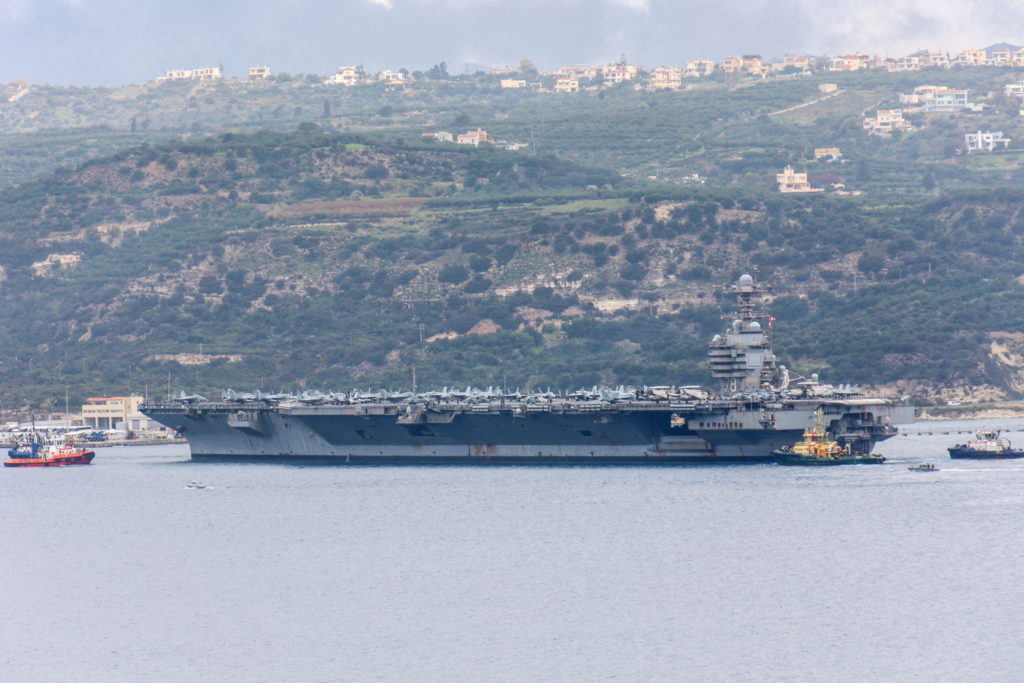
The USS George Washington is departing the Pacific Ocean to join U.S. operations in the Middle East, leaving the western Pacific without a U.S. aircraft carrier. The warship is expected to replace the USS Abraham Lincoln, which has remained at sea beyond its original May return date to support military actions involving Iran. The move comes as the Trump administration focuses military resources on Iran and the Western Hemisphere.
The U.S. Navy currently maintains 11 aircraft carriers, typically deploying two or three at a time. However, ongoing operations have resulted in extended deployments, with the USS Abraham Lincoln reaching a record 240 consecutive days at sea. Other vessels have also faced recent strain; the USS Gerald R. Ford returned in May following an 11-month deployment that included supporting the capture of former Venezuelan leader Nicolás Maduro and addressing a shipboard fire.
Analysts cited by the Associated Press noted that the absence of a carrier in the Pacific coincides with recent military exercises by China near the Scarborough Shoal and Okinotori island. While U.S. Special Operations Command head Adm. Frank Bradley visited Manila on Thursday to reassure allies of U.S. commitment, policy analysts suggested the shift in naval presence could influence perceptions of U.S. regional influence among partners like Japan, Indonesia, and the Philippines.
The shift also signals a change in operational priorities for the U.S. government, moving assets away from the Asia-Pacific region to focus on Iran and the Western Hemisphere. While the Navy may deploy the USS Theodore Roosevelt from San Diego in the next two months to allow the USS George Washington to return to the Pacific, the current high tempo of operations is creating a "maintenance debt." Defense analysts estimate that carriers will eventually be forced into shipyards for repairs in larger numbers, potentially resulting in a lower overall carrier presence in the coming years than in previous decades.
The strategic impact involves U.S. allies like Japan and the Philippines, who rely on the psychological assurance of a permanent U.S. carrier presence to counter regional territorial claims. Domestically, high-ranking officials such as Chief of Naval Operations Adm. Daryl Caudle have indicated a desire to move away from heavy reliance on carriers in favor of smaller, newer ships that may be less vulnerable to modern drone and missile technology. The next immediate steps include Adm. Frank Bradley’s scheduled travel to Japan to meet with counterparts and the potential deployment of the USS Theodore Roosevelt, though specific dates for these moves were not reported.