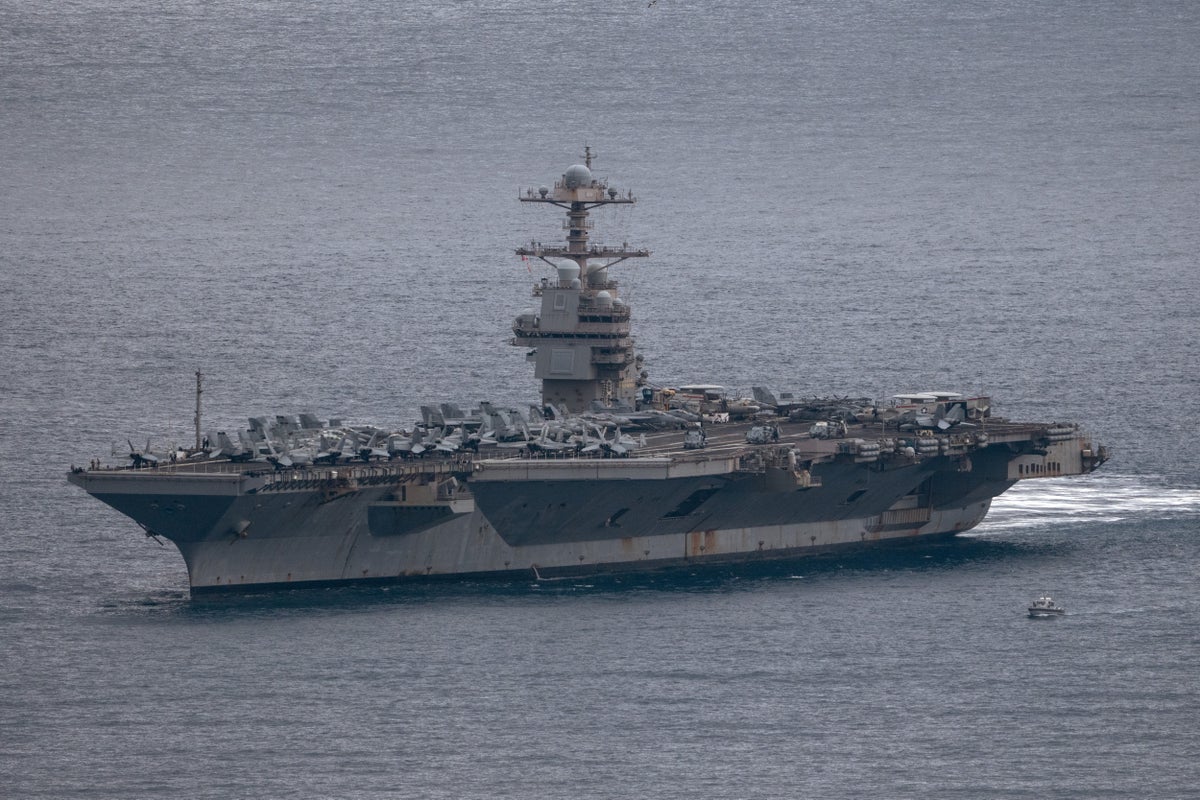
The U.S. Navy is conducting an internal assessment to determine if future aircraft carriers should be redesigned to meet specifications requested by President Donald Trump. A Navy official confirmed that the service has begun exploring options to implement design changes based on the president's intent, a process expected to conclude within the coming weeks.
The review focuses on the Ford-class carriers, which are nuclear-powered supercarriers intended to replace the older Nimitz-class fleet. The primary change under consideration is the relocation of the "island"—the tower that serves as the ship's command center—closer to the center of the vessel. According to a former senior U.S. official, this shift would make the ships more closely resemble older carrier designs.
Hunter Stires, a former strategist to the Navy secretary, criticized the potential move, stating that the current placement of the island on Ford-class ships was chosen to maximize aircraft sortie generation and combat power. Stires described the redesign as "wasteful and abusive," arguing that it prioritizes aesthetics over operational requirements. A person familiar with the matter told The Washington Post that a previous study found relocating the island could add billions of dollars in costs and cause delays to the program.
In addition to the island placement, President Trump issued a national security memorandum on Thursday directing the Navy to replace electromagnetic catapult systems with older steam-powered systems. Officials told the Post that the president wants the carrier fleet to resemble ships used during World War II. There are currently three Ford-class carriers under development, while one, the USS Gerald R. Ford, is already operational.
For the American taxpayer, the reported "extraordinary" costs and delays could mean a redistribution of federal defense funds. Naval experts such as Hunter Stires suggest that changing the island's position—which was originally placed to maximize the number of flights a carrier can launch—could alter the ship's day-to-day combat effectiveness. Sailors would notice a significant shift in flight-deck operations and command-center logistics if the ship's architecture is reverted to older models.
The decision also sets a precedent for how presidential preference influences long-term military engineering and procurement. While the Navy is currently "moving out on options" to meet the president's intent, the final internal assessment is due in the coming weeks. This will determine whether the program faces immediate delays or if the current designs for the remaining Ford-class vessels remain intact. A White House spokesperson referred inquiries to the Department of Defense, while the Defense Department referred questions back to the White House.