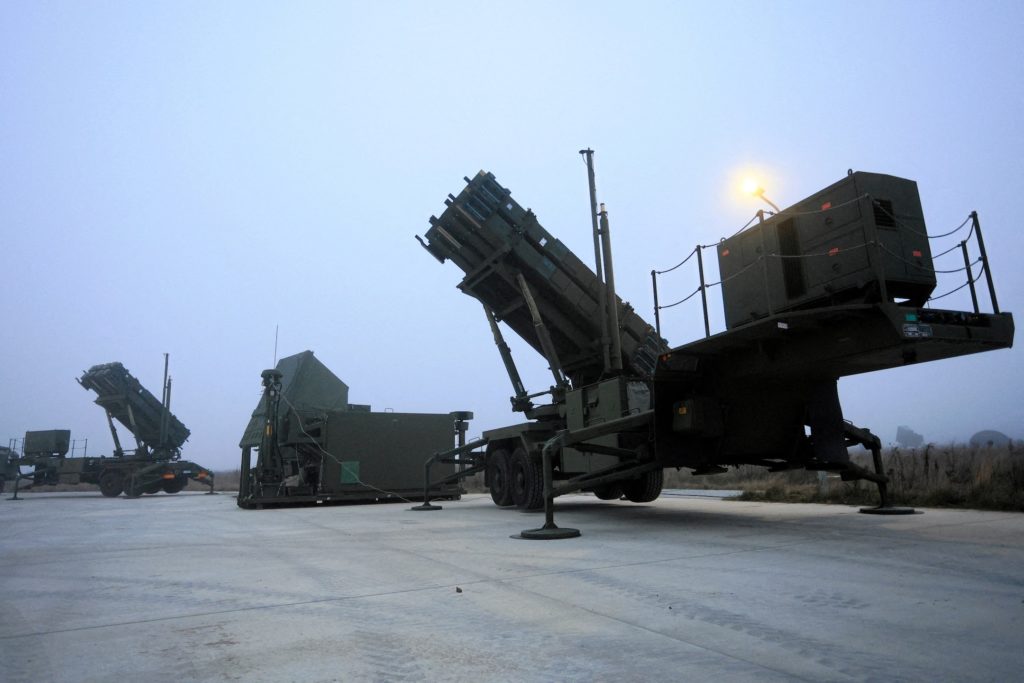
Retired Army Col. Robert Hamilton reported on Wednesday that the United States has depleted approximately two-thirds of its Patriot missile stockpile due to ongoing military involvement in the Gulf. According to Hamilton, the U.S. inventory has fallen from roughly 2,330 missiles before the war with Iran to approximately 800. This shortage has reportedly limited the U.S. government's ability to supply Ukraine with the air defense systems President Volodymyr Zelenskyy has stated are necessary for national defense.
The Patriot system is currently the only mass-produced air defense technology capable of effectively intercepting Russian ballistic missiles at high rates. While European allies have some Patriot stocks, Hamilton noted they have fewer remaining than the U.S. after providing significant quantities to Ukraine during the early stages of the conflict. Ukraine has received roughly 600 Patriot missiles over four and a half years of war, leading Ukrainian forces to adopt a one-to-one interceptor-to-missile ratio to conserve supplies.
To address the shortage, the U.S. has entered a $58 billion contract to increase annual production from 600 missiles to 2,000. However, the first missiles from this contract are not expected to be delivered until early 2029, with the full contract not fulfilled until 2032. In the interim, a joint U.S.-Ukrainian project is working to upgrade older S-300 missiles, and France and Italy have pledged to provide SAMP/T air defense batteries to Ukraine later this year.
A person living in Ukraine would notice the impact through the effectiveness of air defense sirens and the physical interception of incoming missiles; Hamilton noted that some Gulf allies have used four to eight interceptors per single target, a rate Ukraine cannot match due to its limited supply of 600 total missiles. In the U.S., the shortage creates a "theater tax," where the high expenditure of weapons in the Middle East leaves fewer resources for other regions. Hamilton stated this puts the U.S. at risk if it were required to defend itself in multiple simultaneous conflicts in Europe or the Indo-Pacific.
The knock-on effects include the U.S. diverting missiles already purchased by European partners to restock its own supplies, potentially straining diplomatic and defense agreements. Looking ahead, the production gap will persist for several years. While the French-Italian SAMP/T systems are expected this year and S-300 retrofits may arrive by the end of 2026, the primary scaling of Patriot production to 2,000 units annually will not begin delivering results until 2029, with a final completion date for current contracts set for 2032.