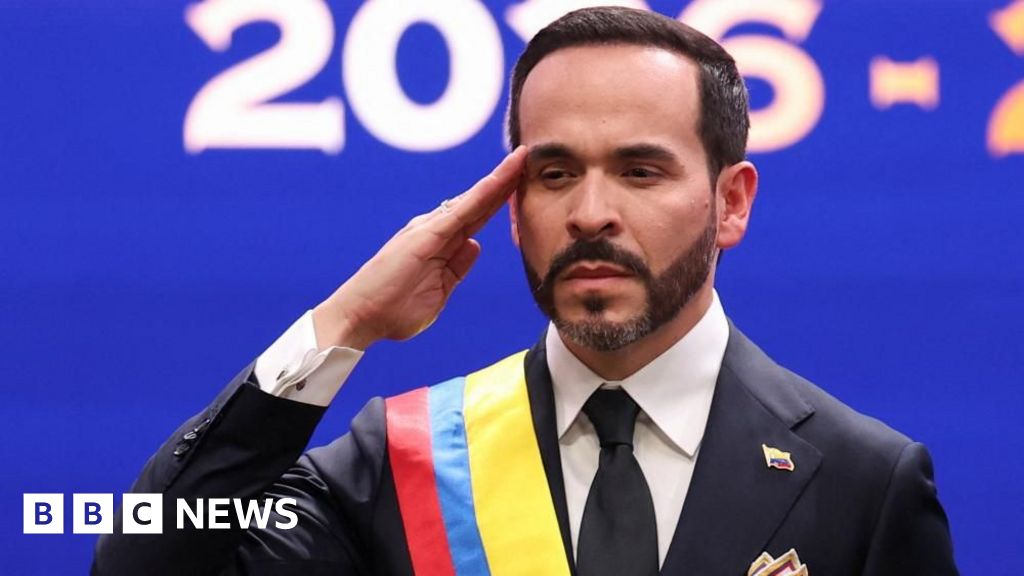
The United States has pledged $1 billion in assistance to Colombia following the inauguration of President Abelardo de la Espriella on Friday. During his first speech as president, de la Espriella announced a focus on combating organized crime and what he described as "narco-terrorism." The U.S. State Department categorized the funding as a security package intended to address shared objectives, including border security and the suppression of criminal organizations.
This administration marks a shift from the previous government led by Gustavo Petro, who frequently disagreed with U.S. President Donald Trump. During the election, Trump endorsed de la Espriella and stated he anticipated an improved bilateral relationship. A U.S. delegation led by Attorney General Todd Blanche attended the ceremony in Cali, a city chosen by the new president to signal his intended approach toward armed groups in the western region.
In his address to military personnel, de la Espriella stated the government would use "reason or by force" to defend democracy and stated that criminals would not find safety within the territory. His platform includes the construction of large-scale prisons and a move away from the peace negotiations favored by his predecessor. Additionally, he announced that Colombia would join the "Shield of the Americas," a security partnership established by the Trump administration.
For the people of Colombia, the shift in policy from peace talks to military-led crackdowns will change the state's interaction with regions currently held by armed groups. The president's plan to build mega-prisons and increase military activity will require significant domestic and international funding. While de la Espriella's "pro-growth agenda" aims to increase trade and economic ties, critics cited in the report expressed concern that his approach could intensify existing social and political divisions within the country.
The new administration also signals a shift in regional diplomacy, as de la Espriella has pledged to strengthen military alliances with both the U.S. and Israel. This reverses the stance of the previous leader, who was a vocal critic of the Israeli government. The U.S. State Department indicated that the next steps involve deepening economic ties and increasing trade. Specific dates for the delivery of the $1 billion in aid or the commencement of new joint border operations were not provided in the announcement.