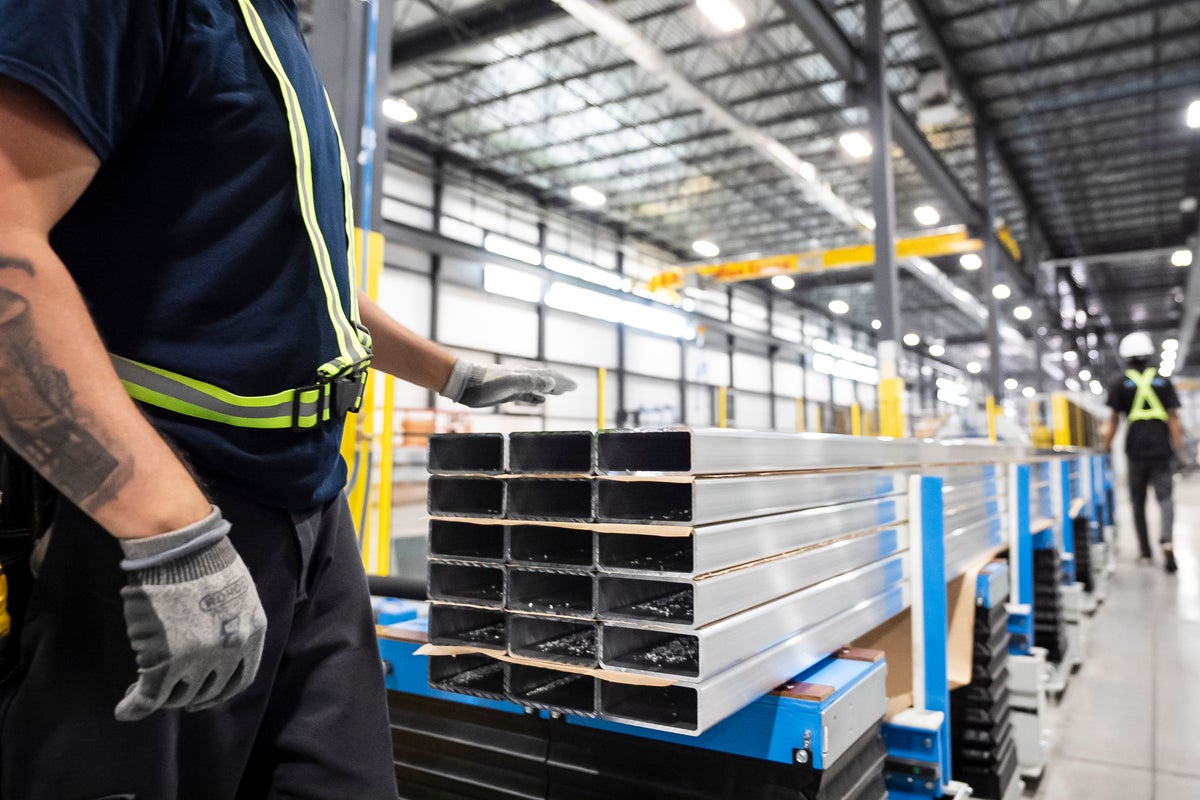
President Donald Trump stated this week that the United States does not need Canada, a claim he has made repeatedly. This assertion comes amid heightened trade tensions and the collapse of trade negotiations last Friday. Despite the President's statement, he acknowledged this week that the U.S. "desperately needs" aluminum, a resource primarily sourced from Canada.
The U.S. and Canada maintain a deeply integrated economic relationship, with approximately $872 billion in goods and services exchanged last year. The U.S. Energy Information Administration (EIA) reports that Canadian crude oil imports account for nearly 20% of total U.S. petroleum consumption. Energy exports also account for the U.S. trade deficit with Canada, which reached $48.3 billion last year; excluding energy, the U.S. would have maintained a trade surplus.
Following the breakdown of trade talks, the U.S. implemented 50% tariffs on approximately $20 billion of Canadian goods, representing 5% of Canada's exports and excluding energy. Additionally, President Trump announced Monday that 50% tariffs would be applied to Canadian cars, trucks, and auto parts beginning Jan. 1, 2027. In response, Saskatchewan Premier Scott Moe announced a 50% reciprocal charge on U.S. alcohol effective Sept. 8, while other Canadian leaders debated using oil and potash exports as potential leverage.
For the American automotive sector, the scale of impact is significant due to a supply chain where parts often cross the border up to six times before final assembly. The Jan. 1, 2027, tariff on vehicles and parts will likely increase production costs for manufacturers in states like Michigan and Ohio. Everyday consumers would notice these changes through higher prices for new cars and trucks. Furthermore, because Canadian crude oil flows primarily to Midwest refineries to be processed into gasoline, diesel, and jet fuel, any future disruption to the 4 million barrels exported daily would impact energy prices across the region.
The conflict also sets a precedent for how integrated North American supply chains are managed during political disputes. Beyond manufacturing and agriculture, the emerging artificial intelligence sector faces potential energy constraints, as Canada supplied 85% of U.S. electricity imports in 2023. While Alberta Premier Danielle Smith has rejected cutting off oil exports due to potential economic devastation in Canada, the debate over using essential commodities as leverage continues. The next major milestone is Sept. 8, when Saskatchewan's reciprocal alcohol tariffs take effect, followed by the scheduled auto tariffs in early 2027.