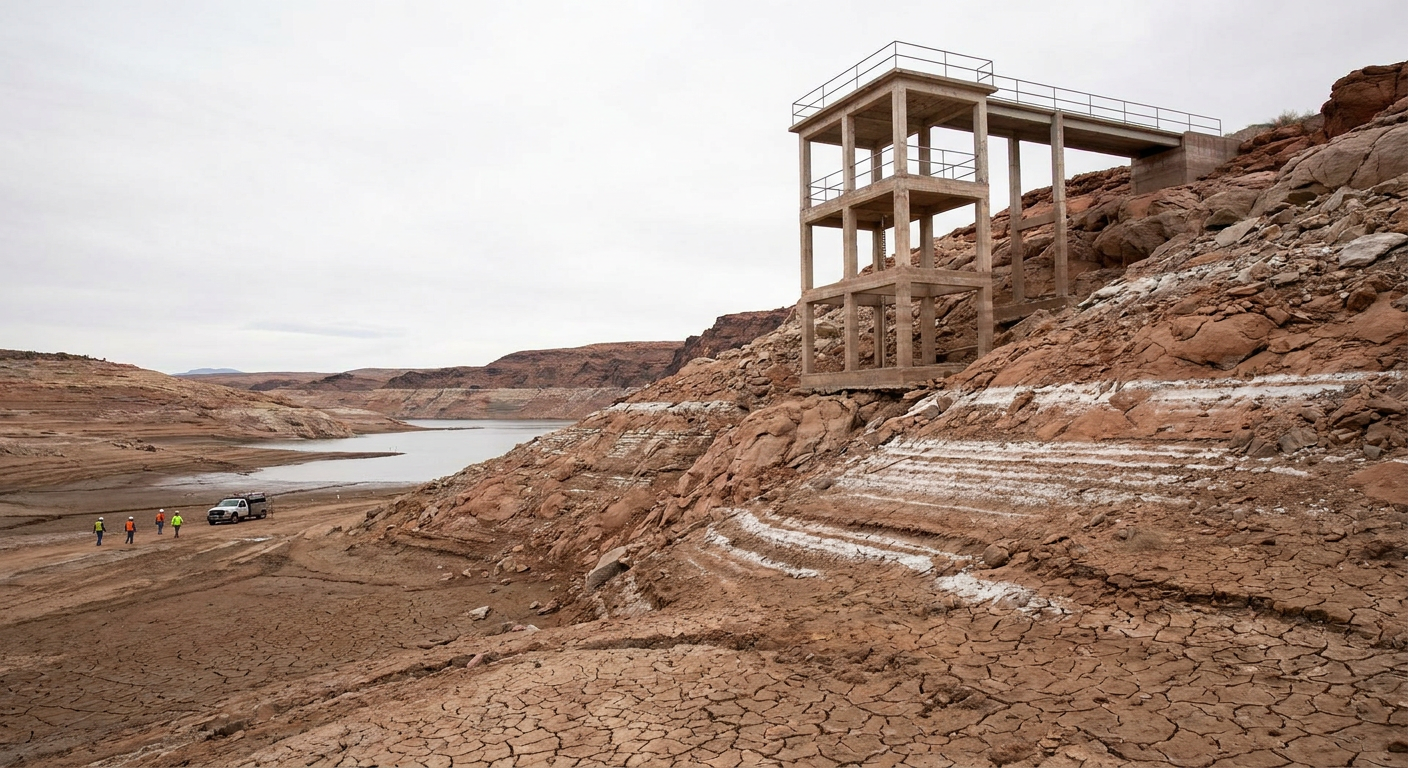
Lake Powell and Lake Mead, the two largest water reservoirs in the United States, reached record-low levels as of August 2026. These reservoirs, created by dams on the Colorado River, serve as the primary water source for approximately 35 to 40 million people across the southwestern United States.
Jack Schmidt, a senior research scientist at the Center for Colorado River Studies at Utah State University, described the current situation as a "five-alarm fire" on a scale of alarm. The reservoirs were last at full capacity in the fall of 1999, followed by a series of dry years in the early 21st century. Despite these conditions, water consumption rates remained consistent with historical levels during the initial years of the drought.
Data indicates that the average natural flow of the Colorado River has decreased by 16% in the 21st century compared to the period between 1930 and 2000. Schmidt attributed this long-term decline in runoff to a warming climate. While urban areas such as Los Angeles, Phoenix, and Las Vegas have reduced their water usage over the last 20 years despite population growth, agricultural use continues to account for 70% of all water consumed in the river basin.
The scale of the crisis is defined by a 16% reduction in natural river flow over the last 25 years, a deficit that has outpaced recent conservation efforts in cities. Agriculture, as the consumer of 70% of the basin's water, faces the most immediate pressure to increase efficiency. If winter snowfall remains low, the reliability of water deliveries for irrigation and municipal use could be further compromised, impacting food production and regional economic stability.
A final federal management plan is expected to determine the specific details of how the Colorado River system will be operated for the next two years and the decade to follow. This plan will dictate the extent of mandatory cuts to water allotments. What remains unknown is the volume of snowfall for the upcoming winter, which is the primary source of replenishment for the reservoirs.
The federal government has already announced the general parameters for managing the system through the next decade. Stakeholders are currently waiting for the final announcement of the specific operating plan that will govern water distributions for the next two years. Schmidt noted that there is no known way to reverse the shortfall in the near future without both significant snowfall and a reduction in water consumption.