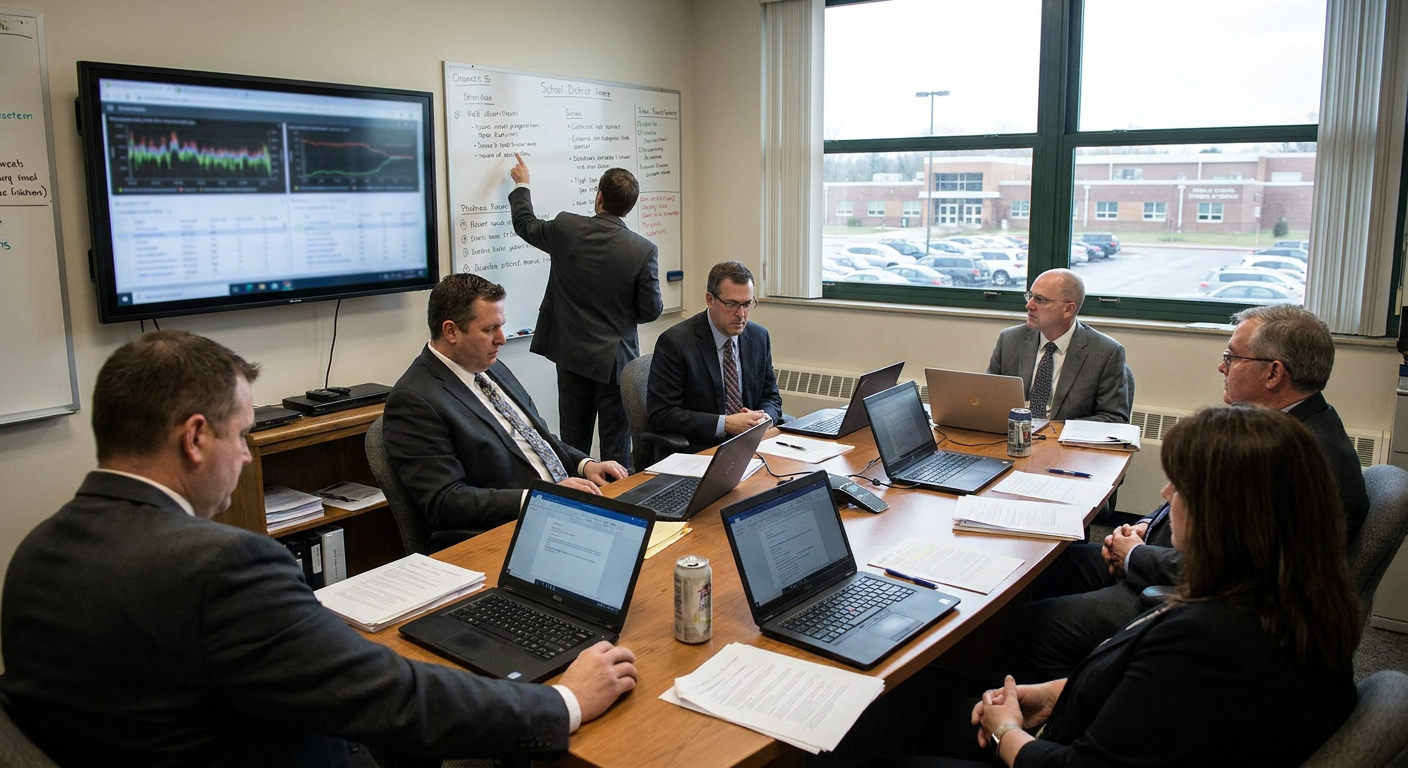
School districts across the United States are implementing artificial intelligence experiments in classrooms, though administrators report difficulty in quantifying the technology's effectiveness. In Dayton, Ohio, and Wichita, Kansas, schools are testing AI tools ranging from chatbots intended to solicit advice from students to math tutors. Educators and consultants involved in these programs state that current evaluations are largely based on student and staff perceptions rather than concrete data.
The Center on Reinventing Public Education (CRPE), which tracks AI adoption, reports that innovation in this field often lacks rigorous evidence-building. Robin Lake, who leads the CRPE, noted that the rapid pace of technological development has left many school systems feeling overwhelmed and unable to determine which tools are beneficial. Lake argued that the speed of change outside of schools necessitates these experiments despite the lack of clear measurement standards.
In the Alternative School at Jackson Center in Dayton, an AI chatbot named "Jordan" was tested during the previous school year. The bot is designed to solicit advice from students regarding social and emotional challenges, such as meeting adult expectations. While the AI grades student responses and students have reported feeling a connection to the bot, consultant Mike Kentz stated that he has been unable to measure the experiment in a concrete way beyond subjective feedback.
Wichita Public Schools in Kansas is also introducing AI tools, including an AI math tutor for high schoolers and a coding exploration day for middle school students. Katelyn Schoenhofer, the district's AI specialist, stated that the school system is wrestling with how to define success for these initiatives. The district is continuing its programs on a small scale, citing a need to educate students on technology that will likely impact their future lives and careers.
The lack of standardized measurement means that for now, the impact on student learning outcomes and mental health remains unverified by traditional metrics. If these tools are scaled without clear evidence of efficacy, it could lead to the adoption of technologies that do not improve, or potentially hinder, educational progress. However, advocates like Robin Lake suggest that failing to integrate these tools could leave students unprepared for a world changing faster than school systems. This creates a tension for school systems that must decide whether to invest in unproven technologies.
What happens next depends on the development of state and federal guidelines. Lake called for the establishment of official guardrails to help schools navigate these experiments and protect student interests. In Wichita, officials indicated they will proceed with caution and optimism, keeping current programs small while they continue to evaluate their value. Specific dates for new regulations or the expansion of these specific AI tools were not reported.