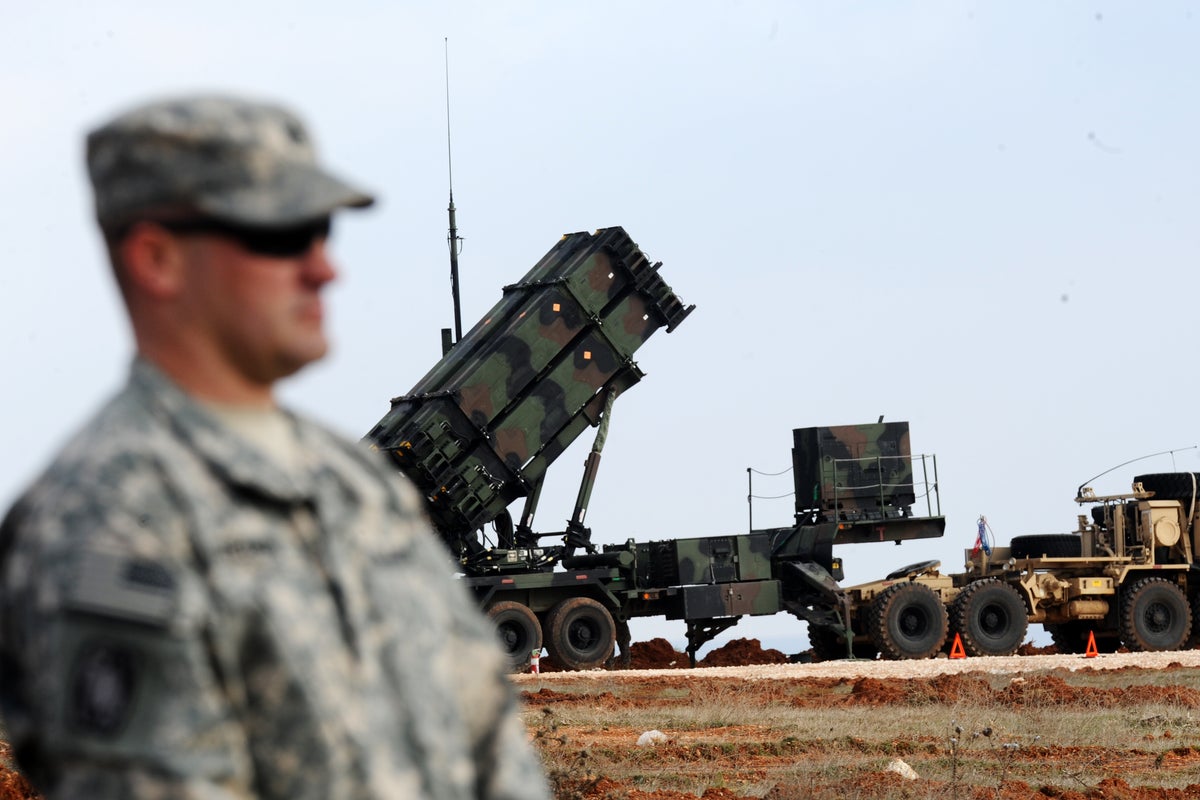
The Department of Defense announced a $3.3 billion contract with Northrop Grumman and Lockheed Martin to increase production of components for Patriot and THAAD air defense systems. The agreement, announced on Monday, aims to triple the production capacity for Patriot interceptors and quadruple the output of Terminal High Altitude Area Defense (THAAD) systems.
The contract follows a separate $58.6 billion agreement with Lockheed Martin last week for the production of Patriot interceptor missiles. U.S. officials and defense analysts have raised concerns regarding the depletion of domestic munitions stockpiles following sustained military aid to Ukraine and active engagements in the Middle East involving Iran and its proxies.
According to a report by the Center for Strategic and International Studies (CSIS), the U.S. military currently holds fewer than 1,000 Patriot and 250 THAAD interceptors. The new contract focuses on manufacturing PAC-3 solid rocket motors and ignition safety devices, effectively establishing a second production source for these critical parts to reduce supply chain bottlenecks.
Federal workers and contractors at production facilities in states where Northrop Grumman and Lockheed Martin operate will see a direct impact through increased demand for labor and facility expansion. For civilians in conflict zones, particularly in Ukraine, the delivery of these systems determines the level of protection for electrical grids and urban centers against aerial strikes. The U.S. military’s ability to defend its own bases in the Middle East also depends on the availability of these interceptors, which currently face high usage rates.
The knock-on effects of these contracts extend to the broader defense industrial base, setting a precedent for multi-year "framework agreements" designed to provide contractors with the financial certainty needed to build new factories. This strategy is also being applied to other munitions; for example, a similar deal with RTX (formerly Raytheon) intends to increase Tomahawk cruise missile production from 60 units to 1,000 per year. While the contracts are signed, the actual delivery of increased units will occur over several years, with specific production milestones and final completion dates for the expanded capacity not yet publicly disclosed.