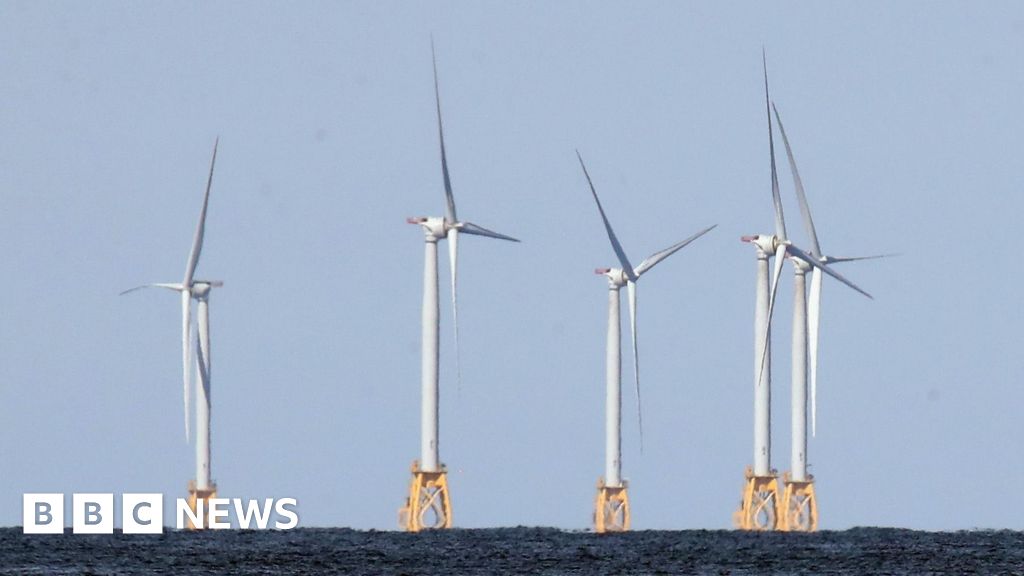
German energy company RWE announced on Friday it will abandon its offshore wind projects in the United States after reaching a $1.2 billion payout deal with the Department of the Interior (DoI). The agreement requires RWE to relinquish its leases off the coasts of California and Louisiana, as well as in the New York Bight.
The deal follows a series of similar moves by the administration of President Donald Trump to halt offshore wind development in favor of fossil fuel production. President Trump has frequently criticized wind energy, referring to turbines as "big, ugly windmills" and citing concerns regarding their impact on wildlife. The administration has previously reached multi-billion dollar agreements with other energy firms to terminate wind leases.
RWE stated that after evaluating the current regulatory environment, the company determined there was no path forward to permit the wind projects for the foreseeable future. The company plans to reinvest the $1.2 billion into conventional gas projects, including $900 million for a liquefied natural gas (LNG) export terminal in Louisiana. Overall, RWE intends to invest approximately $19.6 billion in the U.S. over the next six years to expand its generation capacity.
An ordinary resident in these coastal states will notice a change in the planned local energy mix and job market. Instead of offshore wind construction and maintenance jobs, the focus will shift to LNG terminals and "upstream conventional oil" projects. For RWE, this means a immediate pivot of $900 million into a single Louisiana export project. The administration’s approach, as described by Interior Secretary Doug Burgum, aims to move away from "costly subsidies" in favor of what he termed "common sense" energy security. This suggests that future federal energy policy will prioritize the domestic fossil fuel industry over the growth of the wind sector.
The knock-on effects include a complete halt to the permitting process for several major offshore wind farms, which sets a precedent for how the Department of the Interior handles existing renewable leases. This strategy effectively replaces renewable energy development with natural gas and oil projects, such as the LNG plants in Texas and Louisiana mentioned in recent deals with TotalEnergies and RWE. Moving forward, the industry will be watching for any further lease cancellations or the announcement of new fossil fuel drilling auctions. RWE’s planned $19.6 billion investment over the next six years will serve as a marker for how international energy firms adapt to these federal policy changes.