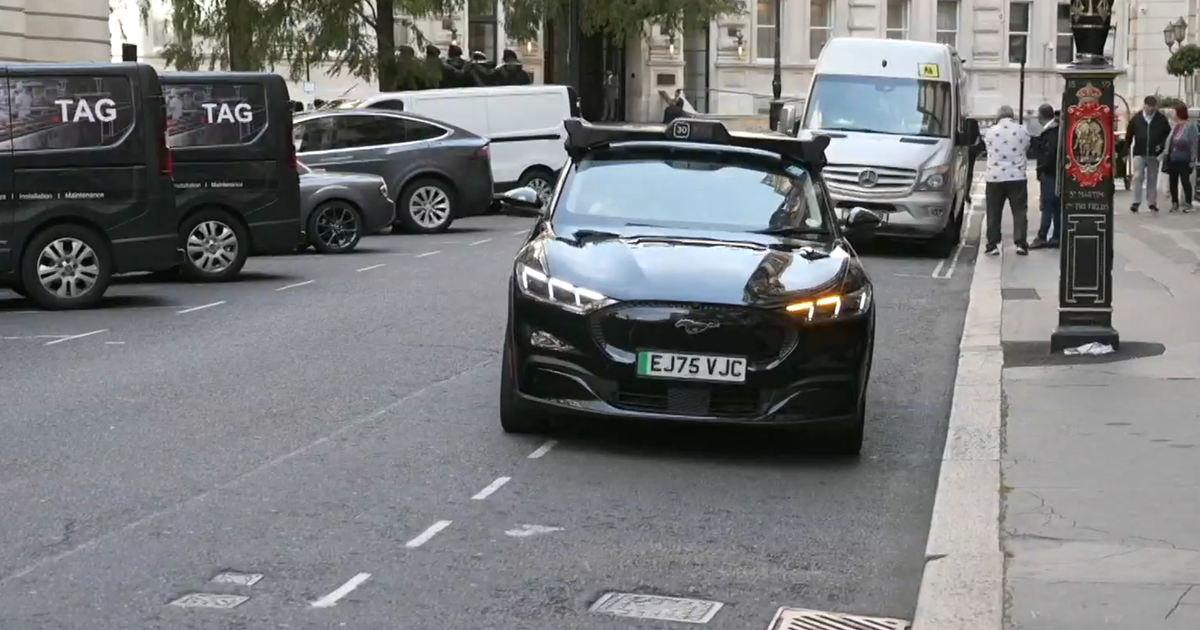
Uber launched a pilot autonomous vehicle service in London on Thursday, September 3, 2026, marking the first time robotaxis have been available through a ride-hailing app in the United Kingdom. The project is a partnership between Uber and Wayve, a British technology company backed by investors including Nvidia and Microsoft. The fleet consists of 15 autonomous Ford Mustang Mach-E vehicles equipped with artificial intelligence (AI) systems.
While the vehicles operate autonomously, London regulators currently require a human safety supervisor to remain behind the wheel. These supervisors keep their hands positioned near the steering wheel to intervene if the AI encounters an unpredictable scenario. The trial covers travel throughout London, though the vehicles are not yet permitted to make trips to airports.
During initial test rides, journalists reported instances where human intervention was necessary. A CBS News crew reported that a vehicle became stuck while attempting to navigate a narrow passageway, requiring the supervisor to take control. Sky News correspondent Rowland Manthorpe reported that a vehicle became confused near Parliament Square when police blocked a road due to a protest, causing the steering wheel to turn in the wrong direction and necessitating a manual override by the safety driver.
Wayve CEO Alex Kendall stated that the company’s AI differs from competitors like Waymo because it does not rely on pre-mapped data. Instead, the system uses sensors, cameras, and microphones to make real-time decisions, having been trained on millions of hours of driving data. Wayve has previously tested its technology in more than 500 cities globally. Kendall noted that London presents unique challenges, featuring 10 times more cyclists and pedestrians and 10 times more roadwork than cities like San Francisco.
The launch affects licensed black cab drivers in London, whose numbers have decreased from about 25,000 in 2010 to approximately 16,000. While Uber’s global head of autonomous mobility, Sarfraz Maredia, stated he does not view robotaxis as a "near-term risk" to traditional drivers, the introduction of 15 autonomous vehicles represents a new development in the transportation industry. For passengers, the service generally costs the same as standard UberX, Uber Electric, or Uber Comfort fares, though CBS News reported a 20% surcharge for their robotaxi ride.
Proponents, citing data from U.S.-based Waymo, argue that autonomous vehicles have 80% fewer injury crashes than human drivers, potentially reducing traffic-related injuries and deaths. However, the current requirement for a human supervisor means passengers will not yet notice a difference in the cabin environment beyond the presence of monitoring equipment and the safety driver.
The success of this trial will determine the pace at which regulators in the United Kingdom grant licenses for full autonomy without human supervisors. Wayve continues to refine its software using data from these real-world interactions. The trial is ongoing, with no specific end date reported, as the companies work toward a future goal of operating vehicles without a human presence in the front seat.