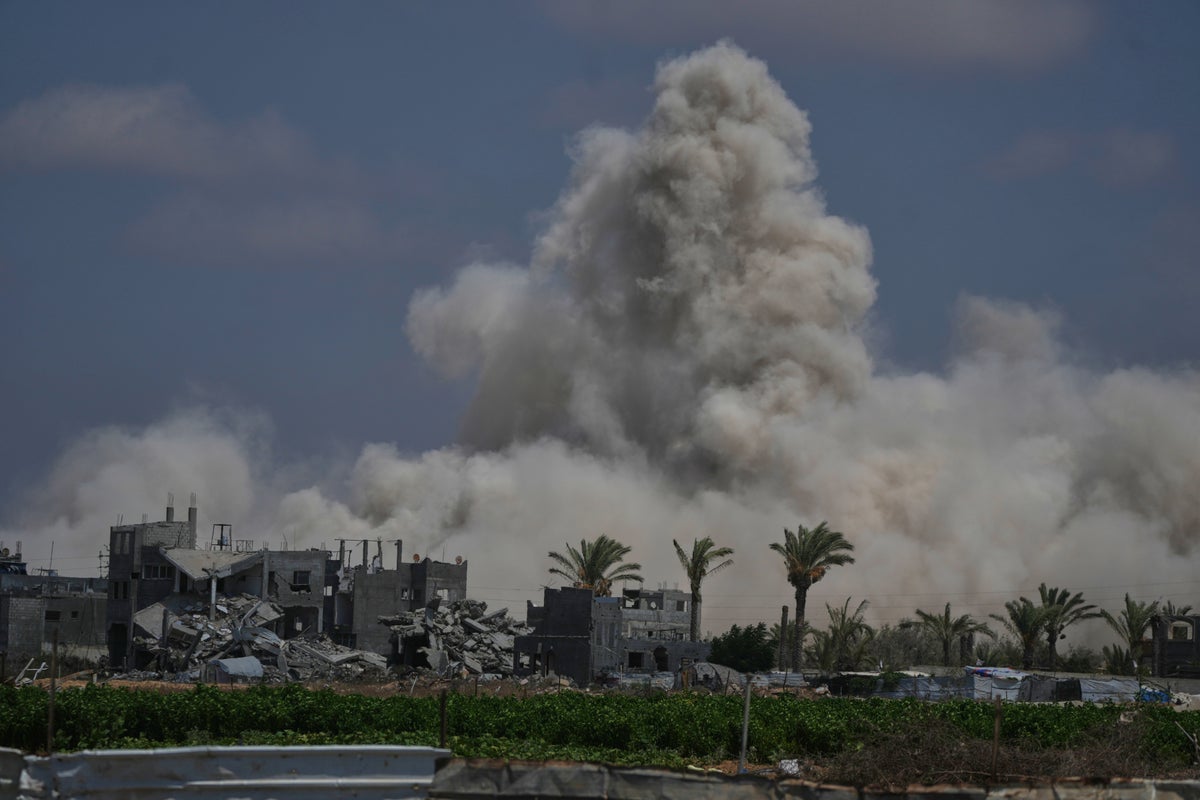
Military officials from Uganda and Burundi traveled to Israel last week to discuss joining an international security force for the Gaza Strip. The proposed deployment is part of a plan developed by U.S. President Donald Trump’s Board of Peace to maintain a ceasefire in the region. According to a Board of Peace official, Uganda is currently finalizing details for its participation following parliamentary approval this month, while discussions with Burundi remain in the preliminary stages.
The proposed International Stabilization Force, which would be led by U.S. Maj. Gen. Jasper Jeffers, is intended to reach a total of 20,000 personnel. The force is tasked with monitoring the ceasefire, securing humanitarian aid deliveries, and training Palestinian police. This deployment would occur in areas administered by a technocratic committee as Israeli forces withdraw under a U.S.-brokered deal announced last month.
While Uganda has committed approximately 1,200 personnel, the overall recruitment for the force remains below the 20,000-troop goal. Other nations that have pledged support include Morocco, which committed up to 500 troops, and Kosovo, Kazakhstan, and Albania, which have pledged a combined total of 80. Indonesia previously prepared 8,000 troops but paused the deployment following U.S. and Israeli military actions against Iran.
The implementation of the force depends on a stalled ceasefire agreement that began in October. While Hamas has reportedly agreed to the new U.S. deal involving disarmament, Israeli Prime Minister Benjamin Netanyahu has rejected it. Netanyahu stated that Israel will not withdraw from the roughly 60% of Gaza it currently controls until Hamas is fully disarmed. Despite recent meetings between U.S. negotiators and Israeli leadership, no formal commitment has been made by Israel.
For the governments of Uganda and Burundi, these deployments offer a shift in military focus as their long-term peacekeeping missions in Somalia wind down. Paul D. Williams of The George Washington University noted that these nations may seek financial and material support for their militaries through these U.S.-backed operations. The scale of the mission is significant for the region; if fully realized, the 20,000 personnel would represent one of the most substantial international interventions in Gaza’s history, costing an undisclosed amount in U.S. and international funding.
The success of the mission hinges on the disarmament of Hamas and the withdrawal of Israeli forces. A person living in Gaza would notice the transition to Palestinian police training and the presence of African and European troops in their neighborhoods instead of the Israeli Defense Forces. The next steps depend on further negotiations between the U.S. Board of Peace and potential troop contributors, as well as high-level diplomatic efforts to secure a formal withdrawal agreement from the Israeli government.