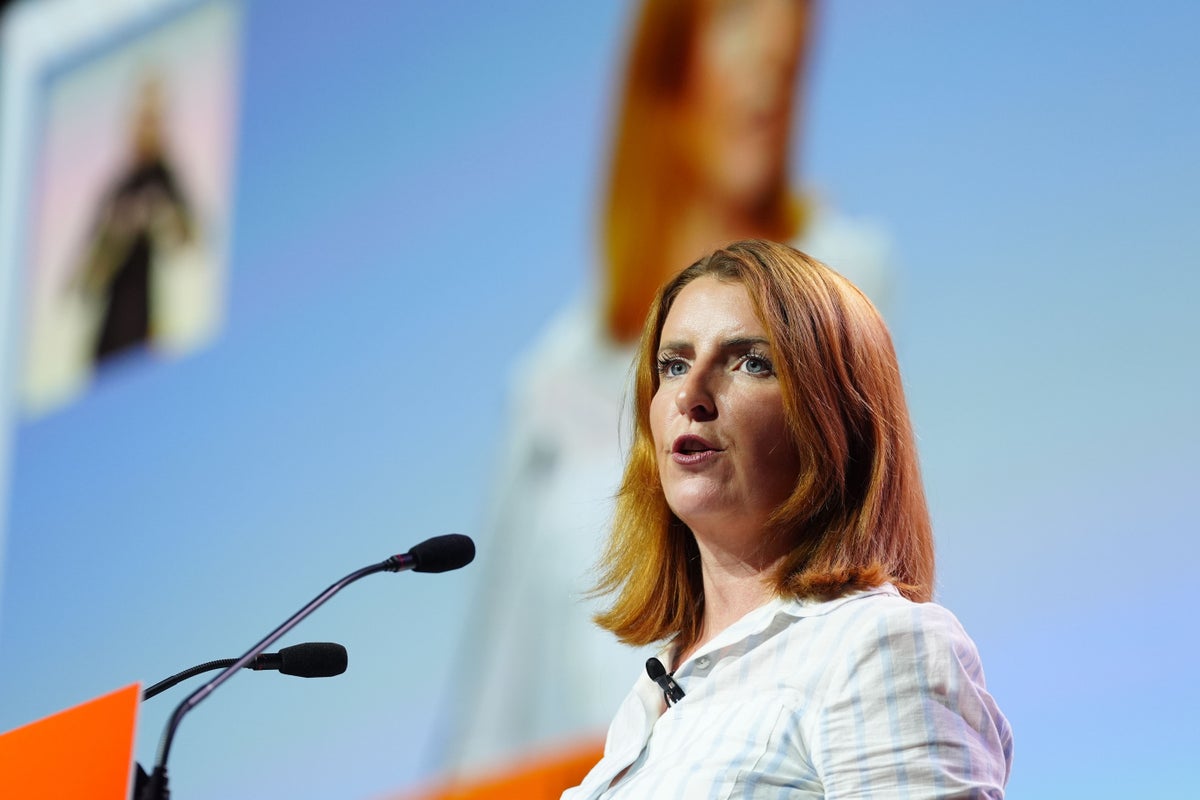
First Secretary Louise Haigh stated on Tuesday, September 15, 2026, that artificial intelligence (AI) presents significant risks to national security and society unless the government implements specific safety measures. Speaking at the Trades Union Congress (TUC) in Brighton, Haigh noted that while the technology has the potential to improve public services and scientific progress, the government has a duty to mitigate its negative impacts.
The statement follows recent remarks from U.S. President Donald Trump, who described concerns regarding AI risks as a "hoax." Trump has argued that government-imposed guardrails could slow American technological development and allow Chinese companies to gain a competitive advantage. He stated on his Truth Social platform that the necessary oversight for AI is a "strong and smart" president.
Haigh told trade union members that the UK is prepared to work with international partners to address these concerns. She noted that people are concerned about the impact of AI on their employment and the safety of future generations. Her address occurred after Prime Minister Andy Burnham canceled his appearance following the death of his father.
Other government officials and lawmakers also commented on the technology's oversight. Business Secretary Jonathan Reynolds told the BBC that while public concern is understandable, the public should have confidence in existing UK safeguards, advising against both complacency and hyperbole. Liam Byrne, chairman of the Commons Business, Innovation, Science and Trade Committee, stated that public concern regarding inadequately governed AI has increased recently.
The scale of government intervention remains undefined in terms of specific dollar amounts or new agency budgets, but the impact is framed as a national security priority. By calling for "guardrails," the UK government is signaling a regulatory approach that contrasts with the current U.S. executive position. This could lead to different operating environments for multinational tech firms depending on which country they are based in or serving, potentially affecting the speed at which new AI features are released to the public.
Future policy will be informed by upcoming testimony from the AI Security Institute, a UK government watchdog. This testimony will provide lawmakers with technical details on current risks and the effectiveness of existing oversight. The outcome of these discussions may determine whether the UK introduces new legislation to restrict how AI is developed or deployed by private businesses.
On October 13, 2026, the AI Security Institute is scheduled to give evidence before the Business, Innovation, Science and Trade Committee in Parliament. This session will allow lawmakers to question the watchdog regarding the safety of current AI development. No specific dates for new legislative proposals or international agreements were reported.