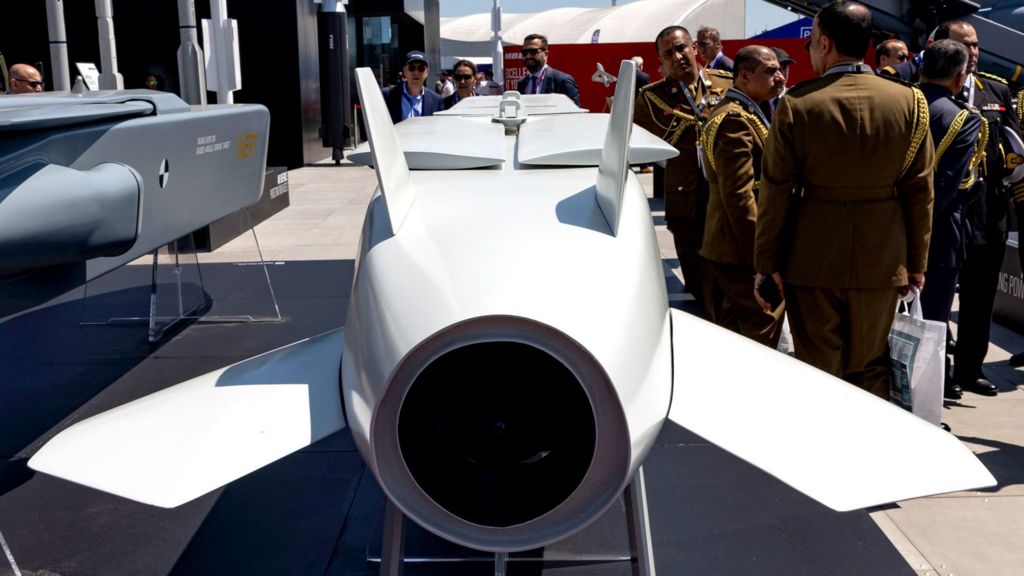
British Prime Minister Andy Burnham met with Ukrainian President Volodymyr Zelensky in Kyiv on Monday to hand over blueprints for the Storm Shadow cruise missile. The agreement, which follows a similar move by France, is intended to allow Ukraine to produce the British-French designed long-range weapons domestically.
The transfer occurs as Ukraine seeks to expand its own arms industry to sustain a protracted conflict. While Britain and France have previously supplied Storm Shadow and SCALP missiles for strikes on military targets, Western nations have generally produced these advanced weapons in small quantities at high costs. The UK military has stopped purchasing Storm Shadows for its own use, transitioning instead to "Project Brakestop," a program to develop cheaper cruise missiles free of foreign components.
Ukraine currently produces approximately 70% of its own weaponry, largely by utilizing mass-produced parts for drone technology. However, the domestic production of complex cruise missiles presents technical hurdles. Experts such as Douglas Barrie of the International Institute for Strategic Studies (IISS) noted that while familiarity with the missile may help, the impact depends on how quickly local assembly lines can be established amid global supply chain constraints.
For the average citizen in Ukraine, the establishment of these assembly lines could eventually influence the effectiveness of national air defenses and long-range strike capabilities. However, the transition will not be immediate. Analysts suggest it could take months or years for Ukraine to source the necessary components and begin domestic manufacturing. In the interim, Ukraine faces a shortage of ballistic missile interceptors, such as the US-made Patriot, which costs £3 million per missile. While the US plans to increase Patriot production from 600 to 2,000 units annually, that expansion is expected to take several years.
The precedent set by this blueprint transfer may encourage further technology sharing, such as "Project Freya," a European-supported effort to help Ukraine develop its own interceptor missiles. The long-term impact on the regional arms market will depend on whether Ukraine can successfully mass-produce these systems at a lower cost than traditional NATO manufacturers. What happens next includes the UK's goal to have its own new "Project Brakestop" missile ready by the end of the year, while a Ukrainian company, Fire Point, aims to have its own ballistic missiles ready for use in 2027.