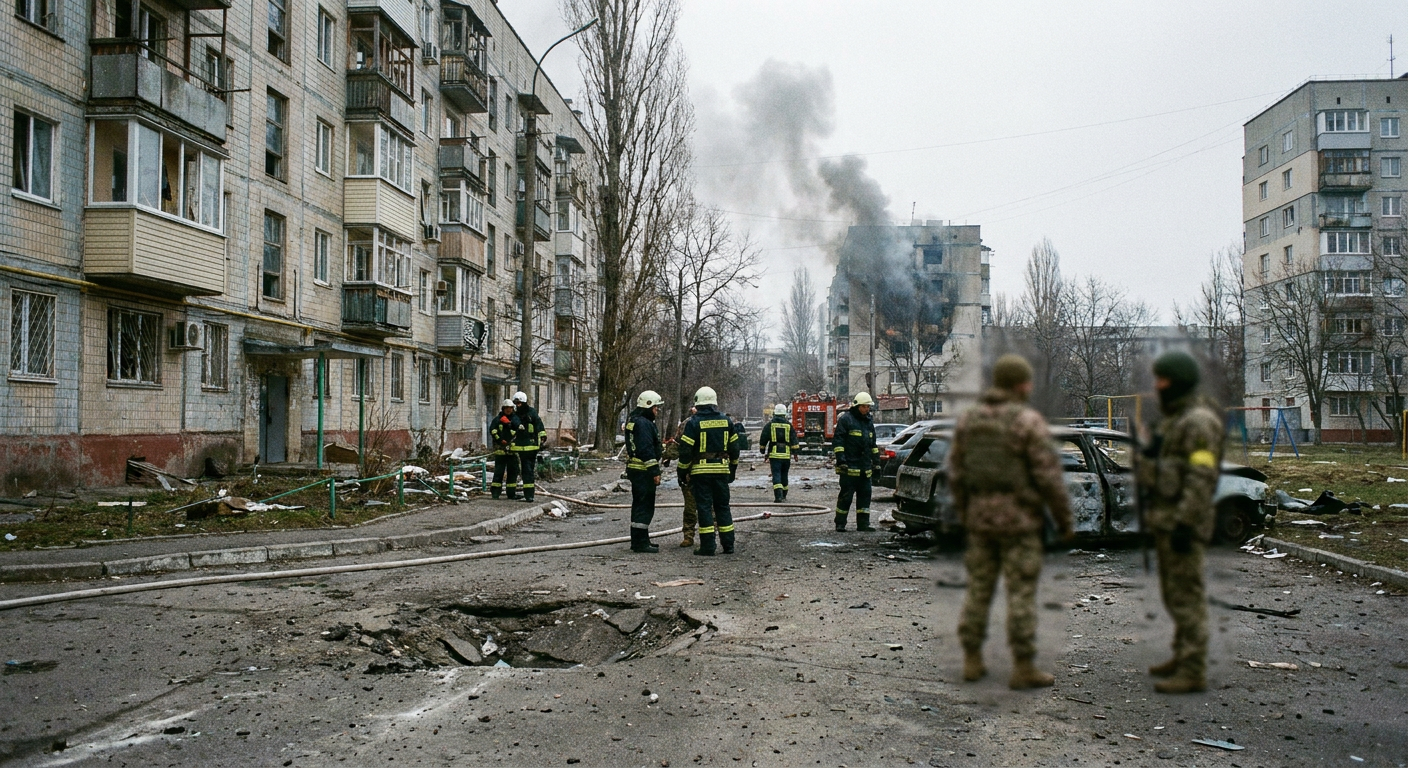
Ukraine and Russia exchanged a series of aerial attacks over the weekend, including a major drone strike on St. Petersburg and Russian missile strikes across Ukraine. According to Russia's regional governor, Ukrainian drones targeted energy infrastructure, a refinery, and a port oil terminal in and around St. Petersburg, causing significant fires. Russia’s defense ministry reported intercepting 1,000 drones across various regions that night.
The escalation follows recent missile strikes by Russia that killed at least 11 people in Ukraine. The drone attack on St. Petersburg, which resulted in at least one death and over a dozen injuries, is described by NPR’s Moscow correspondent as the largest on that city since the 2022 invasion began. This increase in hostilities coincides with a public disagreement between U.S. President Donald Trump and Ukrainian President Volodymyr Zelenskyy regarding the conduct of the war.
President Trump has criticized Ukraine’s targeting of Russian energy facilities, describing a previous strike on Moscow as a "disgrace." According to the report, Trump recently reached an agreement with Russian President Vladimir Putin to import Russian diesel in an effort to lower U.S. gasoline prices. Trump has attributed rising fuel costs to Zelenskyy’s military actions, while economists cited in the report attribute the price increases to U.S. military actions in Iran.
The scale of this policy change is reflected in the potential for significant shifts in global energy markets and U.S. foreign aid. By waiving the sanctions, the Trump administration is allowing continued Russian energy sales that would have otherwise faced high tariffs, a move Trump stated was necessary for national interest and to keep Russia engaged in peace negotiations. For U.S. voters, the administration expects these moves to translate into lower gas prices at the pump ahead of the upcoming midterm elections. Conversely, President Zelenskyy stated on NBC’s "Meet the Press" that U.S. support for Putin would be a "historic mistake" and a "tragedy" for his country's future.
What happens next depends on the continued use of executive waivers and the reaction from Congress. While the Kremlin’s White House envoy, Kirill Dmitriev, called the recent dealmaking "truly historic," members of the U.S. Congress have expressed opposition. Rep. Don Beyer (D-VA) is among the lawmakers who disagree with the president's approach of relieving pressure on Russia. Future developments are likely to center on the impact of Russian diesel imports on U.S. energy prices and whether the administration continues to bypass the sanctions outlined in the legislation named for the late Sen. Lindsey Graham.