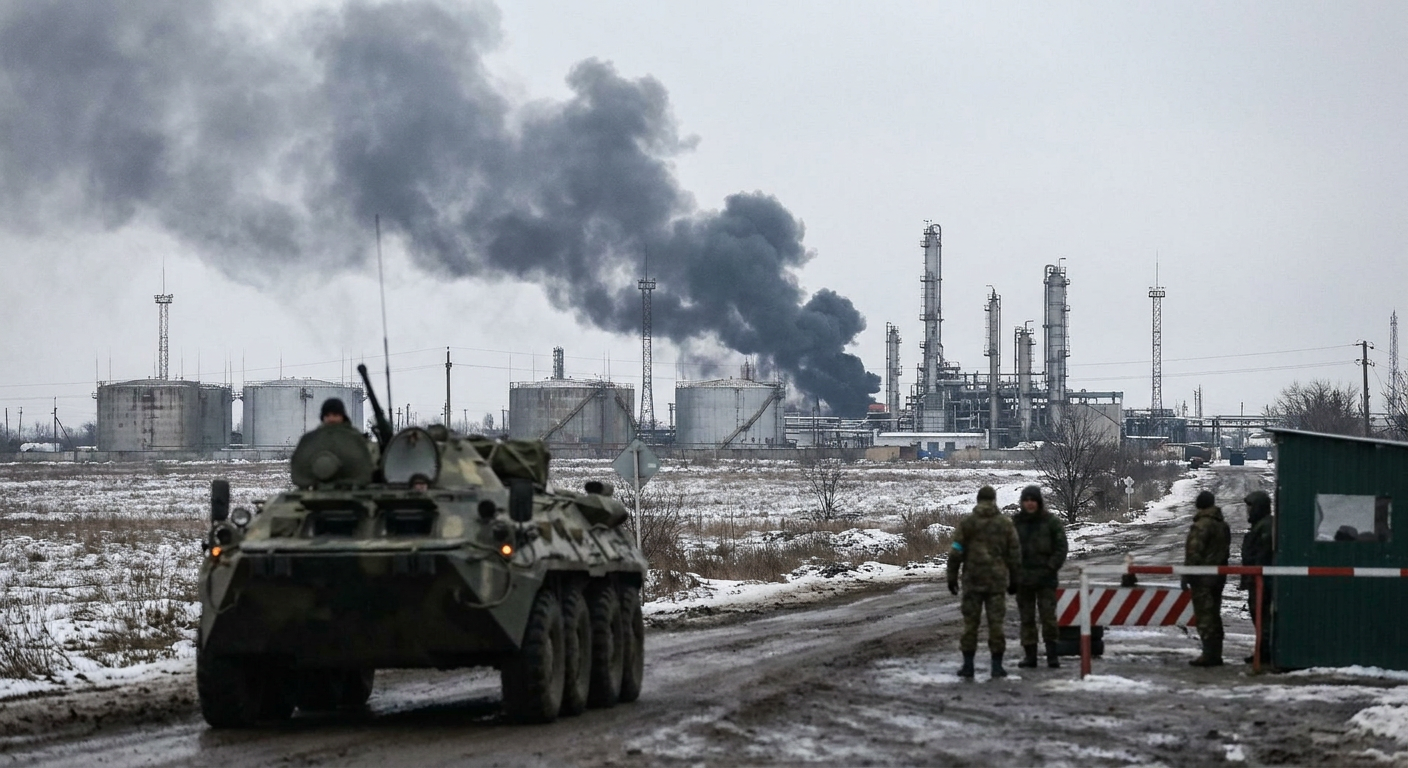
Russian authorities reported that Ukraine struck a major oil refinery in Ryazan, southeast of Moscow, on Thursday. The strike followed a statement from Ukrainian President Volodymyr Zelenskyy, who said he was "done" attempting to adhere to an energy ceasefire proposed by U.S. President Donald Trump. Zelenskyy stated his decision was based on Russia's continued attacks against Ukrainian heating and electrical infrastructure.
The recent exchange occurs amid a public disagreement between President Trump and President Zelenskyy regarding the management of the conflict. Trump has proposed an energy ceasefire and recently reached an agreement with Russian President Vladimir Putin to purchase Russian diesel fuel, a move intended to lower U.S. gas prices before the upcoming midterm elections. Zelenskyy has criticized the diesel agreement, stating it provides billions of dollars for Russia’s military efforts.
During an interview on Newsmax, President Trump stated that President Zelenskyy does not want to settle the conflict and remarked that dealing with Putin was "easier" than dealing with the Ukrainian leader. Meanwhile, the Ukrainian air force confirmed to NPR that it has exhausted its supply of U.S.-made Patriot missiles. These missiles serve as the primary defense against Russian ballistic missiles currently targeting Ukrainian infrastructure.
President Putin described the refinery strike as part of a pattern of Ukrainian attacks on energy facilities and commercial warehouses. He stated that Russia would "avenge twice over" such actions. Additionally, Ukrainian drones have recently targeted Russian data centers and major technology companies to disrupt services. Putin is scheduled to speak at an energy conference in Moscow to further discuss energy markets.
For the Ukrainian government and military, the loss of Patriot missile interceptors means a concrete reduction in the ability to protect major cities and energy grids from ballistic strikes. Residents in these areas may notice increased service disruptions and higher risks during air raids. In Russia, the shift in Ukrainian tactics to target data centers and tech companies represents a change that could affect daily digital services and internet access for the Russian population.
The disagreement between the U.S. and Ukrainian administrations sets a precedent for how future peace negotiations and military aid may be handled. The Kremlin has confirmed it has begun releasing fuel to global markets as part of the agreement with the U.S. further details may be disclosed during President Putin's upcoming speech at a Moscow energy conference. Specific dates for new aid packages or diplomatic meetings were not reported.