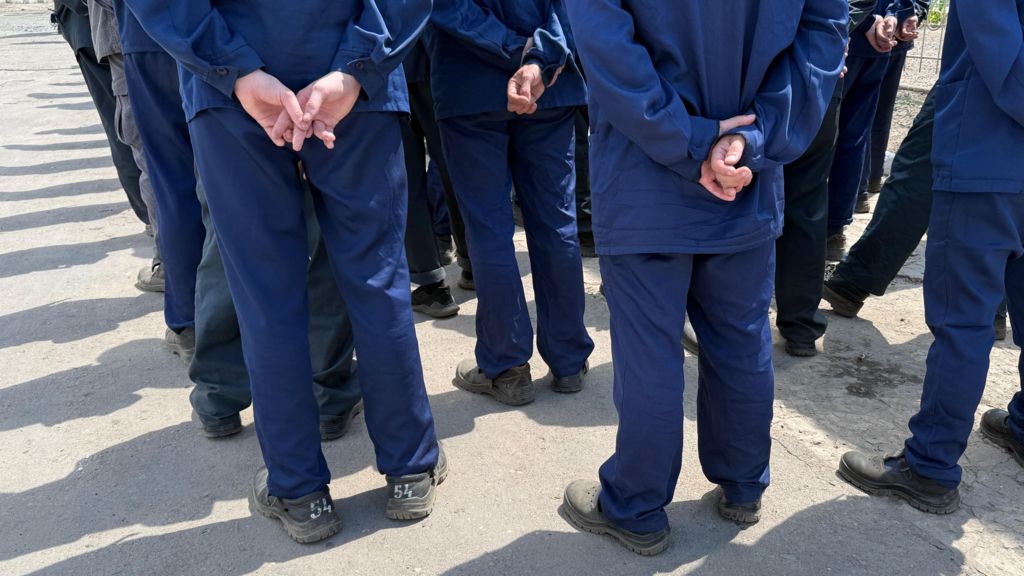
A prisoner of war camp in western Ukraine is currently holding Ukrainian-born men who were captured while fighting for the Russian military. These prisoners, many from the occupied Donbas region, face treason charges from the Ukrainian government while being housed alongside Russian nationals. According to Petro Yatsenko of Ukraine’s coordination headquarters for PoWs, many of these individuals hold pro-Russian views and possess a "blurred" national identity.
The presence of these soldiers highlights the long-term impact of Russian control in eastern Ukraine, where some areas have been occupied since 2014. Captives interviewed at the facility described being raised with Russian schooling and media that characterizes the government in Kyiv as illegitimate. While Ukraine officially considers these men its own citizens and views the Russian occupation of their home regions as temporary, the legal system treats their military service for Russia as a criminal act against the state.
Interviews with the prisoners revealed varying motivations for joining the Russian side. One soldier, Anton, stated he volunteered at age 18 to defend his land, identifying as Russian due to his family roots. Another prisoner, Artyom, cited a desire for payment and grievances dating back to 2014, though he noted he never received his promised 400,000 rouble ($5,000) sign-up fee. Conversely, one unidentified man from the Donetsk region claimed he was forced to fight against his will, echoing Ukrainian intelligence estimates that more than 50,000 Ukrainians have been conscripted by Russia.
For the broader Ukrainian public and government, these prisoners represent a complex hurdle for reintegration and prisoner exchange programs. The BBC reports that Russia has shown less interest in trading for Ukrainian-born soldiers compared to Russian nationals, with only about a dozen such transfers occurring this year. This leaves these men in a legal limbo: they are viewed as traitors by Kyiv and as expendable by Moscow. A captured soldier would notice this disparity in real-time, as seen in the prison hospital where a wounded Russian national received five times the payment of a wounded Ukrainian-born soldier for the same service.
The long-term effects involve the precedent of how a state treats a generation of citizens raised under foreign occupation. As these men work within the camp making coffins and Christmas decorations to earn money for food, the Ukrainian government attempts re-education through videos debunking Russian territorial claims. However, the prisoners' reported lack of interest in these materials suggests that shifting these ideological views may take years, if it is possible at all. Future policy regarding the Donbas and Crimea will be shaped by how these tens of thousands of individuals are eventually reintegrated or punished once the conflict ends or exchanges are processed. Currently, no specific dates for mass exchanges of these specific prisoners have been set.