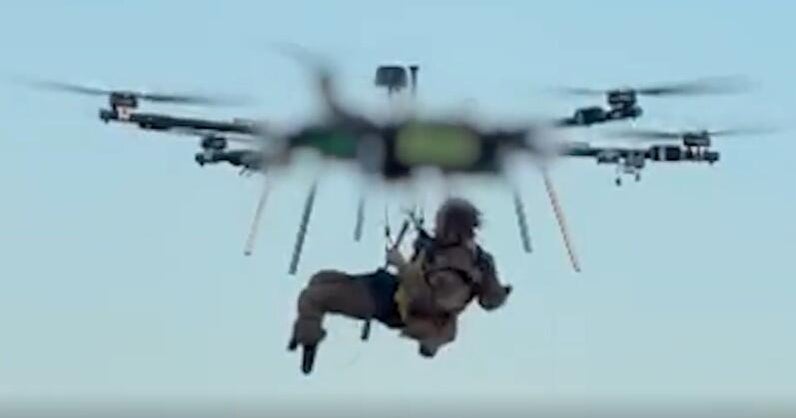
The Ukrainian Ground Forces' 92nd Assault Brigade reported Monday that it successfully evacuated a wounded soldier from a front-line position using a heavy-lift aerial drone. The military characterized the operation as a first-of-its-kind rescue for the nation, which has increasingly relied on unmanned aerial vehicles (UAVs) during the conflict with Russia.
The soldier, Konstantyn Vlasenko of the 30th Separate Brigade, had been at his position for nearly 500 days. According to Ukrainian news outlets and military statements, Vlasenko was unable to be reached by ground forces or robotic units due to heavy Russian drone activity and dense minefields. While trapped earlier this year, Vlasenko was wounded by a Russian drone and performed partial self-amputations on both of his legs while awaiting rescue.
The rescue utilized a Ukrainian-made Gurzuf Defence heavy hexacopter. Originally designed as an attack drone for dropping munitions, the aircraft was modified by specialists to transport a person without flipping or losing stability. The 92nd Brigade stated that the operation involved four different brigades and required seven days of preparation. The flight itself lasted approximately one hour and 15 minutes, covering nearly 40 miles, while other Ukrainian drone units provided distractions to Russian forces.
Pavlo Feldbloom, co-founder of Gurzuf Defence, told CBS News that the drone was developed as a modular, multi-mission platform rather than a dedicated evacuation vehicle. He stated that while the technology is capable of such missions, the company does not expect aerial evacuation to become a routine practice due to the high risks faced by a wounded person during flight. Feldbloom described aerial transport as a "last resort" for cases where no other life-saving options exist.
For soldiers and their families, this indicates that survival and extraction may be possible even after prolonged isolation behind minefields. However, the concrete day-to-day impact remains limited, as the manufacturer stated the risks of aerial drone transport are too high for widespread use. A person in a position similar to Vlasenko's would only notice this change if all ground-based methods, such as the robotic ground drone that was destroyed during the first attempt to reach him, had failed. The military has not indicated that this will replace standard medical evacuation (MEDEVAC) protocols.
The next steps for this technology involve further testing of the hexacopter's modular configuration. While the specific rescue was completed in 75 minutes, the seven-day preparation period suggests that such missions currently require significant specialized coordination. No specific dates for future drone evacuations or formal military-wide adoption have been announced. Vlasenko is currently on friendly ground receiving further medical care following his landing.