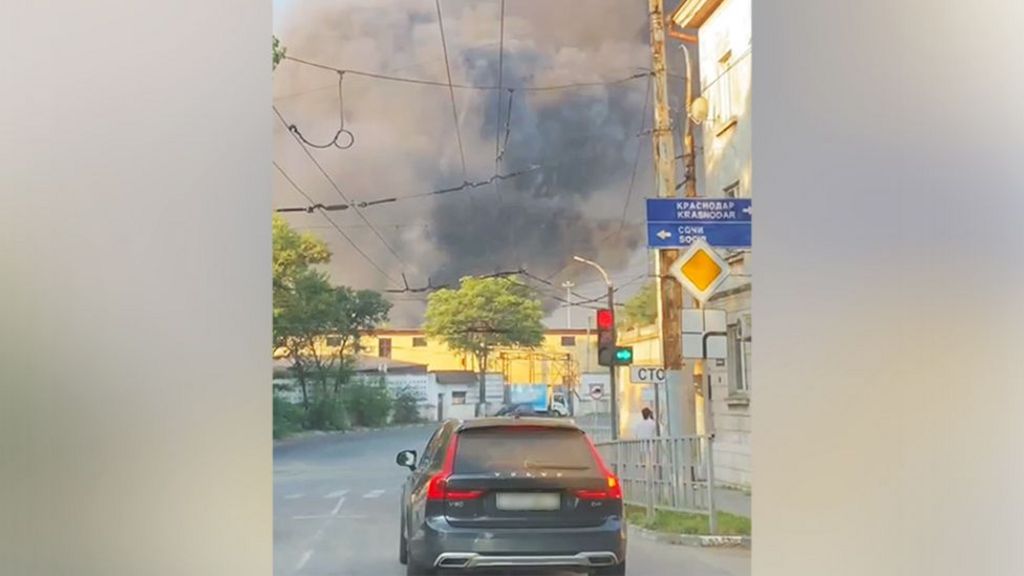
A series of Ukrainian drone and missile strikes hit the Russian port of Novorossiysk overnight, damaging two major grain export terminals and a naval base. Local officials reported that three people, including an eight-year-old child, were killed in the attack, with another 24 people injured. While Ukrainian President Volodymyr Zelensky described the "unique operation" as an attack on the Russian naval base, he did not specifically mention the grain terminals. Two major grain trading companies later confirmed to news agencies TASS, Reuters, and RBK that their facilities had been damaged in the barrage.
The attack on Novorossiysk, one of Russia's largest ports, follows a shift in Russian naval operations. Most of Russia's Black Sea fleet is currently docked there after moving from its former base in Sevastopol, which was considered too exposed to Ukrainian strikes. In addition to the port damage, regional Governor Veniamin Kondratyev stated that several hundred drones struck the surrounding Krasnodar region, damaging dozens of buildings and killing one man. On the same night, Russian aerial strikes in Ukraine killed at least 11 civilians, the majority of whom died during missile and glide bomb attacks on Zaporizhzhia.
The Russian agriculture ministry stated on Wednesday that it is working to redirect cargo flows to alternative routes, including the Baltic and Caspian Seas, due to what it described as "logistical constraints." While Russia has not officially commented on Ukraine's military claims, the Ukrainian military reported that four Russian warships, including two frigates, were hit. Emergency measures were declared in Novorossiysk on Wednesday after the strikes damaged pipelines and suspended the city's water supply.
The scale of the conflict's impact on food trade is reflected in recent reporting from the Ukrainian Agribusiness Club, which noted a 23% decrease in Ukrainian exports in July following Russian strikes on cargo ships and the port of Odesa. Russian foreign ministry spokeswoman Maria Zakharova stated that strikes on agricultural infrastructure have led to increased global food prices and grain shortages. These disruptions change the daily reality for international buyers who must now contend with higher costs or find alternative suppliers as both nations continue to target shipping facilities and maritime corridors.
The knock-on effects extend to global logistics and regional stability. Russia's efforts to redirect cargo to the Baltic and Caspian Seas involve shifting millions of tons of grain to land routes and more distant ports, which typically increases transportation costs. This sets a precedent for the continued targeting of civilian-adjacent infrastructure as a tool of war. What happens next depends on the effectiveness of Russia’s redirected logistics; meanwhile, Zakharova stated that Russia will continue its strikes on Ukrainian maritime facilities until security threats in the Sea of Azov and Black Sea are eliminated. No specific dates for the restoration of the Novorossiysk terminals were reported.