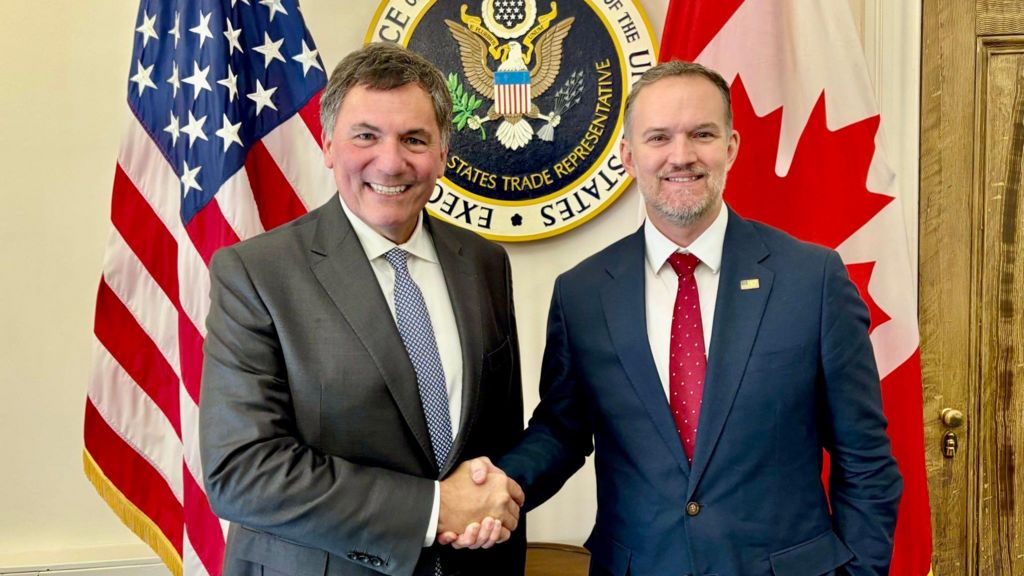
United States and Canadian officials announced Wednesday that they are finalizing a trade agreement intended to resolve several ongoing commercial disputes. President Donald Trump and Prime Minister Mark Carney both described the discussions as successful following a 45-minute meeting between negotiators in Washington. The announcement comes after the Trump administration paused a planned 50% tariff on a variety of Canadian goods that was scheduled to take effect overnight.
Negotiators met for a third consecutive day on Wednesday as they worked toward a weekend deadline. The U.S. had previously imposed these tariffs in response to what it characterized as unequal treatment of American dairy, alcohol, and automobiles. Canada, in turn, has sought the removal or reduction of U.S. tariffs on Canadian steel, aluminum, lumber, and automobiles. While specific details of the new agreement have not been released, U.S. Trade Representative Jamieson Greer stated the deal would eliminate "irritants" and strengthen the North American economy.
President Trump stated that Canada agreed to remove tariffs on U.S. farmers, though he did not name the specific agricultural sectors involved. When asked if the U.S. would reduce its own tariffs on Canada, Trump replied, "a little bit." Meanwhile, Canadian Trade Minister Dominic LeBlanc said Canada’s dairy supply management program, which uses production and import quotas to set prices, would remain "entirely intact." The U.S. has previously requested greater access for American cheese producers and the removal of Canadian provincial bans on U.S. alcohol sales.
The scale of the economic impact is represented by the 50% tariff rate the U.S. had planned to implement on Wednesday, which is now paused until the weekend. In Canada, public sentiment is closely tied to these negotiations; a Leger poll found that 56% of Canadians support a hardline approach rather than making significant concessions. For American dairy farmers, the outcome of talks regarding Canadian import quotas could determine their level of access to the Canadian cheese market, which has been a primary U.S. demand.
The agreement sets a precedent for how the two largest trading partners in North America manage sudden tariff escalations and retaliatory bans, such as the Canadian provincial restrictions on U.S. alcohol. If finalized, the deal may provide what Prime Minister Carney called "greater certainty" for strategic sectors, potentially stabilizing supply chains that have been disrupted by shifting tax rates. U.S. Trade Representative Greer is scheduled to brief Congress and stakeholders on the specific terms of the deal shortly. The current pause on new U.S. tariffs is set to expire this weekend, marking the deadline for the finalization of the agreement.