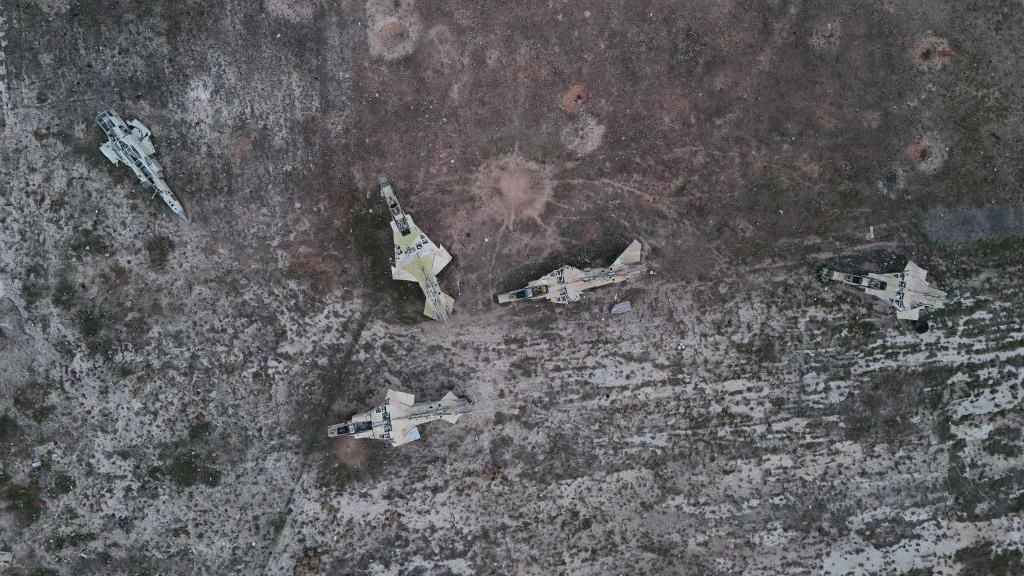
The United States issued a statement on Tuesday criticizing Israeli airstrikes on a Syrian military airbase, characterizing the action as an "unnecessary escalation." Eight airstrikes targeted the runway and storage facilities at the Abu al-Duhur airbase in northern Syria. Syrian state television reported the strikes but noted there were no immediate reports of injuries following the incident.
The strikes follow a period of transition in Syria, where the government of President Ahmed al-Sharaa took power after the December 2024 overthrow of the Bashar al-Assad administration. While Israel has not directly commented on the specifics of the Tuesday strikes, Prime Minister Benjamin Netanyahu’s office stated that Syria was "on the verge of breaching" a security status quo by allowing Turkish troops to deploy at the airbase near Aleppo. Syria and Turkey both accused Israel of violating Syrian sovereignty and endangering regional stability.
Tom Barrack, the U.S. Ambassador to Turkey and special envoy for Syria and Iraq, stated that the confirmed strikes do not advance regional stability. Barrack noted that President al-Sharaa has indicated a preference for de-escalation and has not maintained proxy forces. Turkey’s Communications Directorate rejected Israel's claims that Turkish presence posed a threat, calling the allegations an attempt to legitimize "unlawful airstrikes."
For the residents and government of Syria, this development represents a disruption in the effort to rebuild military infrastructure following the 2024 transition of power. The strikes are the most significant reported since March. A person in the region would notice increased military tension and the potential for further kinetic activity, which could influence the stability of local markets and the safety of transportation corridors near Aleppo. The U.S. response signals a shift in diplomatic tone, as it rarely issues public rebukes of Israeli military actions in the region.
The knock-on effects of these strikes include a potential hardening of positions between Israel and the new Syrian administration, despite al-Sharaa's recent efforts to build ties with Western nations. The U.S. has offered to host diplomatic discussions to address these "kinetic frustrations," indicating that future policy will focus on mediation to prevent a broader conflict. What happens next depends on whether Israel continues its campaign of strikes and how Syria responds to the U.S. offer for diplomatic talks. No specific deadlines for these talks or further military actions were reported.